






















































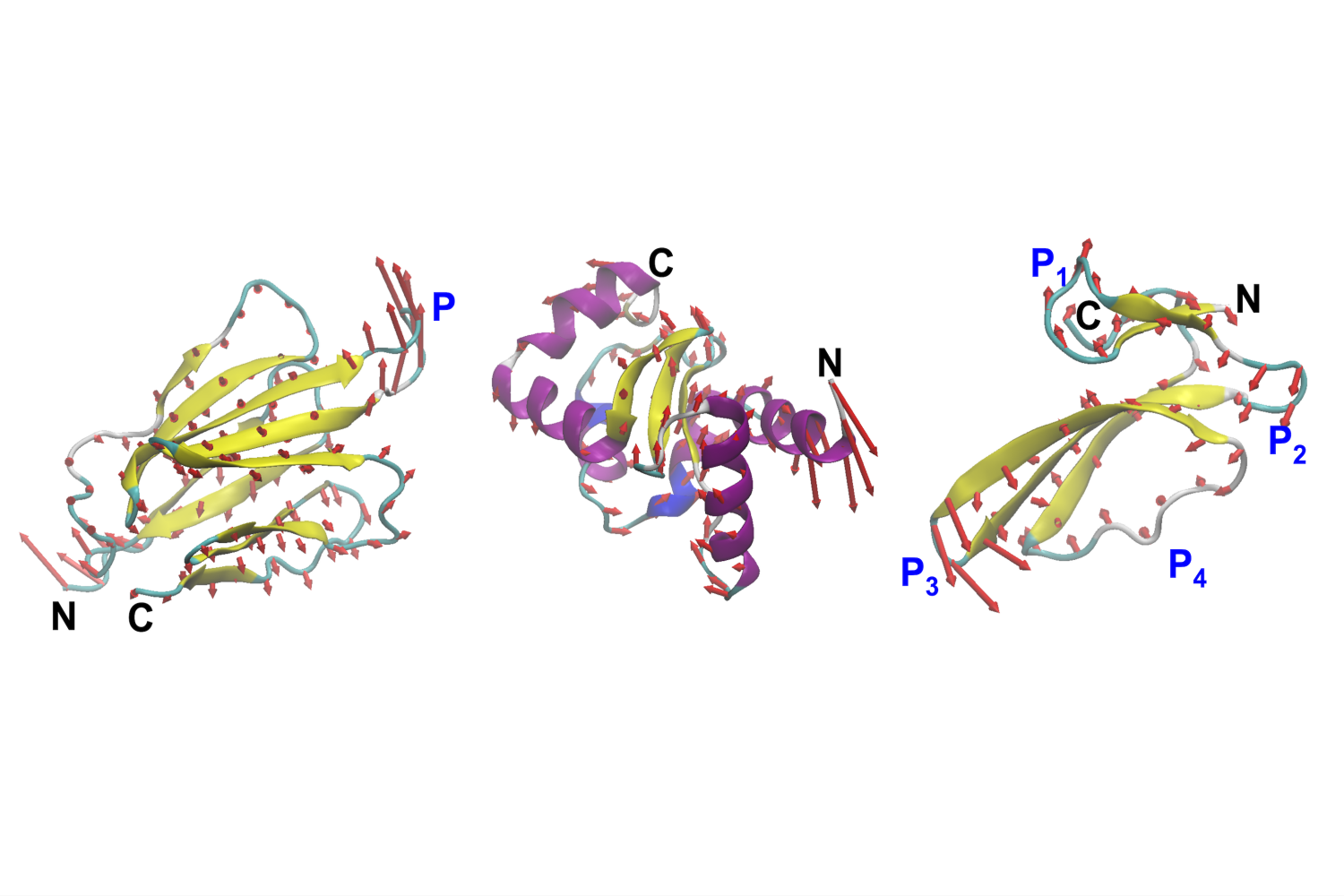
In a significant advancement for protein science, engineers at MIT have developed an AI model called VibeGen, enabling the design of proteins that are not only tailored for specific functions but also optimized for motion. This breakthrough aims to address a critical gap in current protein design methodologies, which have largely focused on the static structure of proteins rather than their dynamic behavior. The findings were published on March 24 in the journal Matter and highlight the implications of motion-aware AI in molecular engineering.
Proteins serve as nature’s molecular machines, performing essential functions in every cell and contributing to processes such as blood circulation and immune response. While existing AI tools have been adept at predicting a protein’s three-dimensional structure, they have traditionally overlooked how these proteins move and interact with their environment. According to Markus Buehler, the Jerry McAfee Professor of Engineering at MIT, “The essence of life at fundamental molecular levels lies not just in structure, but in movement.” The development of VibeGen marks a paradigm shift in how researchers can conceptualize protein design, allowing for motion to inform structure.
VibeGen operates on an innovative approach: rather than inquiring what shape a given amino acid sequence will produce, it asks what sequence will induce a desired mode of movement. This inversion of the traditional design question is pivotal. The model utilizes AI diffusion techniques, similar to those used in image generation, to refine sequences until they align with specified vibrational patterns. This method not only allows for the creation of entirely new protein sequences but also highlights the concept of functional degeneracy, where multiple protein structures can perform the same motion.
Working alongside Bo Ni, Buehler emphasized the importance of “physics-aware AI,” systems capable of reasoning about molecular motion. The VibeGen model features two cooperative AI agents: a “designer” that proposes candidate sequences and a “predictor” that assesses their effectiveness in achieving the desired motion. This internal dialogue fosters an iterative design process that ultimately stabilizes into functional proteins. The team validated these designs through detailed physics-based molecular simulations, confirming that VibeGen-generated proteins behaved as intended.
The ramifications of this technology could be vast. In medicine, for instance, proteins engineered with specific motions could enhance drug efficacy by improving binding precision to target molecules such as viruses or cancer cells. A protein that can adapt its shape flexibly would likely minimize unintended interactions, thereby leading to safer therapeutic options. In materials science, the ability to design proteins with tailored mechanical properties could revolutionize the development of sustainable and resilient materials. Buehler envisions applications ranging from self-healing structural components to biodegradable alternatives to conventional plastics.
By integrating motion as a fundamental design criterion, VibeGen positions proteins as programmable mechanical devices rather than merely static entities. “It’s as if we’ve invented a new creative engine that designs molecular machines on demand,” Buehler remarked, underscoring the potential of this technology to bridge various fields, including artificial intelligence, synthetic biology, and advanced materials engineering.
As the research team prepares to refine their model and validate their designs further in the lab, they also aim to integrate motion-aware design with other AI tools. This could lead to the creation of multifunctional proteins capable of real-time environmental sensing and response. The evolution of VibeGen fundamentally redefines how scientists can approach protein design, paving the way for a future where molecular machines can be crafted with the same precision as engineered systems like bridges and engines.
See also AI Video Workflows: Achieving Temporal Consistency with Multimodal Approaches
 OpenAI Shuts Down Sora Video App, Shifts Focus to Coding and Enterprise AI
 OpenAI Shuts Down Sora Video App as Disney Exits $1 Billion Deal
 Google Unveils 7 Free AI Tools for 2026, Enhancing Productivity and Creativity
 Gnani.ai Secures Rs 68 Crore in Series B Funding, Valuation Surges to Rs 818 Crore















