






















































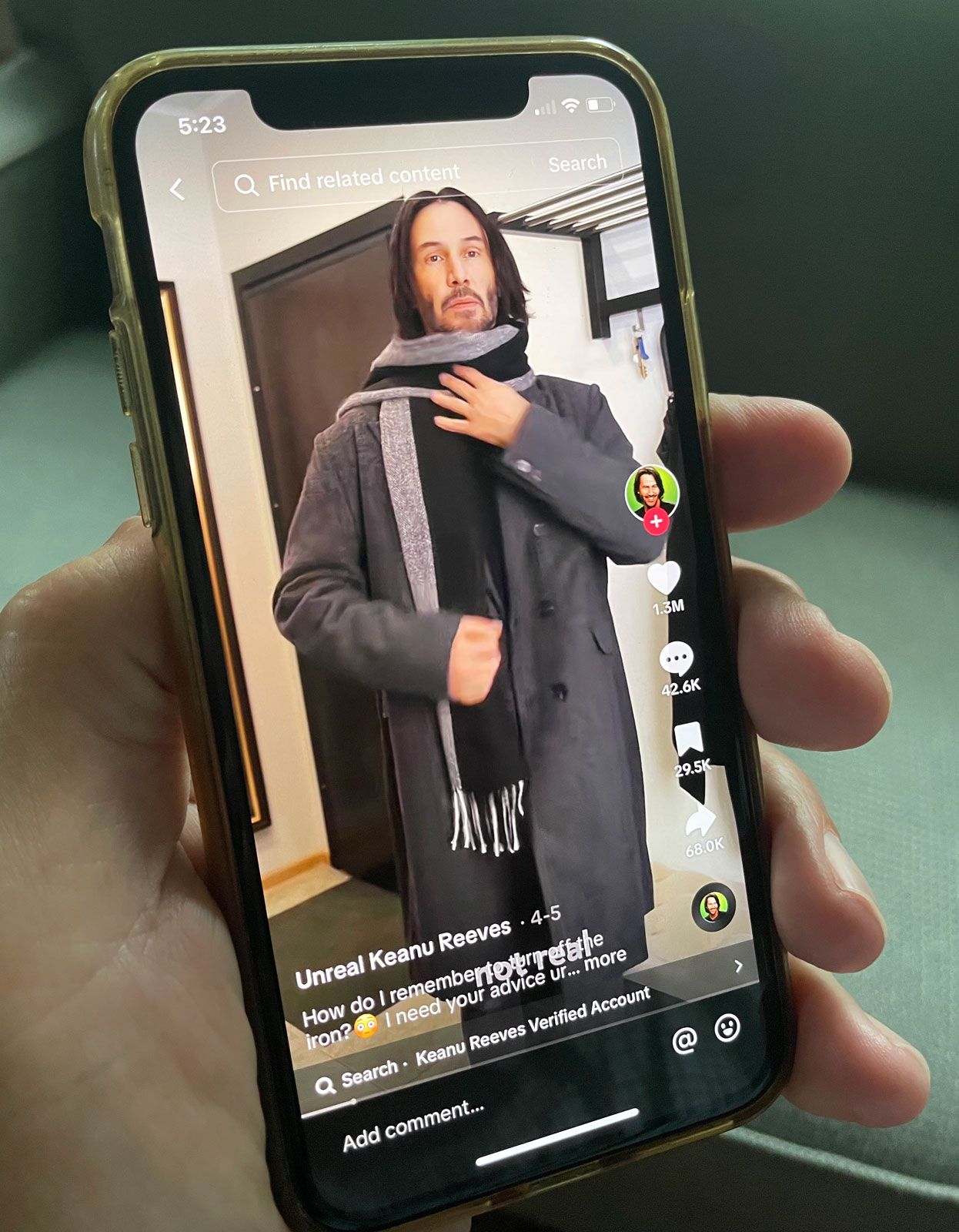
Deepfake technology, which utilizes artificial intelligence to create synthetic media that depicts events or individuals that do not exist, is becoming increasingly prevalent across various sectors. The term “deepfake” merges “deep” from AI deep-learning models and “fake,” indicating that the content does not reflect reality. Originally popularized by a Reddit subreddit in 2017, deepfakes have taken on a darker reputation, often associated with misinformation, harassment, and scams.
Deepfakes are typically produced using generative adversarial networks (GANs). In this process, two AI models engage in a feedback loop—one generates images or videos, while the other assesses their authenticity and highlights discrepancies. For instance, the first model creates a synthetic image; upon receiving feedback, it iteratively refines its output until the second model can no longer detect the fakeness. Another method, diffusion models, generates visuals from text prompts, enhancing their realism over successive iterations.
The dangers associated with deepfakes are significant. A report from cybersecurity firm McAfee highlighted that over 500,000 deepfakes were shared on social media platforms in 2023. These manipulations have been weaponized in scams, including a notable case where an employee at engineering firm Arup lost approximately $25 million after participating in a fraudulent video call featuring AI-generated likenesses of the company’s executives. The Federal Bureau of Investigation (FBI) reported that romance scams involving deepfakes led to losses exceeding $650 million in 2023.
Amplifying the issue, a 2019 study by Sensity AI revealed that about 96 percent of deepfakes consist of non-consensual sexual imagery, predominantly targeting women. This troubling trend continued as public figures like Taylor Swift became victims of explicit deepfake images, raising concerns over the absence of stringent legislation. The first U.S. law aimed at combating this issue, the TAKE IT DOWN Act, was enacted in May 2025, addressing the unauthorized publication of sexually explicit content.
Deepfakes have also been leveraged for more benign purposes. For example, British soccer player David Beckham participated in a campaign that utilized deepfake technology to present him speaking multiple languages, effectively broadening the outreach of the malaria awareness initiative. In the art world, the Dalí Museum hosted an exhibition titled “Dalí Lives,” featuring a deepfake of Salvador Dalí that allowed him to deliver quotes in a voice mimicking his own, captivating audiences and breathing new life into historical figures.
Moreover, deepfake technology has potential applications in education and healthcare. Educators can employ deepfakes of historical speeches to create immersive learning experiences. In the medical realm, this technology can enhance diagnostic accuracy by generating synthetic images of rare tumors, thereby training AI systems more effectively. The ethical considerations surrounding the use of real patient data are mitigated by employing synthesized data.
As the capabilities of deepfake technology continue to evolve, the balance between its misuse and potential positive applications raises pressing questions for society. While its role in disinformation and personal abuse cannot be overlooked, innovative applications demonstrate that deepfake technology can also enhance public awareness and education. As awareness of the technology grows, a critical discourse on its regulation and ethical use will be essential to mitigate its risks while harnessing its benefits.
See also Generative AI Transforms ADM Models to Focus on Autonomous, Value-Based Delivery
 AI UGC Video Generators Empower Small Businesses with Cost-Effective Content Creation
 OpenAI Launches GPT-5.3 Update to Reduce ‘Cringe’ Factor and Enhance ChatGPT Responses
 NTU and CUHK Unveil MoTok: 89% Error Reduction in Motion Generation with 1/6 Tokens






