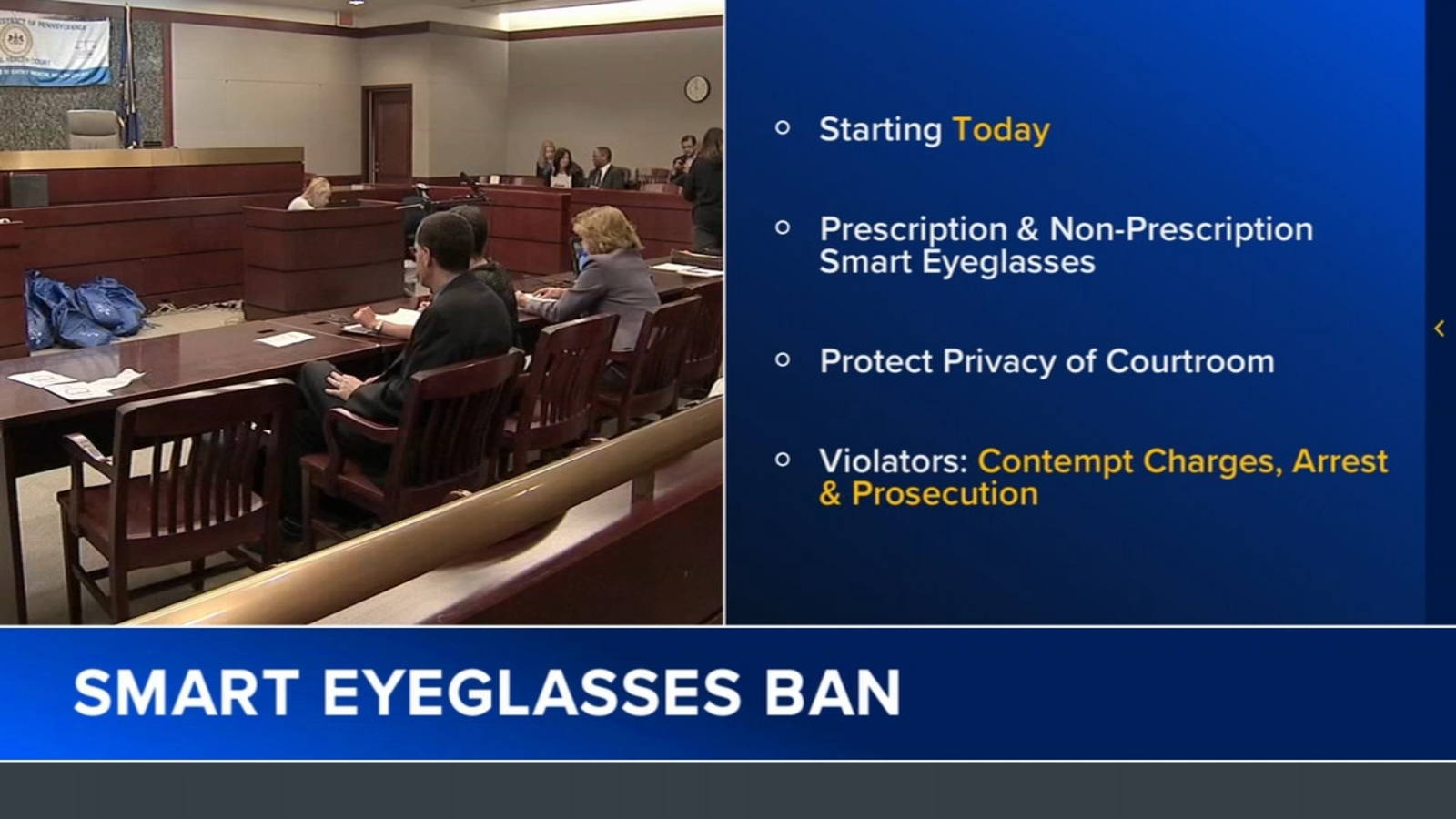
PHILADELPHIA (WPVI) — Starting Monday, March 30, 2026, a new regulation will take effect in Philadelphia Courts, prohibiting the use of smart eyeglasses, including those manufactured by Meta, which possess recording capabilities. This ban encompasses both prescription and non-prescription models, reflecting the court’s commitment to protecting the privacy of all individuals involved in legal proceedings.
The decision to implement this ban comes as part of ongoing efforts to safeguard courtroom integrity and minimize the risk of unauthorized recordings. “There already exists a long-standing prohibition on recording devices of any kind in FJD courtrooms. Adding Smart/META eyeglasses to the prohibition will further enhance privacy measures and help lessen witness or juror intimidation by preventing any video recording of them,” stated Richard McSorely, Court Administrator for the First Judicial District (FJD).
Violators of this new regulation could face serious consequences, including potential criminal contempt charges, arrest, and prosecution. This strict enforcement is designed to deter individuals from attempting to record sensitive court proceedings, ensuring that the judicial process remains unobstructed and that all participants can engage without fear of being filmed.
The introduction of this ban highlights a growing recognition of privacy concerns associated with emerging technologies, particularly those featuring integrated recording capabilities. As smart eyewear becomes increasingly common, various sectors, including law enforcement and education, are also grappling with similar concerns, aiming to strike a balance between innovation and privacy rights.
In recent years, the proliferation of smart devices has raised significant ethical questions surrounding surveillance and consent. While these technologies offer users enhanced functionality and connectivity, they also pose challenges in environments where confidentiality is paramount. In courtrooms, where sensitive testimonies and discussions occur, the stakes are particularly high.
With this regulatory move, Philadelphia Courts are setting a precedent that may inspire other jurisdictions to consider similar bans on smart eyewear in their own courtrooms. As legal systems worldwide adapt to the rapid evolution of technology, the ongoing dialogue around privacy, ethics, and the judicial process will likely continue to evolve.
The implications of this ban extend beyond the immediate courtroom environment, opening discussions about how new technologies can coexist with established legal frameworks. As courts strive to maintain order and confidentiality, the relationship between technology and the law will remain a critical area of focus in the coming years.
As stakeholders in various sectors observe the outcome of this ban, it will be essential to assess its effectiveness in preserving courtroom privacy while navigating the complexities introduced by modern technology. The balance between embracing innovation and safeguarding individual rights will undoubtedly remain a pertinent issue for courts and legislatures alike.
See also Panasonic Energy Enhances Data Center Solutions with In-House Battery Technology
 Alphabet Outpaces Amazon with 48% Cloud Growth Amidst 2026 Tech Stock Slump
 Memory-Makers’ Shares Plummet Up to 20% Amid AI Demand and Google’s TurboQuant Reveal
 Anthropic’s Claude Delivers Complete Software Projects for $200, Achieves 10-Round Revisions
 DeepMind’s GenCast Model Reveals Structural Limitations in Butterfly Effect Simulation