






















































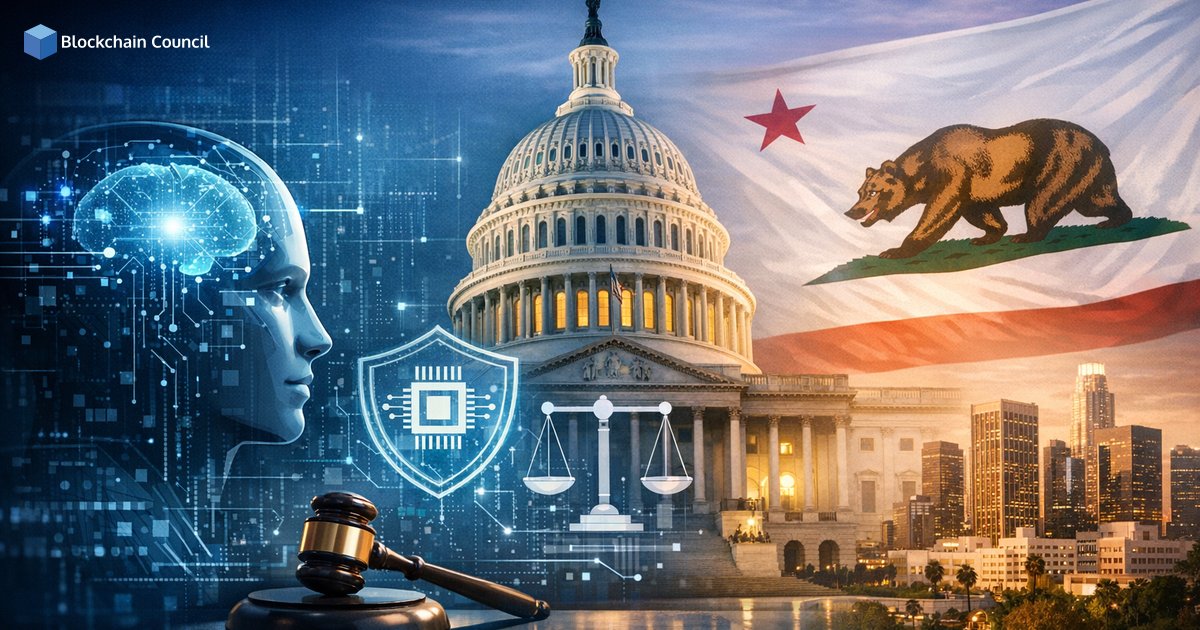
AI regulation 2026 is shaping up to be a pivotal issue in the United States, particularly as California leads the charge with a set of laws set to take effect on January 1, 2026. The federal government, under President Trump, is attempting to establish unified national standards, arguing that state-level regulations could hinder innovation and weaken the U.S. position in the global AI landscape. This conflict is not merely political; it will significantly influence how AI tools are developed, governed, and utilized across various sectors, including healthcare, education, and media.
Contrary to sensational headlines framing the debate as “AI banned?” or “the AI dangerous truth,” the emerging legal trend focuses on targeted regulations for high-risk AI applications. These regulations are designed to ensure transparency, impose safety reporting requirements, and enforce governance without an outright halt to AI development.
As of early 2026, there is no comprehensive national AI law in the U.S. Multiple states, however, including California, have enacted legislation addressing various facets of AI technology. California’s laws encompass generative AI, chatbots, and algorithmic pricing, reflecting a proactive approach to AI governance. Meanwhile, the federal government aims to prevent a fragmented regulatory environment that could complicate compliance for businesses operating across state lines.
The rationale for federal preemption hinges on the principle of avoiding regulatory fragmentation. David Sacks, an AI advisor at the White House, has underscored the importance of maintaining a cohesive regulatory framework to bolster U.S. competitiveness in AI. The challenge remains how swiftly protections will be implemented for users and companies if federal standards replace state regulations.
California’s regulatory framework is notable for its focus on transparency, harm prevention, and oversight of high-risk AI systems. Among the key laws is the Transparency in Frontier Artificial Intelligence Act (SB 53), which mandates that large AI developers disclose risk-management frameworks and report significant safety incidents. This legislation aims to document safeguards for powerful AI models and ensure accountability in the event of catastrophic failures.
Another important measure, the Generative AI Training Data Transparency Act (AB 2013), requires developers to provide high-level information about the training data used in generative AI systems. This law seeks to enhance transparency without divulging proprietary datasets, allowing stakeholders to assess risk areas such as bias and safety limitations.
The AI Transparency Act (SB 942), which has seen its implementation date delayed to August 2, 2026, focuses on large platforms, requiring them to provide free AI-content detection tools and watermarking capabilities. This legislation is particularly relevant in the context of deepfakes and misinformation, empowering users to identify AI-generated content more effectively.
In the realm of consumer interactions, the Companion Chatbots Act (SB 243) introduces safety obligations for chatbot applications, particularly those serving minors. This legislation responds to growing concerns about the behavioral health impacts of persuasive AI conversations. Additionally, the Health Care Professions: Deceptive Terms or Letters: AI Act (AB 489) prohibits AI systems from misrepresenting themselves as healthcare professionals, ensuring that patients are not misled by automated tools.
On the economic front, the Preventing Algorithmic Price Fixing Act (AB 325) updates antitrust laws to prohibit companies from sharing pricing algorithms. This law aims to prevent coordinated market behaviors that could harm consumers, addressing a modern risk that existing regulations did not foresee.
California’s initiatives occur amid similar movements in Texas, which has introduced the Responsible AI Governance Act to enhance enterprise AI transparency and governance. This creates a complex compliance landscape for companies that must navigate differing regulations across states. The overarching regulatory picture is characterized by California’s focus on transparency and harm prevention, Texas’s emphasis on enterprise governance, and the federal government’s push for national standards addressing child protection and intellectual property rights.
Despite fears of a blanket AI ban, there are currently no credible indications that such a measure will be implemented. What is emerging instead is a structured approach to AI governance that prioritizes accountability, safety, and transparency. As AI technologies continue to advance, the debate surrounding their regulation will likely evolve, focusing on managing risks related to misinformation and safety rather than outright prohibitions.
For those engaged in technology policy or studying governance, AI regulation in 2026 serves as a compelling case study. Key takeaways include the dynamics of federalism, the importance of risk-based regulation, and the increasing demand for transparency in AI governance. As requirements become more enforceable, organizations will need to adapt and develop compliance strategies capable of addressing the complexities of overlapping state and federal regulations.
Looking ahead, the coming months will be critical as California’s SB 942 transparency obligations take effect and as federal legislation moves through Congress. The possibility of legal challenges regarding federal preemption could further extend the period of uncertainty for companies and consumers alike. As states continue to develop their own frameworks, the landscape of AI regulation will remain a focal point of discussion, ultimately shaping how AI systems are integrated into society.
See also Trump Administration Unveils National AI Regulatory Framework to Preempt State Laws
 OpenBox AI Launches Governance Platform with $5M Funding Amid Rising Regulatory Demands
 UK SMEs Prioritize Data & AI Over Compliance, 28% Focus on Digitalization for 2026
 CookieYes Launches Cookie Policy Generator to Streamline Compliance for 80% of Global Users
 Poland Approves Draft AI Regulation Bill to Enhance Security and Support Innovation















