Anthropic has officially rebranded its AI tool OpenClaw from its former name, Clawdbot, following concerns over potential confusion with its own product, Claude. This name change marks a significant shift as Anthropic has now integrated OpenClaw’s capabilities directly into Claude’s framework, enhancing its functionality.
On March 31st, Anthropic announced the addition of a new “Computer use” feature to Claude Code, enabling it to not only read code and execute commands but also interact with a computer’s interface directly. This allows the AI to view screens, click buttons, and navigate web processes, effectively performing tasks typically reserved for human operation.
This capability, while not entirely new—having undergone testing since October 2024—has only recently been polished enough for broader application. Anthropic initially hesitated to integrate this function into routine use due to the resource-intensive nature of handling real-time computer interfaces, which carries a higher risk of errors compared to conventional code assistance.
Previously, Claude Code functioned primarily as a code assistant in terminal environments, where direct interface operation was not deemed necessary. However, with the new Computer use feature, Anthropic is clearly positioning Claude Code as a long-term agent system, suggesting a shift in strategy toward more autonomous operations.
Complementing this is the recent addition of the Channels function to Claude Code, allowing for communication via external social platforms. This capability enables users to send messages to Claude Code, thereby directing its tasks without needing to interact with the session directly. In essence, Channels acts as an “inbox” for Claude Code, facilitating real-time updates and instructions.
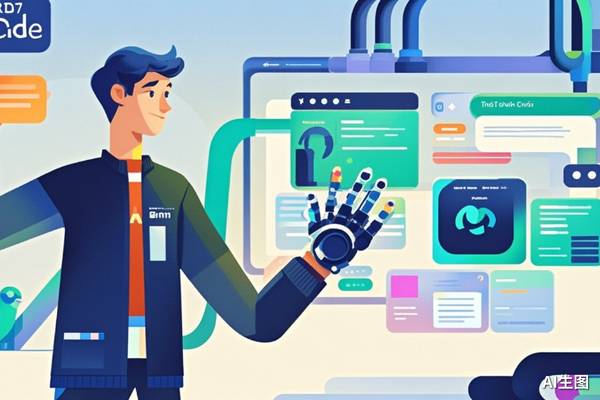
While Channels serve as a conduit for external messages, the Computer use function represents a more hands-on approach, enabling Claude Code to emulate user actions. This distinction draws a line between the two features: Channels function as the “ear,” receiving messages, while Computer use acts as the “hand,” executing commands and controlling the interface directly.
Despite these advancements, the architectures of OpenClaw and Claude Code differ significantly. The Channels feature is essentially an MCP (Message Communication Protocol) server, designed to safely route external messages into a Claude Code session. This provides a structured approach for third parties to generate message entries that can tap into Claude Code’s capabilities.
Interestingly, the relationship between OpenClaw and Claude Code appears more nuanced than direct competition. Although both systems aim to facilitate interaction with AI, Anthropic’s Channels operate under a specific communication protocol framework, while OpenClaw has already established numerous integrations with various chat applications.
The advent of MCP in Anthropic’s approach speaks to a broader industry trend. Acknowledging that many organizations had previously perceived MCP as cumbersome and complex, it has now resurfaced as a vital framework. The shift in perspective comes as businesses increasingly recognize the need for systems capable of continuously receiving external events, a capability that MCP facilitates effectively.
Steinberg, the founder of OpenClaw, recently remarked on the evolution of his product, suggesting that the upcoming version will also adopt MCP features. This is notable given his background and previous rivalry with Anthropic, now further complicated by his current role at OpenAI.
Anthropic’s decision to adopt an open MCP interface may expand Claude Code’s capabilities while simultaneously allowing third-party developers, like OpenClaw, to leverage this system for creating a larger array of message interactions. This creates an opportunity for OpenClaw to develop its “multi-message channel gateway” as a standalone feature, enhancing its utility across different platforms.
As the capabilities of Claude Code expand, users are presented with the potential to interact with AI in more sophisticated ways. However, challenges remain, particularly regarding user experience. Feedback indicates that many find Claude Code’s interface and command structure daunting, despite its potent functionality.
The evolving landscape of AI tools underscores a growing inclination toward enhancing communication with machines. As companies like Anthropic and OpenClaw reconfigure their systems to better integrate real-world inputs and operations, the future of AI agent interaction is set to become increasingly dynamic and accessible.
See also Nvidia’s DLSS-5 Faces Backlash for AI-Enhanced Female Character Redesigns
 OpenAI Announces $122B Funding Round, Plans Unified AI Superapp at $852B Valuation
 Anthropic Confirms Claude Code Source Code Leak; 1,900 Files Exposed on GitHub
 Gmail Launches AI Inbox for $250/Month, Streamlining Email Management for Subscribers
 Nvidia’s China Market Share Drops to 55% as Local Chip Makers Ship 1.65M AI GPUs