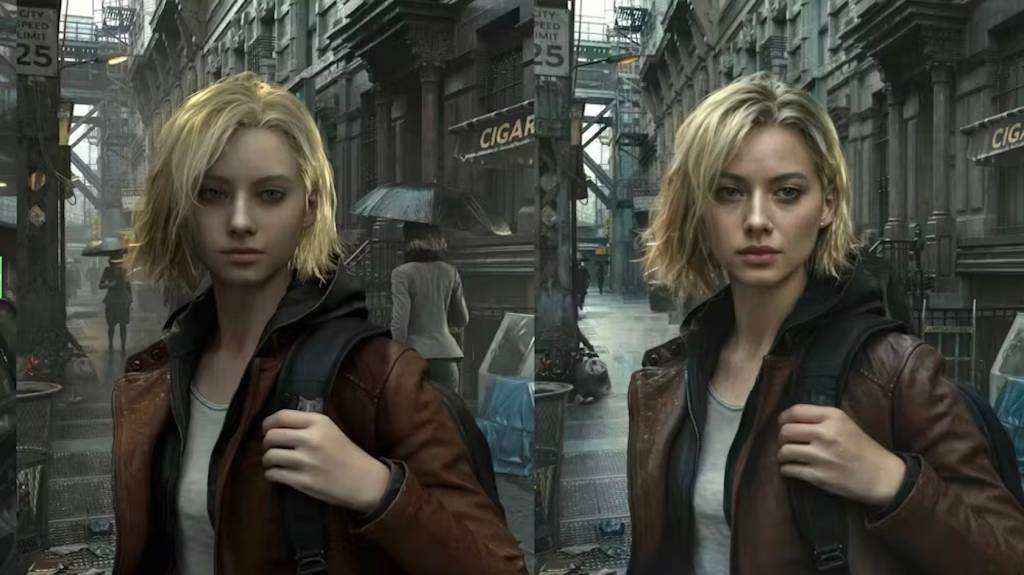
Last week, leading chipmaker Nvidia announced DLSS-5 (Deep Learning Super Sampling), a new artificial intelligence (AI) rendering tool it describes as a “breakthrough in visual fidelity for games.”
The software takes low-resolution images and uses AI to upscale them, enhancing what Nvidia calls “photoreal lighting and materials.” Designed to make video games appear more photorealistic, the technology has sparked unexpected reactions; the AI not only sharpens images but also alters character appearances to align with conventional beauty standards.
This growing backlash extends beyond aesthetic preferences, raising broader concerns about creative autonomy in gaming and the values encoded in AI algorithms. Critics argue that reliance on AI for visual enhancements risks undermining the artistic vision of game developers.
Nvidia showcased DLSS-5 using Grace Ashcroft, the protagonist of the recently released Resident Evil Requiem. Before-and-after comparisons displayed notable changes: hair color alterations, defined eyebrows, lip tint, and facial contouring. Gamers quickly dubbed it a “beauty filter,” citing heavy makeup application and a reshaped face as signs of a troubling trend in character design.
The selection of Grace as the face of this technology warrants scrutiny. While Resident Evil Requiem features a wide array of monstrous characters, highlighting a traditionally attractive female character raises complex questions about representation in gaming. This tension has persisted for years, as female characters have often been depicted in stereotypical and sexualized manners.
Historically, female characters in games have been portrayed either as helpless victims or as secondary sexual objects to male leads. Though the 2000s saw more diverse representations, this progress faced significant backlash, notably during the Gamergate campaign in 2014, which targeted women and minorities in the gaming industry with harassment and threats.
The discourse continued as some players expressed outrage over the muscular depiction of Abby Anderson in The Last of Us: Part 2, demanding a return to more conventional beauty. With DLSS-5, the debate intensifies, as an algorithm can now override designer choices regarding character appearance, raising ethical concerns about the implications of AI in creative processes.
The adjustments made by DLSS-5 echo trends prevalent in the manosphere, specifically the notion of “looksmaxxing,” which stems from incel communities. This concept posits that certain facial features are more biologically desirable, prompting some to enhance their own appearances. The automatic application of similar principles to a female game character generates discomfort about the standards of beauty perpetuated by technology.
Humor has emerged as a coping mechanism, with gamers mocking the software’s effects. The term “yassifying” has circulated alongside memes that humorously apply the same treatment to male characters, such as Kratos from God of War, illustrating the absurdity of applying a beauty filter universally.
Gamers previously reacted similarly to criticisms of Aloy from Horizon Zero Dawn, creating “unwokified” versions of her character in response to claims of being “woke.” These reactions showcase a broader societal discussion on beauty standards and representation in games.
Concerns regarding DLSS-5 also extend to the impact on artistic integrity. Instead of merely sharpening visuals, the software alters textures and lighting, potentially leading to a homogenized “AI aesthetic.” A game like Resident Evil Requiem, known for its dark and gritty atmosphere, risks being transformed into something resembling a luxury skincare advertisement. In some cases, such as with EA Sports FC, the software altered a real-life player’s likeness so dramatically that they became unrecognizable.
While DLSS-5 can enhance visual quality and revive dated character models, it also raises critical questions about the future of visual storytelling in gaming. Nvidia has defended the technology, with CEO Jensen Huang asserting that DLSS-5 is not merely a filter and that developers maintain control over its application. However, the backlash underscores a tension between technological advancement and the creative choices of artists.
As the industry grapples with these challenges, the conversation around AI-driven enhancements will likely continue to evolve. Many gamers express discomfort with both the shifting standards of beauty imposed by AI and the potential erosion of creative control, revealing the complex relationship between technology and artistic expression in modern gaming.
See also OpenAI Announces $122B Funding Round, Plans Unified AI Superapp at $852B Valuation
 Anthropic Confirms Claude Code Source Code Leak; 1,900 Files Exposed on GitHub
 Gmail Launches AI Inbox for $250/Month, Streamlining Email Management for Subscribers
 Nvidia’s China Market Share Drops to 55% as Local Chip Makers Ship 1.65M AI GPUs
 DeepSeek Faces 7-Hour Outage, Exposing Critical AI Infrastructure Gaps