






















































Dell Technologies has unveiled new security features aimed at enhancing cyber resilience and addressing emerging threats posed by quantum computing and artificial intelligence (AI). The enhancements, announced this week, are designed to help organizations secure, detect, and recover from increasingly sophisticated cyberattacks that exploit vulnerabilities in current encryption methods.
As AI continues to generate valuable data, it also provides attackers with new avenues to execute rapid and devastating attacks. The advent of quantum computing poses a significant risk by potentially undermining existing encryption technologies, which organizations rely on to protect sensitive data. This convergence of threats is driving demand for devices that are engineered to withstand future attacks, as well as the implementation of robust detection mechanisms across environments where AI data is processed.
To combat these emerging risks, Dell is adopting a layered defense strategy that spans from personal computers to data centers. A critical component of this approach is the introduction of quantum-ready security features in its commercial PCs. These enhancements focus on hardening the foundational security embedded in devices, specifically targeting firmware layers that can be vulnerable to sophisticated attacks.
One notable development is the improved security for the embedded controller (EC) within Dell’s PCs. This core hardware security element now verifies firmware updates through signatures designed to be resistant to future quantum-enabled threats, thereby preventing the acceptance of malicious or tampered firmware. Additionally, Dell has enhanced its BIOS Verification capability, which aligns with post-quantum standards. This feature detects any tampering by comparing the BIOS against a securely stored trusted reference in the Dell cloud. If discrepancies are identified, alerts are triggered for investigation, thus bolstering organizational security.
In parallel with these advancements, Dell is improving its PowerProtect portfolio, which plays a crucial role in enhancing cyber resilience. According to Dell’s Cyber Resilience Insights research, only 40% of global organizations reported success in containing and recovering from cyberattacks with minimal impact. To address this challenge, Dell has infused its PowerProtect Data Manager with AI capabilities that assist organizations in detecting threats like ransomware more quickly and recovering from incidents more efficiently.
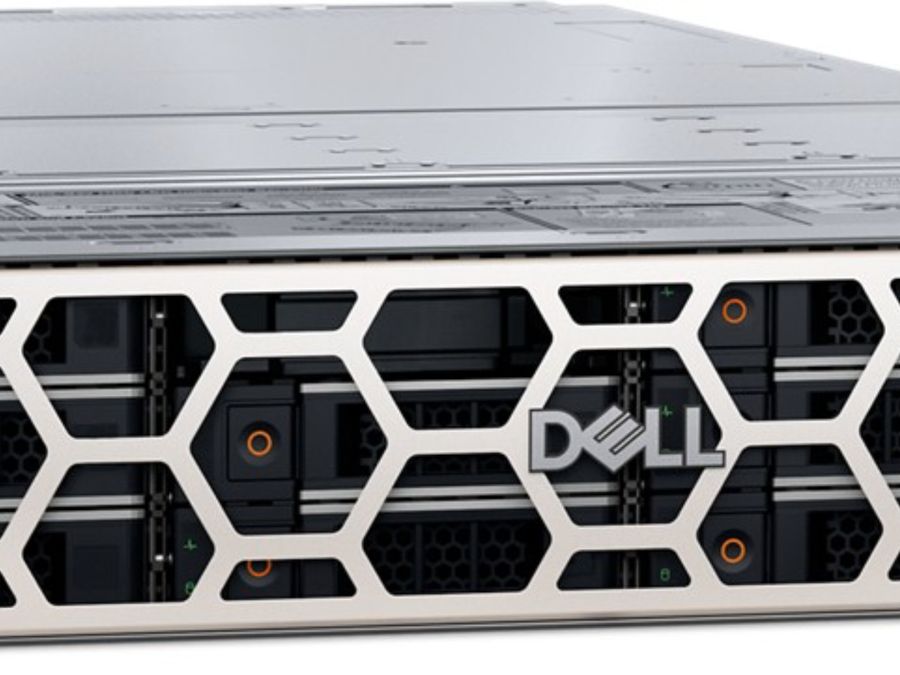
The enhancements allow organizations to resolve recovery issues faster with an AI-powered assistant that provides contextual guidance during urgent tasks. Furthermore, the updated PowerProtect Data Domain appliance, known for its industry-leading cyber resilience, now offers up to twice as fast backups and 46% quicker data restores. This rapid recovery capability is crucial for organizations aiming to resume operations promptly after a cyber incident.
Fast recovery also hinges on effective early threat detection, which is especially imperative in environments housing valuable AI workloads. Traditional endpoint security measures often overlook risks in these areas, creating exploitable visibility gaps. To address this, Dell is expanding its Managed Detection and Response (MDR) service to cover environments containing unstructured data and AI workloads. This new extension to Dell PowerScale enhances visibility into threats targeting AI data storage platforms, enabling organizations to detect suspicious activity sooner and automate response actions.
Additionally, Dell is launching a new Endpoint Detection and Response (EDR)-only option designed to monitor and respond to endpoint threats using advanced detection techniques. When deployed alongside Dell PCs, this service provides unique insights into BIOS verification results, allowing for quick responses if any discrepancies arise from potential compromises.
Venkat Sitaram, Senior Director and Country Head of Dell Technologies India, emphasized the urgency of strengthening cyber resilience as AI adoption accelerates, particularly in India. “Security teams must protect growing volumes of high-value data across distributed environments where traditional controls often lack visibility into how threats move across AI workloads and data platforms,” he stated. “Dell’s approach aligns with this evolving need, focusing on enhancing security visibility and enabling organizations to respond to and recover from incidents more effectively.”
As organizations increasingly contend with the dual threats of quantum computing and sophisticated cyberattacks, Dell Technologies’ latest security features represent a proactive step toward building a more resilient digital infrastructure. The company’s emphasis on integrating advanced security measures at foundational levels may prove essential for organizations seeking to safeguard their critical data in an evolving threat landscape.
See also Aviation Cyber-Attacks Surge 600% Year-on-Year: Why Zero Trust Security is Essential Now
 Google Cloud Reveals AI Cyberattacks Will Surge in 2026, Targeting Key Industries
 28 Million AI-Driven Cyberattacks Expected in 2026—How Security Leaders Must Adapt
 Dell Technologies Unveils Quantum-Ready Cyber Resilience Tools to Combat AI-Driven Threats
 Datadog Launches Bits AI Security Analyst, Reducing Threat Investigation Time by 98%















