






















































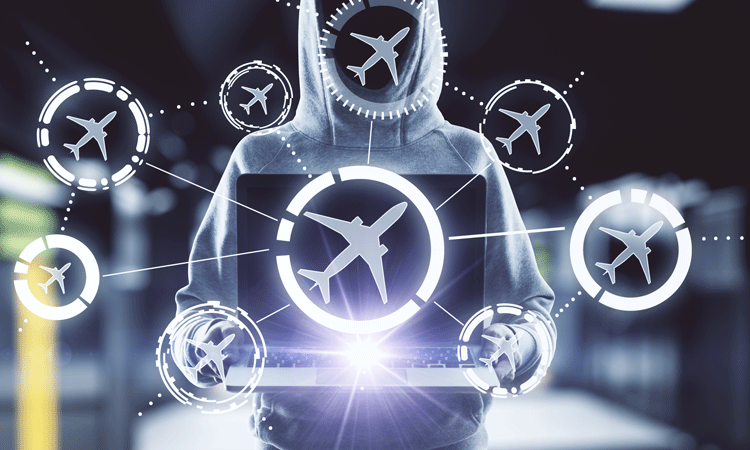
Recent data from the Thales Group reveals a staggering 600% year-on-year increase in cyber-attacks targeting the aviation industry. This surge is largely attributed to advancements in artificial intelligence (AI), which have enabled cybercriminals to execute attacks with unprecedented speed, automation, and sophistication. The rise in threats is not merely a reflection of the sector’s preparedness; instead, it highlights how AI has lowered the entry barrier for potential attackers, allowing even those without advanced technical skills to launch sophisticated assaults.
The aviation sector, renowned for its acute focus on safety, is facing a new frontier in cybersecurity. Aircraft are engineered with remarkable precision, where tolerances are measured to the thousandth of an inch. Similarly, industry leaders are now channeling that rigorous commitment to safety into the realm of digital security as they confront emerging AI-driven threats.
Airports have become prime targets for cybercriminals, including ransomware groups and state-aligned actors, due to the potential for extreme impacts. Recent reports indicate that attacks are increasingly motivated by broader strategic aims, such as espionage and disruption of supply chains, rather than purely financial gain. The interconnected nature of the aviation ecosystem, which relies on shared platforms and data, means that a successful breach in one area can have cascading effects, impacting booking, check-in, and even critical safety systems such as air traffic control.
In this evolving landscape, it has become clear that a rapid response to cyber incidents is no longer sufficient. While detection and reaction remain essential components of cybersecurity, the industry must prioritize preventative measures. This shift begins with a zero trust cybersecurity model, which operates on the principle of denial-by-default.
Managing Risk with Zero Trust
The zero trust approach emphasizes that every user or system should only have access to the tools and data necessary to perform their functions, with continuous verification of identity as a cornerstone. Unlike traditional models that presumed trust within a network perimeter, zero trust starts from the assumption that threats could already be inside the system and implements controls accordingly. This methodology aligns closely with the aviation industry’s established safety protocols, where every component is certified and every deviation is scrutinized.
To implement zero trust effectively, organizations must adopt solutions tailored to safeguard networks, cloud systems, and endpoints. For endpoint security, allowing only explicitly trusted software and processes to run on systems is critical. Techniques like application allowlisting ensure that only recognized and approved code can execute, effectively blocking unrecognized threats such as ransomware.
Moreover, organizations should control the behavior of authorized software, avoiding unnecessary permissions. If a particular program does not require internet access, for instance, it should be restricted from accessing it. This minimizes the risk of even trusted software becoming a vector for attacks.
Network security measures must also be stringent. Employing just-in-time access principles ensures that ports are opened only when necessary, and dynamically controlled access lists can create secure pathways while continuously monitoring identities and behaviors. This way, even if an attacker obtains credentials, they will be unable to access the network without an approved device.
As cyber threats increasingly target cloud systems, controlling access has never been more vital. Traditional login methods are no longer sufficient, given the prevalence of phishing attacks that deceive employees into providing credentials. Enhanced controls that require device authentication and strict web navigation policies can greatly mitigate these risks.
The shift to a zero trust model is not solely about implementing technology; it fosters a culture of cybersecurity awareness among employees. When individuals recognize that previously trusted actions are now subject to scrutiny, it alters their interactions with technology, promoting more responsible behavior. This cultural shift is especially valuable in a heavily regulated industry like aviation.
Zero trust is ultimately about empowering teams with clear guidelines and reducing the burden on individuals to detect threats independently. By embracing this approach, the aviation sector can bolster its defenses beyond mere reaction and develop a proactive posture against cyber incidents.
When effectively implemented, zero trust can enhance resilience in aviation without causing significant disruptions. Such a framework allows for effective containment of attacks, preventing lateral movement within systems. For example, unauthorized tampering with flight information displays could have far-reaching consequences, but a zero trust environment would restrict access, ensuring that other systems continue to function normally.
The transition to zero trust does not necessitate a complete overhaul of existing systems. Modern technological advancements have made it easier to implement these changes gradually, allowing for a seamless integration into the existing architecture.
As cyber threats evolve, the aviation industry finds itself at a critical juncture. The sector has historically led in promoting safety across transportation, and it now has the opportunity to pioneer advancements in cybersecurity. With the clarity of a zero trust framework, aviation organizations can proactively address the rising tide of cyber threats, setting a precedent for others to follow.
See also Google Cloud Reveals AI Cyberattacks Will Surge in 2026, Targeting Key Industries
 28 Million AI-Driven Cyberattacks Expected in 2026—How Security Leaders Must Adapt
 Dell Technologies Unveils Quantum-Ready Cyber Resilience Tools to Combat AI-Driven Threats
 Datadog Launches Bits AI Security Analyst, Reducing Threat Investigation Time by 98%
 ZeroEyes Expands AI Security Platform with Knife Detection and Suspect Tracking Features















