
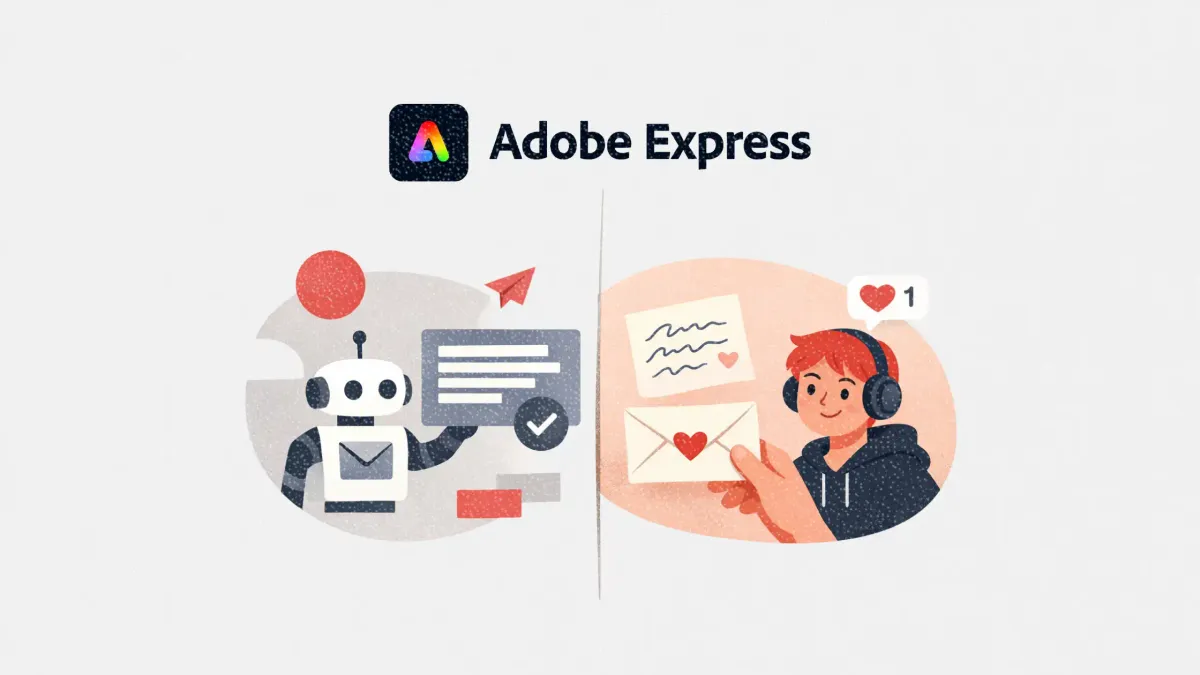
Artificial intelligence (AI) has transformed email marketing by enabling teams to scale their content production. However, despite this increase in output, recent findings indicate that the effectiveness of these emails may not be improving. An Adobe Express survey of 1,007 U.S. consumers highlights a surprising trend: the most significant factor driving email engagement is not personalization, automation, or relevance, but rather whether the email “sounds like it was written by a real person.”
This shift in consumer preference underscores the importance of tone as an emerging performance lever in email marketing. As marketers rush to embrace AI tools, they must also adapt to ensure that their communications resonate authentically with audiences.
Why tone is becoming the most important email performance lever
For years, marketers have relied on data-driven strategies focused on personalization, segmentation, and targeting to boost engagement. The Adobe Express report challenges this approach, revealing that when asked what makes marketing emails appealing, 60% of consumers prioritized emails that feel humanly written. Relevance trailed closely at 59%, while basic personalization tactics, such as including a recipient’s name, garnered only a mere 26% of the respondents’ approval.
The findings show that 68% of respondents believe that tone plays a crucial role in determining whether they remain subscribed to a brand’s email communications. This signals a significant shift in how email performance metrics should be understood, as tone now emerges as a core performance variable influencing both engagement and retention.
The data further illustrates a disconnect between marketers’ optimization efforts and consumer expectations. Traditional strategies that emphasize names, behavioral triggers, and segmented offers are increasingly becoming standard practice without guaranteeing that the emails feel thoughtful or intentional. In contrast, AI-generated emails may excel in structure and relevance but often lack the emotional nuance that is essential for effective communication. Overly polished language, generic phrasing, and excessive sales pressure are among the patterns consumers associate with low-effort communications.
In fact, 78% of respondents indicated that emails perceived as overly salesy are the most significant turn-off, followed by wordy content at 46% and generic messaging at 37%. This trend helps explain why emails that are less polished and sound more human often achieve better performance. According to the study, 37% of consumers claimed they trust brands more when emails feel human, regardless of refinement.
Why Gen Z is forcing marketers to rethink AI email tone
Notably, generational differences also play a critical role in how audiences respond to AI-generated emails. Gen Z emerged as the most tone-sensitive demographic in the study, with 72% asserting that tone significantly affects their subscription decisions to brand emails. Only 20% of Gen Z respondents expressed indifference toward emails sounding AI-generated, pointing to their heightened awareness and expectation of authenticity in digital communications.
This demographic’s ability to identify AI-generated content means they are more likely to disengage when emails fail to meet their expectations for authenticity. The preferences of Gen Z may serve as a bellwether for broader shifts in consumer attitudes, as they have grown up in a media environment saturated with digital content, making them acutely aware of patterns, repetition, and inauthentic tone.
As such, marketers cannot afford to overlook the implications of these insights, particularly as Gen Z’s preferences may shape content expectations across other segments in the future.
What marketers should know about fixing tone in AI-generated emails
To navigate these challenges, marketers should focus on enhancing the way AI outputs are shaped and delivered rather than reducing their reliance on these technologies. Practical approaches to refining tone include prioritizing it in workflow processes rather than treating it as a final edit, avoiding over-optimization, and ensuring that AI is trained on authentic brand voice rather than generic examples.
Furthermore, introducing a human editing layer where it matters most can significantly improve the perceived authenticity of AI-generated content. Finally, A/B testing should expand beyond subject lines and offers to include different tonal approaches, helping marketers understand what resonates best with their audience.
While AI has addressed many operational challenges in email marketing, it has also revealed a new limitation: efficiency alone does not guarantee engagement. The Adobe Express data indicates that consumers are evaluating not only the content of emails but also how that content is communicated. As marketers look to optimize their email strategies, mastering tone without sacrificing the human touch is likely to be paramount in maintaining audience engagement.
 Artisan’s Controversial AI Hiring Billboards Spark Backlash, Lead to Brand Revision
 Amazon Launches Transformer Phone, Elevating AI Personalization in Mobile Ecosystem
 ChatGPT Drives 15% of Target’s Traffic as Agentic AI Transforms Beauty Shopping Experience
 Nexxen Launches Enhanced nexAI DSP Assistant with AI-Native UI for Streamlined Campaigns