






















































Researchers from the University of South China and Purdue University have unveiled a groundbreaking application of artificial intelligence (AI) in the development of a new high-strength, ductile 3D-printable form of steel. This innovation marks a significant advancement in metallurgy, as it combines strength and flexibility—characteristics that have traditionally been at odds with one another.
The new steel is not only robust and flexible, but it is also rust-resistant, cost-effective, and can be produced more rapidly than conventional high-performance steels. Typically, enhancing the strength of steel results in increased brittleness, making it more prone to breaking. Conversely, efforts to improve ductility often lead to a reduction in overall strength. However, this novel steel merges both qualities, a rare feat made possible through the innovative use of AI.
To achieve this, researchers fed the AI system 81 distinct physical properties of various metals, including atomic size, electron behavior, and sound speed through metal. The AI was then tasked with identifying patterns that could lead to the creation of a stronger yet flexible alloy. The result was a new formulation combining iron, chromium, and small amounts of other metals such as nickel, manganese, copper, silicon, aluminum, and carbon—elements that are generally inexpensive and widely available.
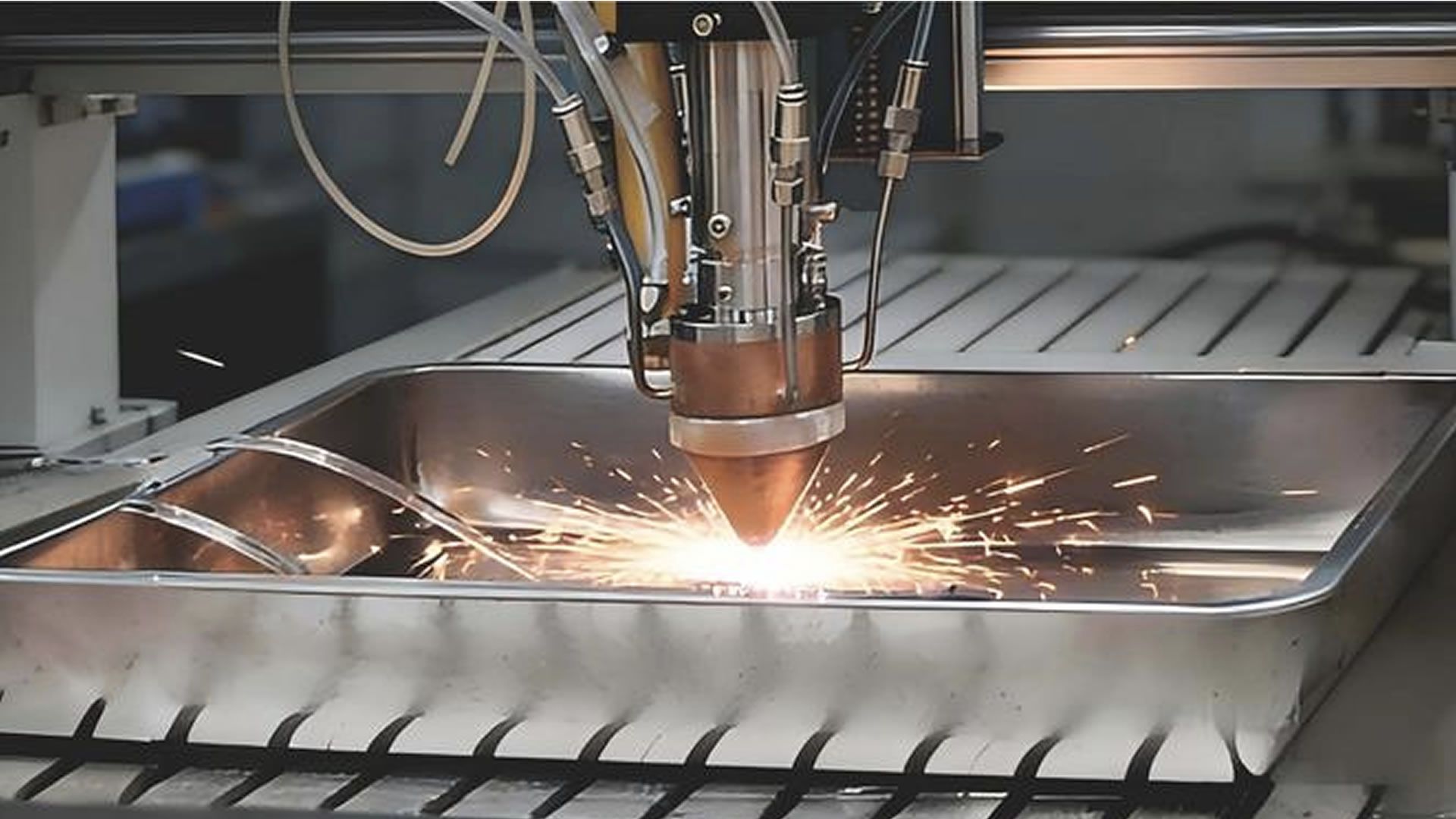
Utilizing a specialized laser metal 3D printer known as Laser Directed Energy Deposition (LDED), the team then produced components from this new alloy. The LDED technique involves melting metal powder with a laser and constructing parts layer by layer, a method commonly employed in aerospace, military, and heavy engineering applications. Notably, the process required only about six hours of treatment post-printing—far less than the multiple heat treatments typically needed for high-performance steels, which can extend over several days and incur significant costs.
The unique properties of this alloy stem from the incorporation of thin nano-particles within its structure. These nano-particles help to inhibit crack propagation when the metal is subjected to stress. Furthermore, the alloy features “shock absorber” zones designed to deform under stress rather than fracture. The incorporation of certain metals also contributes to its rust-resistant capabilities.
In typical steel formulations, inclusions like chromium often become locked in carbides over time, creating weak spots vulnerable to rust. In this new alloy, chromium is evenly distributed, with copper particles assisting in maintaining its position. This innovation significantly enhances corrosion resistance, with performance that rivals that of stainless steel.
Testing has demonstrated that the new steel exhibits a strength measuring approximately 1,730 MPa, which is highly commendable, alongside a ductility of 15.5% stretch before breaking—a roughly 30% improvement compared to its raw printed state. Such advancements are poised to have substantial implications for industries reliant on high-strength materials, including aerospace, military, energy, and heavy engineering. The enhanced characteristics could facilitate the manufacture of lighter and more durable aircraft components, as well as improve the sustainability of offshore wind turbines and oil and gas pipelines.
For those interested in a more in-depth examination of the research, the study is published in the International Journal of Extreme Manufacturing.
See also Hyperscalers Shift to Arm CPUs, Projecting 90% Adoption in AI Infrastructure by 2029
 LG Hosts Aimers Hackathon, Engaging 94 Young Developers to Optimize EXAONE AI Model
 AI Coordination Risks Emerge as Governance Lags in Enterprise Environments, Experts Warn
 Pelonomi Moiloa Launches Lelapa AI, Africa’s First Multilingual Language Model
 AI Transforms Finance: Key Trends and Insights Every Professional Must Follow















