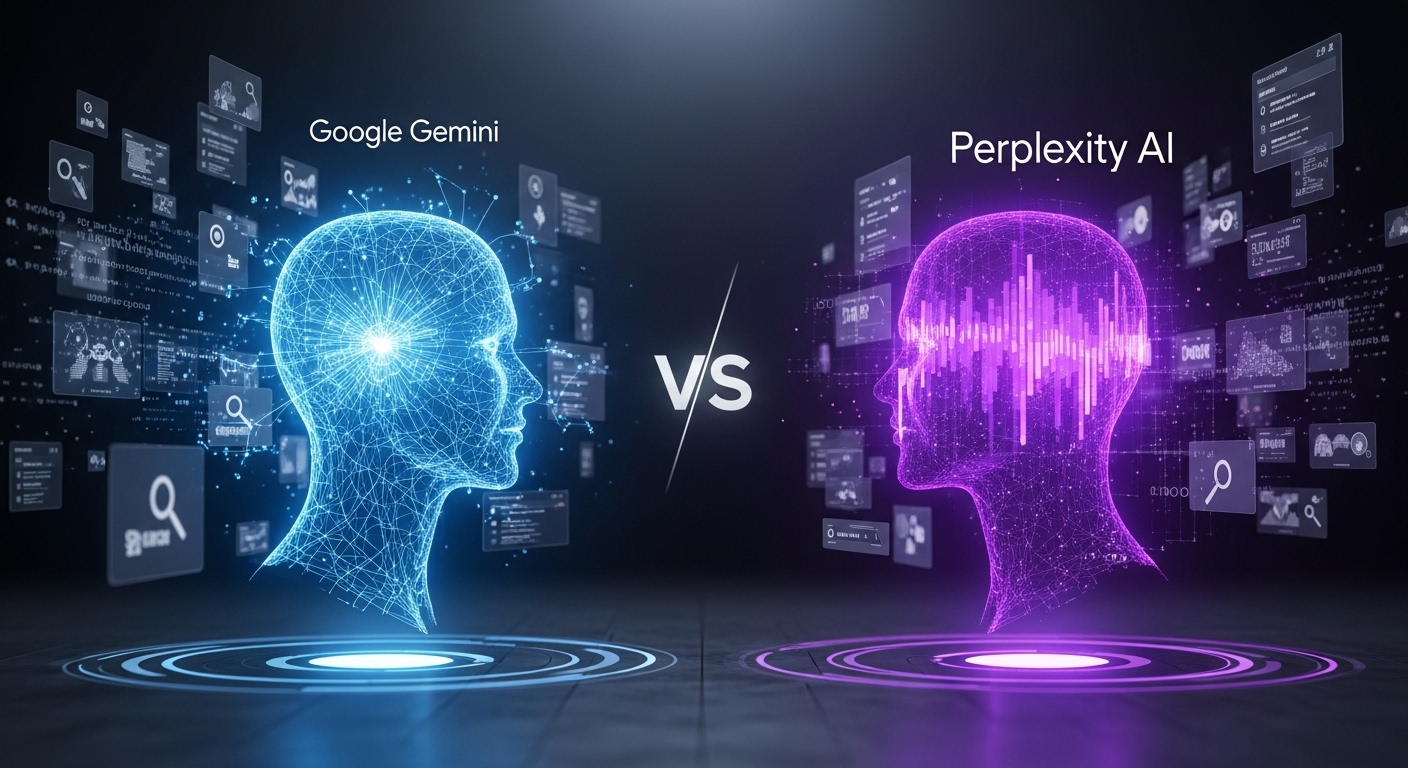
Google Gemini has overtaken Perplexity to become the world’s second-largest source of AI chatbot referral traffic to websites, according to data from March 2026 released by independent analytics firm Statcounter. This marks the first time Gemini has captured the number two position in the rapidly evolving AI discovery landscape.
In March 2026, Gemini accounted for 8.65 percent of global AI chatbot referrals, surpassing Perplexity’s 7.07 percent. Meanwhile, ChatGPT continues to dominate the market with a commanding 78.16 percent share of referrals, although this figure has decreased from 84.21 percent in April 2025. The rankings reveal not just platform popularity, but also which AI interfaces are effectively converting user queries into website visits, a metric that is becoming increasingly critical as AI evolves from merely answering questions to functioning as discovery engines that guide users to publishers, brands, and product pages.
Gemini’s rise was rapid, with its referral share more than tripling year-over-year from 2.31 percent in March 2025 to 8.65 percent in March 2026. The most significant momentum occurred between December 2025 and January 2026, when referrals surged from 4.74 percent to 7.20 percent following the rollout of Gemini 3 Flash as the default model across Google’s AI-powered search and Gemini app.
“Google has the advantage of integrating Gemini across its ecosystem—Search, Android, Workspace, and Chrome,” noted Aodhan Cullen, CEO of Statcounter. This integration is translating directly into growth in referral traffic, enabling Gemini to scale distribution rapidly while converting usage into measurable website visits.
In contrast, Perplexity has seen a decline in its referral share, which peaked at 12.07 percent in April 2025 and has since eroded by more than 40 percent over the past twelve months. This drop suggests that while strong use-case clarity around AI search exists, it does not guarantee sustained dominance when competitors with broader ecosystem reach enter the market.
Anthropic’s Claude emerged as March’s fastest-growing platform, more than doubling its share from 1.37 percent in February to 2.91 percent. Since April 2025, Claude’s referral contribution has expanded nearly tenfold, from 0.30 percent to 2.91 percent. However, weekly data indicates volatility, with Claude’s share peaking at 3.6 percent in week 12 before dipping to 2.49 percent in week 13, suggesting that initial growth may have been spurred by a news cycle rather than sustained user migration.
Microsoft Copilot continues to lose traction despite enterprise investments, falling from 5.18 percent in May 2025 to 3.19 percent in March 2026. Meanwhile, DeepSeek remains negligible at 0.02 percent.
The dynamics of the market are significant because AI referral traffic behaves differently from general chatbot usage. Referral traffic consists of pre-qualified audiences ready to take action—making purchases, reading content, and engaging with brands. Industry reports indicate that AI-sourced traffic converts at approximately twice the rate of standard organic search traffic, making these referral shares crucial for revenue outcomes.
Despite the fragmentation in the market, ChatGPT’s 78.16 percent share illustrates that OpenAI still commands the overwhelming majority of outbound traffic from AI interfaces. However, the gap is narrowing. In October 2025, ChatGPT sent 22 times more traffic than Gemini; by January 2026, that lead had reduced to eight times. If current growth rates persist, with Gemini expanding roughly 47 percent monthly while ChatGPT experiences slight declines, the competitive landscape could shift considerably before the year concludes.
For marketers and publishers in Nigeria, these findings suggest a need for strategic diversification. Optimizing content for a singular AI platform increasingly resembles reliance on a single search engine. The referral market is fragmenting rapidly, where platform proximity and ecosystem integration are becoming competitive advantages alongside content quality.
Currently, AI platforms collectively account for only 0.24 percent of global internet traffic, up from 0.15 percent in 2025. The category remains nascent, but the 1.6-times growth over the past twelve months indicates that the distribution channel is maturing quickly, with tangible winners and losers emerging. The battle for AI referral traffic is ultimately a battle for attention, which has become digital marketing’s most valuable currency.
See also Cohere and Hanwha Ocean Launch AI-Driven Design Pilot to Revolutionize Shipbuilding Processes
 Anthropic Surpasses $30B Revenue Run Rate Amid Strategic Partnerships with Broadcom and Google
 AI Enthusiast Forums Market Set to Surge from $3B to $15B by 2033, Driven by Community Growth
 Anthropic Reveals Claude Sonnet 4.5’s Emotion Signals Impacting AI Behavior and Decision-Making
 Google Launches AI Edge Eloquent, an Offline Dictation App with Speech Polishing Features