Almaty Technological University (ATU) recently convened an international expert dialogue focused on the future of engineering amid the rise of artificial intelligence. The roundtable discussion, titled “AI in Engineering: Tool, Partner or Competitor?”, drew leading academics and industry representatives from Kazakhstan and the United Kingdom. This event underscored the increasing role of universities as pivotal players in driving technological transformation.
In his opening remarks, Vice-Rector for Science and Innovation, Bakhodir Aliyev, highlighted the strategic importance of integrating AI into the university’s academic and research agenda. Feruza Malikova, Dean of the Faculty of Information Technology, emphasized the urgent need to modernize educational programs to meet the demands of the digital economy and the evolving labor market.
A key highlight of the event was a presentation by Arman Mazhikayev, a researcher from Loughborough University, who discussed the implications of artificial intelligence on firm productivity and workforce transformation. His insights echoed a significant global challenge: finding a balance between automation and the creation of new professional opportunities.
The discussion was enriched by a variety of applied case studies, showcasing innovative solutions in areas such as digital twins for the food industry, intelligent control systems, cybersecurity, and AI-driven content generation for education. Special attention was given to critical topics like data security, the Industrial Internet of Things (IIoT), and the seamless integration of AI into educational processes.
Experts at the roundtable reached a consensus that artificial intelligence should not be viewed as a competitor but rather as a high-tech partner for engineers. This perspective shift necessitates the development of new competencies, including critical thinking, data verification skills, digital literacy, and interdisciplinary collaboration.
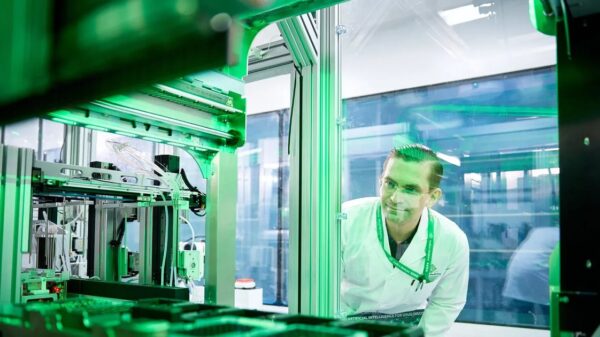
The program concluded with a tour of ATU’s research laboratories, which demonstrated the university’s capacity to foster international collaboration and innovation. The event marked a significant step in positioning ATU as a forward-looking institution that is shaping the agenda for digital and sustainable development.
As the landscape of engineering continues to evolve with the integration of AI, such dialogues will be crucial in preparing the next generation of engineers for the demands of the global economy. By embracing these changes, institutions like ATU are not only enhancing their educational frameworks but also contributing to the broader dialogue on the future of work in an increasingly digitized world.
See also AI-Optimized Renewable Systems Market to Reach $5.5B by 2035 with 29.1% CAGR
 IBASE Launches MBB1002 AI-Ready eATX Motherboard for Advanced AI Workloads
 Intel in Talks with Google, Amazon for Advanced Chip Packaging Services This Year
 Goldman Sachs Report: AI Job Losses Cause Lasting Economic Scars for 11M Workers
 BitValue Capital Launches $200M Africa Growth Fund II for AI and Digital Infrastructure