






















































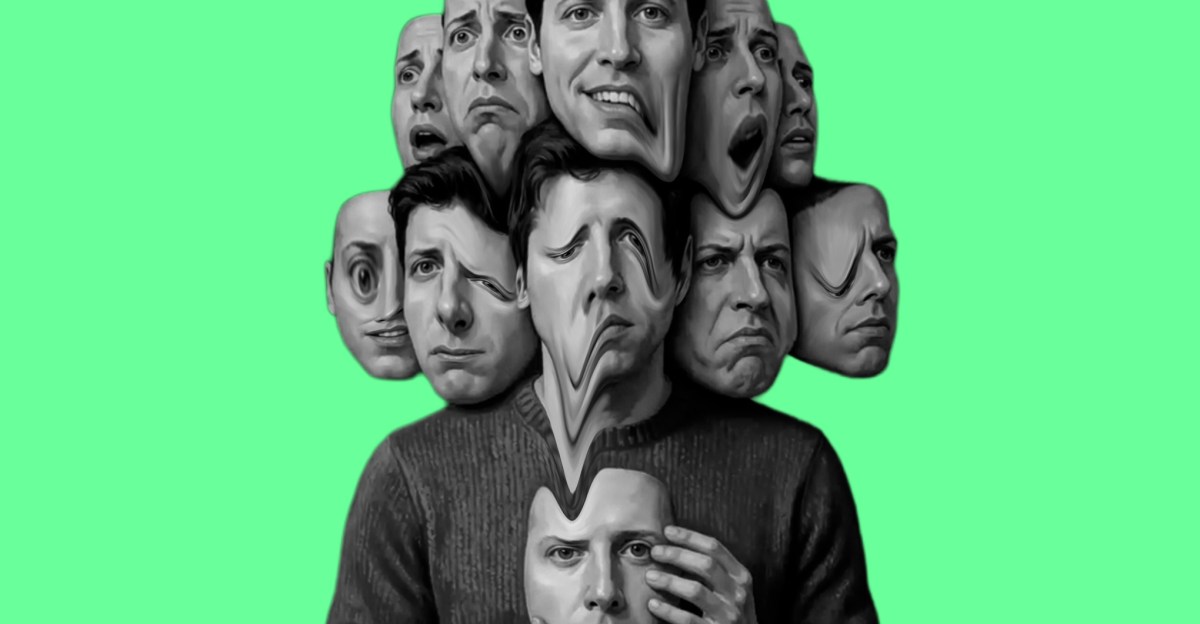
The New Yorker recently featured an illustration of OpenAI CEO Sam Altman that has sparked both intrigue and criticism. Created by mixed-media artist David Szauder, the artwork depicts Altman surrounded by a cluster of disembodied faces, some resembling him while others do not. The piece, which carries the note “Visual by David Szauder; Generated using A.I.,” is emblematic of the ongoing debates surrounding the use of generative AI in art.
Szauder, who has been exploring collage, video, and generative art for over a decade, described his process as a blend of traditional artistic techniques and AI tools. His approach involved programming his own AI systems and integrating archival materials, such as newspaper clippings and family photos. The unsettling expressions on the faces within the illustration convey a sense of distrust toward Altman, suggesting a deeper commentary on the complexities of AI’s role in society.
The involvement of The New Yorker, a publication renowned for its high standards in art and journalism, raises questions about the implications of using generative AI in professional illustration. Critics argue that such technology often flattens the creative process, reducing the artist’s intention to mere automation. Yet in Szauder’s case, the AI served as a tool rather than a replacement, requiring extensive manual refinement to correct imperfections and enhance the nuances of the faces depicted.
Szauder’s methodology sparked a discourse on the ethical dimensions of AI in the creative industries. He emphasized the importance of human oversight, stating, “I strongly believe that even in the age of AI, an image must first be formed in the human mind, not in the machine.” This perspective highlights a crucial distinction: while AI can generate images, the vision and artistry behind them must ultimately stem from a human creator.
Despite its artistic merits, the illustration has drawn criticism for its failure to fully engage with the profound questions that surround AI-generated imagery. The piece may succeed in depicting Altman’s multifaceted persona but offers little in terms of original commentary about the implications of AI in the creative realm. Critics have noted that the unsettling aesthetic often associated with AI-generated art risks becoming a cliché, overshadowing the potential for meaningful dialogue.
While some artists have found ways to use AI to enhance their work or streamline processes, many in the field express concern over job security as AI tools gain prevalence. The debate is further complicated by financial pressures on editorial publications, which often cut art budgets in times of economic uncertainty. As freelance artists navigate a challenging landscape, the decision to incorporate AI into creative practices remains contentious.
The New Yorker’s choice to feature Szauder’s work underscores the complex relationship between tradition and innovation in the arts. While some view the move as a step toward normalizing AI’s role in illustration, others see it as a potential threat to the integrity of artistic expression. The tension between embracing new technologies and preserving the human touch in art continues to be a focal point in discussions surrounding the future of creative industries.
Looking ahead, the broader implications of AI in art will likely remain a topic of intense debate. As publications and artists grapple with the integration of AI tools, the challenge lies not only in the creative possibilities they offer but also in the ethical responsibilities they impose. The evolving landscape of art and technology will require ongoing scrutiny, fostering dialogue that balances innovation with the preservation of human creativity.
See also Anthropic Unveils Claude Mythos Preview for Enhanced Cybersecurity, Triples Revenue to $30B
 Anthropic Reveals Claude Mythos Model for Uncovering Untapped Software Vulnerabilities
 US Officials Urge Cybersecurity Action as Anthropic’s Mythos Threatens $200B Damage
 AI Models Struggle with Help-Seeking; ProactiveBench Shows 60% Drop in Accuracy
 MegaTrain Achieves 120B Parameter LLM Training on Single GPU, Bypassing HBM Limits














