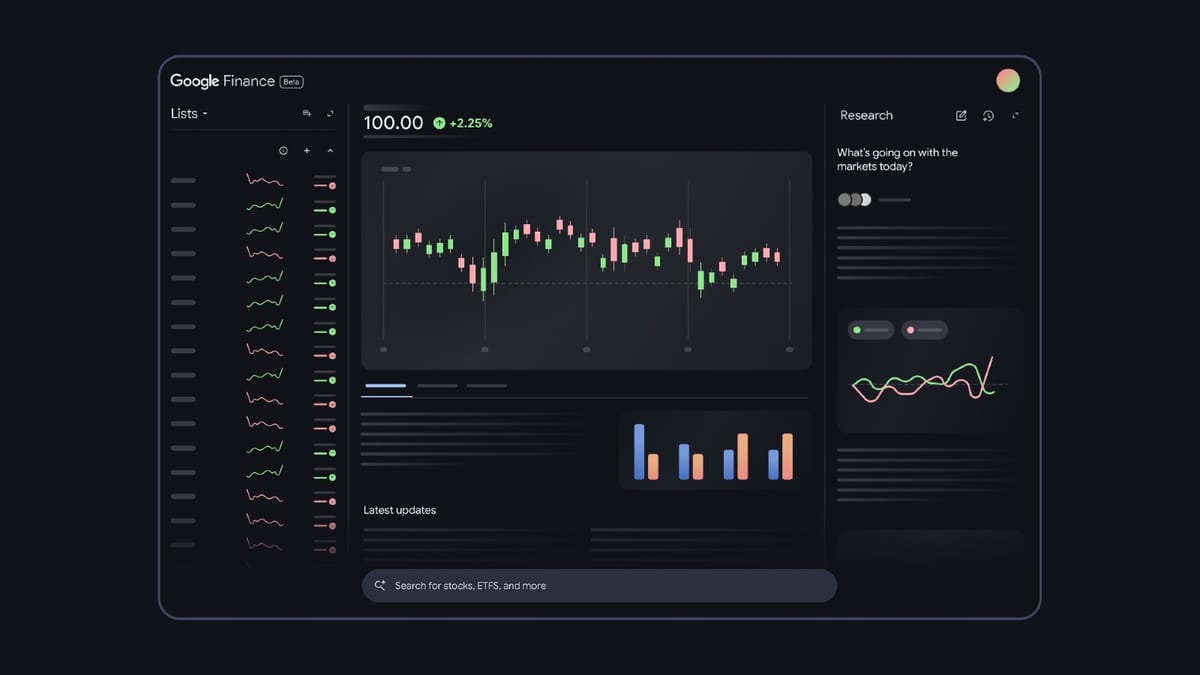
Google has expanded its AI-powered Finance platform to over 100 countries as of April 8, 2026, introducing a redesigned experience complete with local language support. Previously available only in the United States and India, this rollout was announced via the company’s official blog, The Keyword, marking a significant step in Google’s goal to enhance financial research accessibility globally.
The expansion includes markets such as Australia, Brazil, Canada, Indonesia, Japan, and Mexico, enabling users to interact with the platform in their native tongues. Google has advised users to consult its Help Center for the latest information on supported countries as the rollout continues over the coming weeks.
This global launch follows a developmental timeline that began on August 8, 2025, when Barine Tee, a Principal Engineer for Search, initiated a limited test of the new Google Finance in the U.S. That test introduced a natural language research interface, advanced charting tools, and an enhanced real-time data feed encompassing commodities and cryptocurrencies, illustrating a marked shift from the traditional Google Finance, which primarily served as a basic stock tracker.
New Features and Capabilities
The April 8 rollout equips users in newly supported regions with four key functionalities. The AI-powered research tool allows complex inquiries regarding stocks, market trends, or economic topics, returning comprehensive AI-generated responses with cited sources. Advanced visualizations introduce sophisticated charting tools that include technical indicators and various display modes. Real-time market intelligence is available through a revamped news feed alongside expanded data for commodities and cryptocurrencies. Lastly, live earnings tracking enables users to follow corporate earnings calls in real time, complete with audio streams, synchronized transcripts, and AI-generated summaries.
These features were gradually introduced in the U.S. market since August 2025, although the April 8 announcement did not clarify whether more complex functionalities like Deep Search and prediction markets data, launched in November 2025, are included in the international rollout.
The research panel within Google Finance leverages a natural language interface located at the bottom of the screen, where users can enter queries or choose from suggested options. Follow-up questions can be asked in the same session, with past interactions stored for reference. This design aims to streamline the research process, making it easier for users to extract relevant financial data.
Deep Search, a feature introduced on November 6, 2025, utilizes advanced Gemini models to conduct multiple searches simultaneously, delivering detailed responses quickly. This capability indicates Google’s ambition to position Finance as a powerful tool for users seeking comprehensive financial insights.
Chart customization tools further enhance the platform, enabling users to analyze price movements and technical indicators effectively. Features such as comparing securities and employing candlestick charts reflect Google Finance’s increased competitiveness with established financial platforms.
Alongside these enhancements, the earnings tracking experience launched on October 30, 2025, offers users various access levels to corporate reporting events, including a calendar of upcoming calls and the ability to stream live audio alongside real-time transcripts. These functionalities provide users with a nuanced understanding of corporate performance.
Another intriguing element is the prediction markets integration, which allows users to pose questions about future economic indicators directly through the Finance search box, providing insights based on crowd-sourced data.
The transition from U.S.-based testing to a global product has spanned eight months. Following the August 2025 U.S. test, Google expanded the experience through Search Labs, allowing for feedback collection before a broader launch. The first international market outside the U.S. was India, which received the platform with English and Hindi support.
The latest expansion signifies a commitment to broader market accessibility, with users needing to navigate to google.com/finance/beta to access the platform. Some features may require a Google account sign-in, impacting data handling and user experience continuity.
From a marketing perspective, this expansion invites scrutiny regarding its implications for financial publishers and advertisers. The integration of AI-driven research tools within Google’s ecosystem may divert user traffic away from traditional financial information sources. Furthermore, the exclusion of finance from the advertising eligibility of AI-generated summaries raises questions about the evolving landscape of digital finance marketing.
The April 8 rollout also emphasizes the importance of local language support. Previous expansions of Google’s AI capabilities have shown that localization significantly boosts adoption rates in non-English-speaking markets. This fully localized Finance platform represents a competitive challenge for local financial publishers and information providers.
As Google continues to refine its AI-powered financial offerings, the implications for users, advertisers, and financial publishers are profound, potentially reshaping how financial data is accessed and utilized globally.
See also Canadian Regulators, Bank Executives Address Cyber Risks from Anthropic’s Mythos AI Model
 DataPro Trains 80 Journalists on AI-Driven Financial Reporting Techniques
 UK Regulators Assess Cyber Risks of Anthropic’s AI Model Claude Mythos Preview
 Anthropic’s Mythos Raises Cybersecurity Concerns in U.S. Banking Sector
 London Fintech Round Secures $6M Seed for Automated Payroll and Treasury Solutions