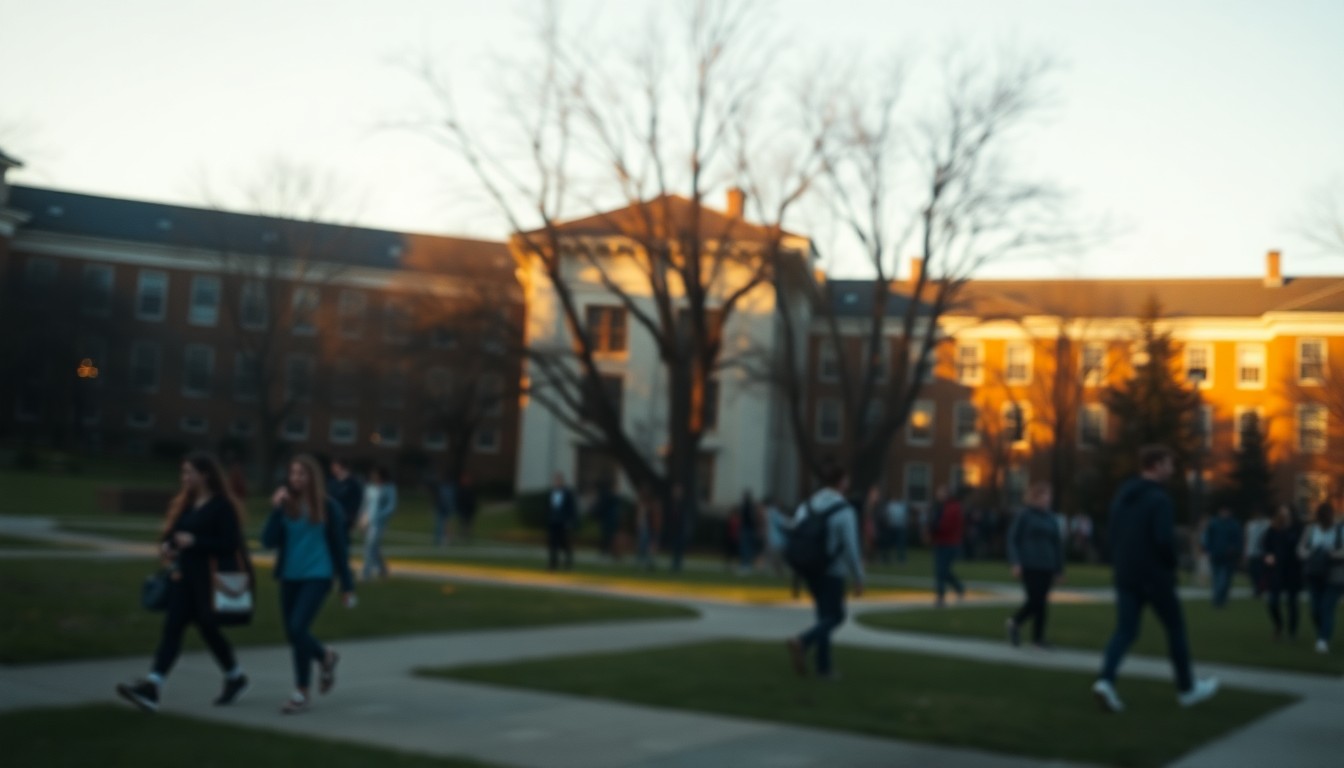
The future of higher education in America is at a critical juncture as institutions grapple with declining enrollment, political pressures, and the rising influence of artificial intelligence. This “demographic cliff,” characterized by a sustained drop in college enrollment due to declining birth rates, poses significant financial and academic challenges, particularly in regions like New England that are densely populated with colleges. As these institutions face unprecedented pressures, they are compelled to rethink academic programs, recruitment strategies, and alignment with the evolving job market.
Higher education’s challenges are not merely anecdotal; they carry profound implications for students, families, and the broader economy. Institutions are tasked with adapting to a shifting landscape marked by demographic shifts, political influences, and technological advancements. The urgency for change has never been more apparent.
The demographic cliff, defined as the point where the number of high school graduates begins to decline, is expected to continue through the 2020s. As a result, colleges are experiencing financial strain and are faced with the need for significant academic restructuring. Some institutions have attempted to mitigate enrollment shortfalls by recruiting international students, but efforts have been complicated by heightened visa restrictions imposed during the previous administration. Consequently, colleges are reassessing where and how they offer services, placing a greater emphasis on aligning academic offerings with the current labor market.
In this climate, the focus on return on investment (ROI) has intensified. Institutions are increasingly tracking the economic mobility and employability of their graduates. However, a notable challenge remains the lack of comprehensive data on ROI, making it difficult for colleges to effectively communicate the value of a degree. The rise of artificial intelligence further complicates this landscape, influencing which academic majors yield the best career outcomes for students after graduation.
Cole Clark, managing director for higher education at Deloitte, underscores the gravity of the situation, stating, “These pressures are forcing a reevaluation of long-standing practices in higher education.” This sentiment reflects a widespread acknowledgment that traditional models of education may no longer suffice in a rapidly changing world.
Recent analysis by the Federal Reserve Bank of New York highlights computer engineering as a top major, noted for its early-career median wage. However, this field is also particularly vulnerable to the shifting dynamics brought about by AI, adding complexity to the decision-making process for both institutions and prospective students.
As colleges and universities navigate these multifaceted challenges, the need for innovation and adaptability has never been greater. Institutions are called upon to not only rethink their academic programs but also to understand the changing demands of the workforce and align their curricula accordingly. This includes a closer examination of the skills that will be valued in the age of AI and the economic landscape of the future.
The implications of these changes are vast, affecting not only the institutions themselves but also the students who seek education as a pathway to economic opportunity. As higher education continues to evolve, the stakes are high, and the future of learning and career preparation remains uncertain yet crucial for societal advancement.
Ultimately, the landscape of higher education will be defined by how institutions respond to these emerging challenges. The ongoing reevaluation of academic practices, recruitment strategies, and alignment with the labor market will determine the continued relevance and value of a college degree in an increasingly complex world.
See also Gallup: 83% of Gen Z Adults Believe AI Will Hinder Learning Opportunities
 UNM Student Calls for Clear AI Usage Guidelines to Enhance Learning Outcomes
 ASU Faculty Warn Against Ineffective Hidden AI Prompts in Student Assignments
 China Launches National AI Education Plan to Equip Future Workforce with Essential Skills
 Google Unveils Gemini and NotebookLM Updates to Enhance Education with AI Tools