






















































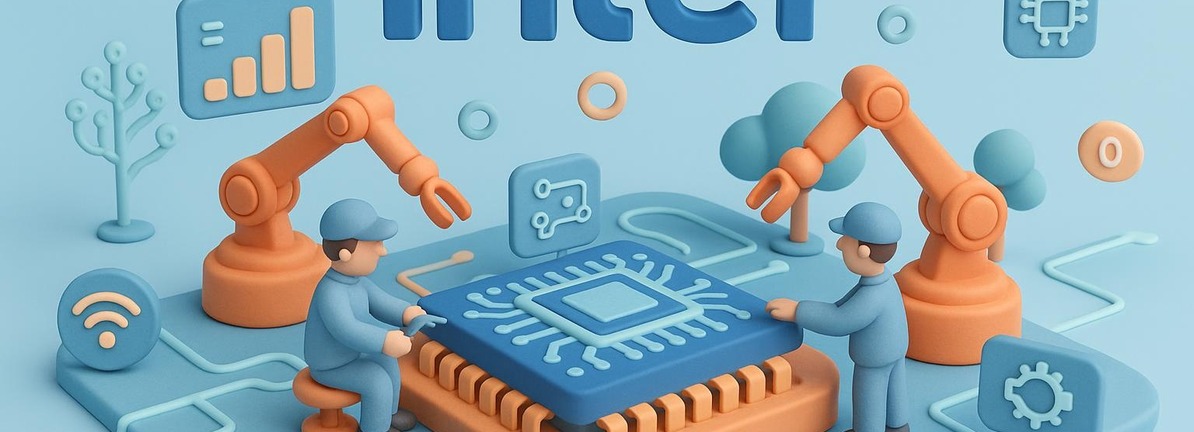
Intel and Google have expanded their multi-year partnership to co-develop AI data center infrastructure and custom chips, marking a significant advance in their collaboration. This expansion includes the introduction of new infrastructure processing units (IPUs) and a broader deployment of Intel Xeon CPUs within Google’s global AI cloud framework. The deal underscores the tech giants’ mutual commitment to enhancing AI capabilities in cloud computing.
In addition to its alliance with Google, Intel has also finalized its collaboration with Tesla, SpaceX, and xAI under the TeraFab initiative. This partnership aims to position Intel’s technology and manufacturing efforts at the center of a large-scale, U.S.-based AI and semiconductor expansion. These collaborations not only reinforce Intel’s position within the semiconductor landscape but also provide external validation for its foundry and AI roadmap.
For investors monitoring shares of Intel, listed on NasdaqGS as INTC, these agreements arrive amid a notable stock surge. As of the latest trading session, shares were priced at $62.38, reflecting a return of 23.8% over the past week, 30.0% over the past month, and an impressive 58.4% year-to-date. In stark contrast, Intel’s one-year return stands at 216.0% while the three-year return is at 100.4%. However, the five-year return is significantly lower at 5.9%, highlighting a recent turnaround in performance compared to its longer-term record.
The partnerships with Google and TeraFab provide tangible evidence of major clients committing to Intel’s manufacturing and AI strategies. The pivotal question ahead lies in Intel’s ability to transform these alliances into sustained, high-quality revenue streams from foundry and data center operations, all while managing the execution risks associated with multiple complex projects simultaneously.
Intel’s collaboration with Google aligns the company’s data center CPUs and custom infrastructure chips with long-term AI initiatives. Google’s commitment to integrate multiple generations of Xeon and expand the use of custom IPUs signifies confidence in Intel’s strategy to combine CPUs with accelerators as a viable alternative to GPU-centric offerings from Nvidia and Advanced Micro Devices. Conversely, the TeraFab initiative emphasizes Intel’s process technology and packaging as essential components of a major project aimed at enhancing robotics and AI computing capacity in the U.S.
This development supports the ongoing narrative that AI-related partnerships and advancements in foundry services could help Intel regain customer trust and attract external manufacturing business. However, it also raises concerns regarding execution complexity, as managing simultaneous projects for Google, TeraFab, and other partners could intensify the demands on Intel’s manufacturing capabilities and capital expenditure.
Investors should consider the potential risks associated with these developments. Execution risk is expected to rise as Intel navigates the intricacies of multiple custom programs while simultaneously investing in its foundry operations. Analysts have flagged several company-specific risks, including a volatile share price over recent months and shareholder dilution, which may compound potential downside if market expectations do not align with projected outcomes. On the positive side, these alliances anchor Intel within high-profile AI and semiconductor projects, potentially increasing foundry utilization and assisting in profitability recovery over time.
Looking ahead, it will be critical to monitor how swiftly Google deploys the newer Xeon generations and custom IPUs across its global cloud infrastructure. Additionally, Intel’s success in securing design wins against competitors like Nvidia and AMD will be crucial. For TeraFab, key indicators will include firm capacity plans, funding information, and evidence that Intel’s technologies are being utilized at scale rather than merely in pilot phases. Investors should keep a close eye on how these initiatives are reflected in Intel’s data center, AI, and foundry segment reports, and whether management’s commentary links these developments to changes in capital spending, profit margins, or identified risks.
To stay informed on the latest developments impacting Intel, interested parties are encouraged to follow community discussions and analysis.
See also Hugging Face Contributes Safetensors to PyTorch Foundation to Enhance AI Security
 Perplexity AI Achieves 50% Monthly Revenue Surge, Exceeding $450M ARR
 Microsoft’s Stable AI Growth and Reliable Dividends Attract Retirees Amid Market Volatility
 Microsoft Removes Copilot Buttons from Windows 11 Apps, Shifts AI Integration Approach
 Meta Launches Muse Spark, Boosting Stock 10% Amid Growing AI Competition














