






















































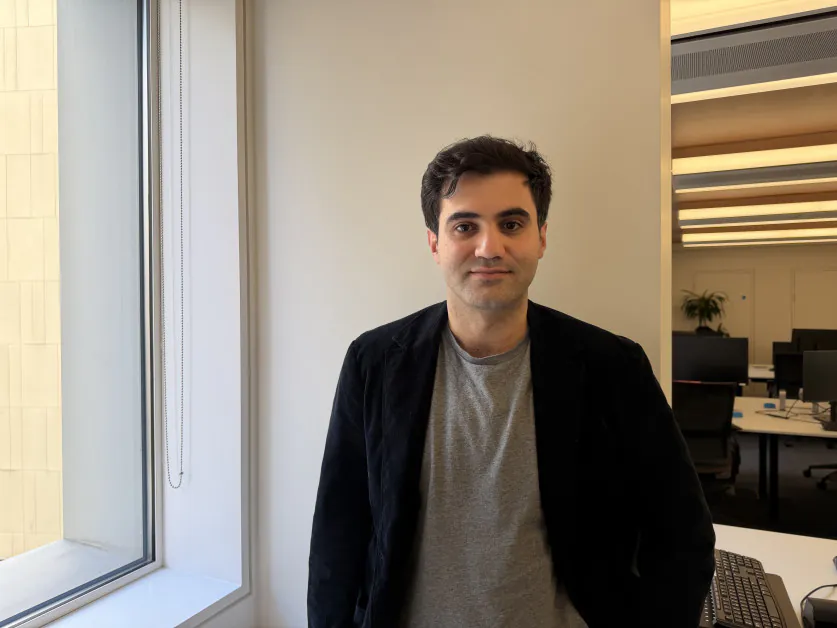
Nijat Hasanli, Head of Product at Lindus Health, is at the forefront of a transformation in clinical trials, advocating for a streamlined, technology-driven approach. Since joining the company in 2022, Hasanli has leveraged his extensive experience in healthtech, previously holding positions at OneCommerce and Downforce Technologies, to shape product strategy and execution at Lindus. His focus is on aligning product development with business outcomes and driving innovation within the fast-evolving healthcare sector.
Lindus Health operates as an AI-driven clinical trial company and functions as an “Accountable Research Organization,” providing biotechnology and pharmaceutical firms with enhanced control and efficiency in conducting clinical studies. By replacing traditional contract research models, Lindus offers a fully integrated, technology-first platform that spans trial design, patient recruitment, and data management, often resulting in trials completed significantly faster than industry standards. The company’s proprietary AI-native operating system delivers real-time visibility into trial performance, optimizing enrollment and outcomes to expedite the delivery of new treatments to patients.
In reflecting on the company’s inception, Hasanli noted a pivotal moment during their first trial that informed Lindus Health’s mission. “Innovation in trial delivery depends on ownership of the full trial, start to finish, with a coherent data pipeline,” he explained. This realization led to a focus on simplifying trial designs and enhancing visibility into operational dependencies, contrasting sharply with the traditional complexities often associated with large organizations in the sector.
The AI capabilities of Lindus Health are embedded within a platform known as Citrus™, which the company describes as an AI-native trial operating system. Rather than relying on a single AI application, Lindus employs a distributed approach, applying AI across various stages of trial execution. This comprehensive integration ensures that improvements in one area, such as protocol parsing, can enhance subsequent stages like study design and data collection, thus compounding efficiency and reducing errors. “We do not apply AI in clinical care workflows,” Hasanli added, emphasizing the company’s commitment to patient safety and quality control.
Addressing the issue of unnecessary data collection in clinical trials, which a recent Tufts study identified as a significant concern, Hasanli pointed to structural challenges within the industry. Fragmented teams often lead to overzealous data collection practices, diluting focus on the essential research questions. Lindus Health’s AI tools facilitate early identification of potential redundancies during trial design and enable agile adjustments during trial execution, thereby streamlining data collection processes.
Despite some skepticism about AI’s role in clinical trials, Lindus Health’s experience has shown a growing openness among sponsors and regulators. “There’s a general recognition that AI can improve productivity, efficiency, and quality,” Hasanli remarked, noting that sponsors have actively sought AI solutions even before they were discussed. This trend is attributed to the potential for AI to reduce trial durations and costs, as well as mitigate oversight in data handling.
As the conversation around AI in clinical trials evolves, so does the need for balancing automation with human oversight. Lindus Health prioritizes applications where human review is integral to the process. “We’re cautious about using AI where there’s no opportunity for human review,” Hasanli explained, highlighting the risks associated with high-stakes decisions made solely by automated systems.
To enhance patient experience and retention, Lindus Health employs design principles that prioritize clarity and ease of use in patient-facing materials. The company regularly consults with patient advocacy groups to refine communication strategies and ensure that study materials resonate with diverse participant populations. This collaborative approach is complemented by continuous feedback from research staff, fostering a learning culture that enhances future trial designs.
Looking ahead, Hasanli believes that the clinical research landscape must undergo significant changes to achieve faster and more reliable trials. “The industry has structural inertia,” he noted, highlighting the need for practitioners willing to innovate and prove new methodologies. AI holds promise for overcoming existing bottlenecks, but only if organizations are committed to creating the right conditions for its effective implementation.
Over the next five years, the relationship between AI, data, and trial design is expected to evolve, driven by the need for comprehensive data infrastructure. Organizations that harness end-to-end traceability from protocol design to data capture will likely reap the most benefits from AI. As the industry grapples with data fragmentation, the challenge will be to build robust systems that support reliable AI applications, ensuring that patient care remains at the forefront of clinical research.
See also AI Science Agents Face Benchmark Challenges: DiscoveryWorld Scores at 20%, ScienceWorld at 80%
 Machine Learning Advances Bone Imaging, Enhances Diagnosis and Treatment Monitoring
 OpenAI’s GPT-5 Conducts 36,000 Experiments, Highlighting AI’s Risks in Biology
 Evo 2 AI Model Predicts Genetic Disease-Causing Mutations from 128,000 Genomes
 New Deep Learning Framework Achieves 36.8% Boost in Drone-Based Vehicle ReID Accuracy






