






















































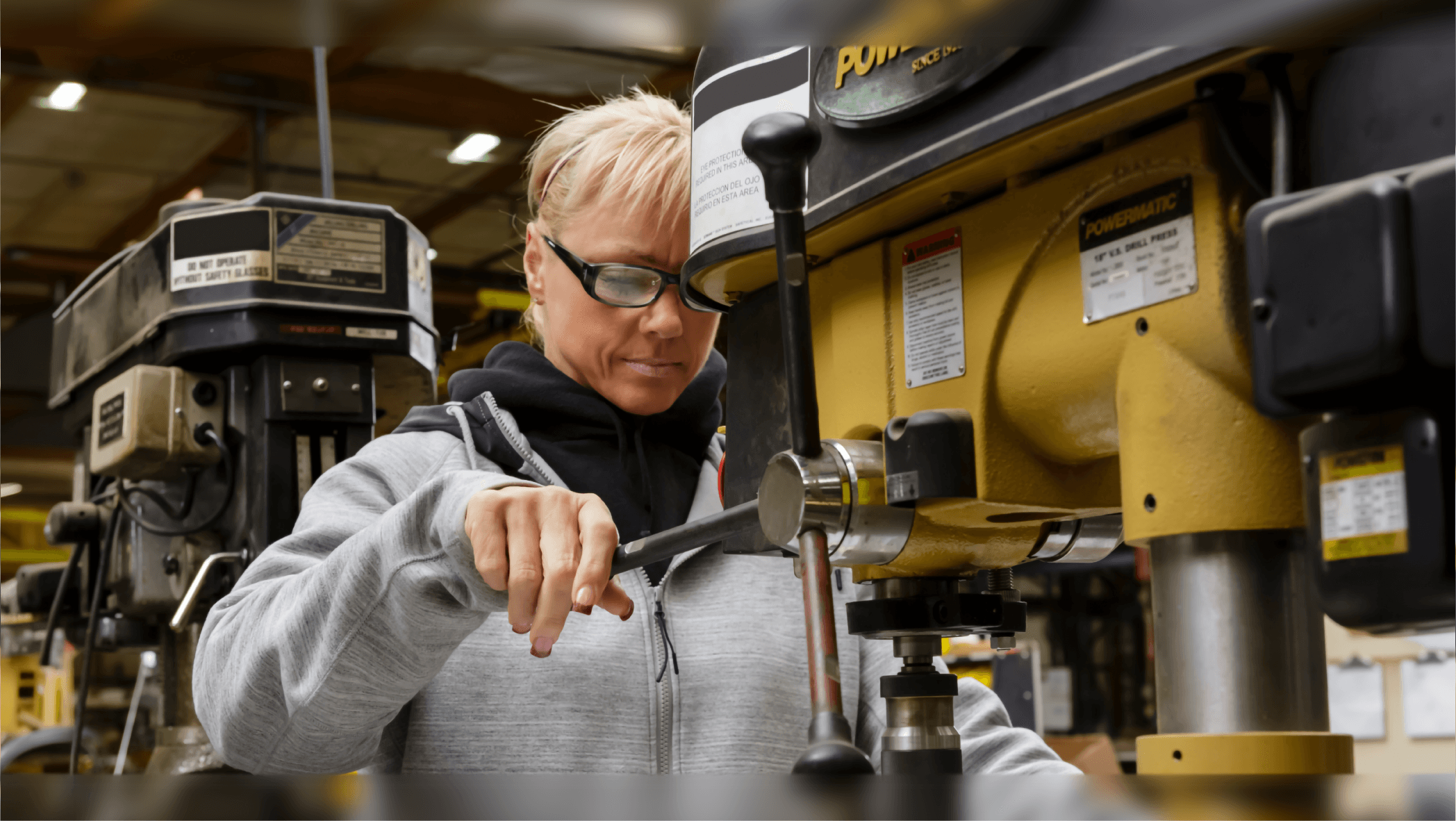
Google.org has announced a significant commitment of $10 million to train 40,000 manufacturing workers in artificial intelligence skills through a partnership with the Manufacturing Institute. This initiative is seen as one of the largest workforce AI training programs targeting blue-collar workers in the industrial sector, highlighting the urgent need for upskilling in an industry facing a technological transformation.
The initiative comes at a critical time as the manufacturing sector grapples with the implications of increased AI adoption. Companies are rapidly deploying machine learning models for applications ranging from predictive maintenance to quality control. However, many frontline workers lack the necessary technical expertise to effectively engage with these AI systems, creating a skills gap that could hinder progress in the sector. “We’re seeing manufacturers invest millions in AI infrastructure, then realize their workforce can’t actually use it,” noted one industry analyst, underscoring the urgency of addressing this disconnect.
The training program aims to cultivate practical AI literacy among workers, focusing not on turning them into data scientists but on equipping them with the skills needed to collaborate effectively with AI-powered systems. Trainees will learn to interpret AI-generated reports, troubleshoot flagged issues, and work with predictive maintenance algorithms. This foundational competency is increasingly viewed as essential, akin to basic computer skills two decades ago.
What sets this initiative apart is its scale. Training 40,000 workers represents a substantial portion of the U.S. manufacturing workforce, particularly in advanced sectors where AI adoption is accelerating. Google.org has been bolstering its investments in workforce development, and this manufacturing-focused program indicates the company’s recognition of industrial AI as a critical frontier for future growth.
The funding also aligns with a broader trend among tech giants aiming to bridge the skills gap. Microsoft has initiated AI training through community colleges, while Amazon has committed to upskilling 29 million people in cloud computing by 2025. Such commitments indicate a collective industry understanding that the value of AI products hinges on the workforce’s ability to utilize them effectively.
For the Manufacturing Institute, this funding addresses a pressing need. The organization has developed the curriculum and industry connections necessary for large-scale training but previously lacked the financial resources to reach a wider audience. Google’s $10 million investment dramatically changes the landscape, enabling the institute to expand programs that were previously limited to pilot phases.
The strategic implications for Google are notable as well. The manufacturing sector represents a significant enterprise market where competitors like Microsoft’s Azure and Amazon Web Services have gained traction. By providing workers with a grounding in AI fundamentals, potentially incorporating exposure to Google Cloud tools, the company is effectively nurturing future customers who are already familiar with its ecosystem.
As the Bureau of Labor Statistics projects a need to fill 4 million manufacturing jobs over the next decade, the importance of AI skills is rising. While initiatives like Google.org’s do not fully resolve the skills gap, they offer a model for how private sector investments can facilitate workforce adaptation amid rapid technological change.
The $10 million will be deployed over several years, with the Manufacturing Institute collaborating closely with manufacturers to tailor the curriculum to the actual needs of shop floors, rather than merely theoretical AI concepts. Initial training efforts are expected to focus on sectors where AI is already being implemented—such as automotive, aerospace, and advanced electronics—before branching into broader industrial applications.
Google.org’s investment in manufacturing AI training signifies a shift in how technology companies approach AI deployment. It is becoming increasingly clear that building robust AI models is not sufficient; a skilled workforce is essential for successful implementation. This $10 million commitment to upskill 40,000 manufacturing workers represents one of the most ambitious efforts to close the skills gap, and it could serve as a blueprint for similar initiatives across other blue-collar sectors like healthcare and logistics, where automation is outpacing training programs.
See also Stanford AI Report Reveals U.S.-China Model Gap Closing, 95% of AI Projects Fail
 Lumentum Secures $2B Nvidia Investment, Boosting AI Orders Through 2028
 Google DeepMind Hires Philosopher Henry Shevlin to Explore Machine Consciousness and Ethics
 Microsoft’s AI Integration Fuels 20% Revenue Growth Amid Intensifying Competition
 Meta Launches Muse Spark AI Model, Integrating Across Instagram, WhatsApp, and Facebook














