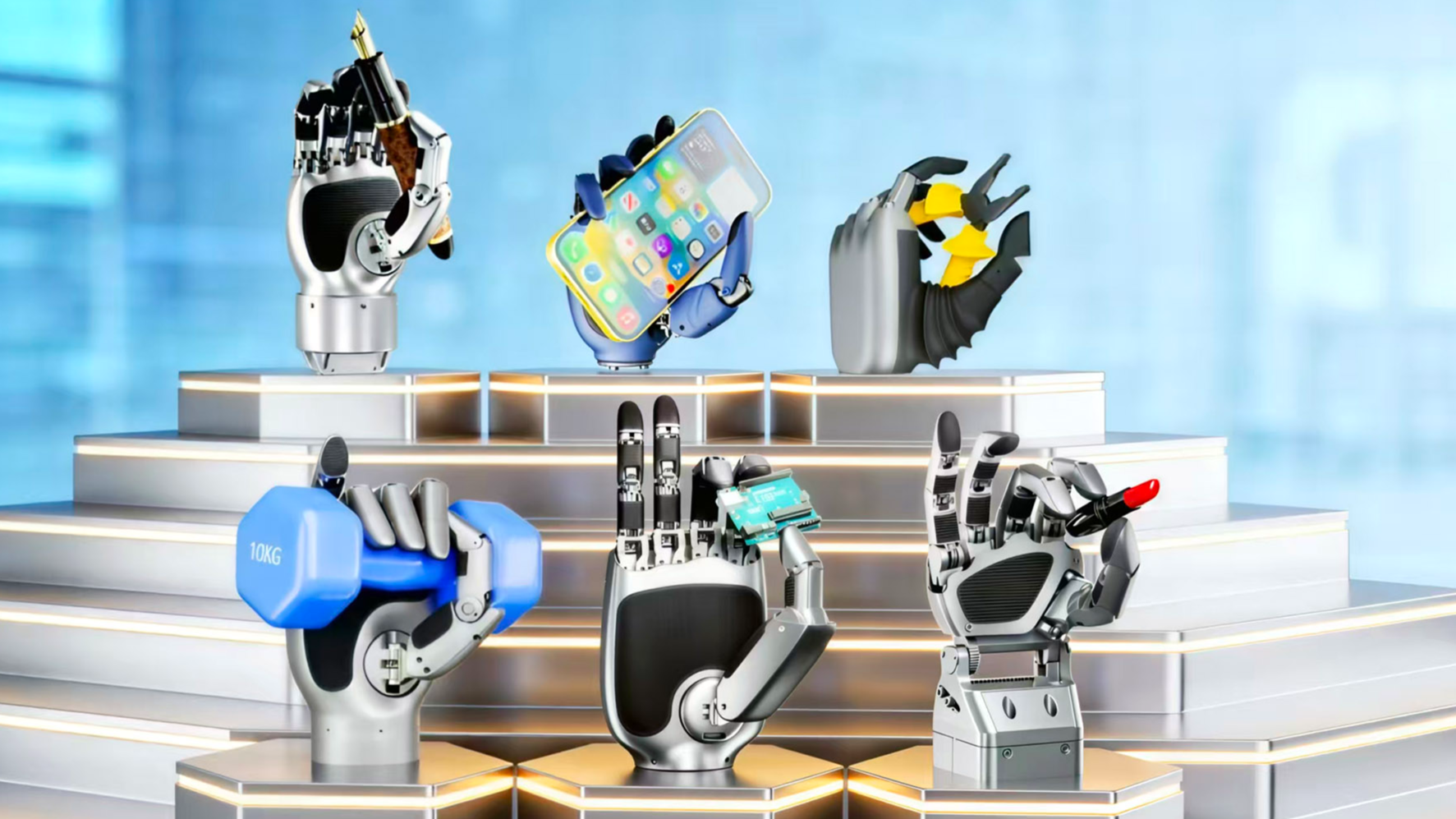
Young entrepreneurs in China are transforming academic research into startups, integrating embodied intelligence into both industry and daily life through a combination of curiosity and ambition. At Beijing’s Zhongguancun Science Park, innovations such as dexterous robotic hands exemplify this trend. Developed by Linkerbot, a Beijing-based company co-founded by Jia Xiaoyou, these robotic hands can perform a variety of tasks, from threading a needle to delivering gentle massages, highlighting their adaptability.
Jia, a graduate student at Tsinghua University, is leading her team to make a technology once considered niche and expensive more accessible for widespread use. “For robots to truly integrate into daily life, agile mechanical hands are indispensable,” Jia said. “Without them, robots can only handle simple interactions, rather than solving real-world problems.” Linkerbot’s systems are now recognized globally, with the company producing 80% of similar units worldwide.
Jia’s entrepreneurial journey began in 2023, during a time when embodied intelligence was still emerging. She noted that many overseas products cost over 1 million yuan ($140,000), making them impractical for large-scale adoption. Her objective is to reduce prices to below 50,000 yuan, with entry-level models priced as low as 6,000 yuan.
This entrepreneurial spirit is emblematic of a broader shift among young Chinese innovators. As Shenzhen prepares for a significant Asia-Pacific gathering later this year, themes like openness and innovation take center stage. Many young entrepreneurs are part of the Zhongguancun U30 program, launched in 2015 to support founders under 35. Nearly 7,000 participants have engaged with the program, fostering a growing community focused on cutting-edge technologies such as artificial intelligence and robotics.
For Jia, the U30 program is more than just recognition; it serves as a platform for idea exchange and peer connection. “I have met many like-minded entrepreneurs,” she remarked. “Support from local authorities has also helped us gain exposure at important events.”
Another U30 member, Lai Jiancheng, is working on electronic skin technology, which aims to endow machines with a sense of touch. Lai, a chemistry major and founder of Tachin, explained the complexity of creating electronic skin, noting it cannot be assembled from existing components and requires a long industrial chain to develop. After years of development, his team established their first production line by the end of 2025, a significant achievement that involved integrating various technologies.
Entrepreneur Yuan Zhichao, the founder of i-Sense, is focused on creating optical inspection modules essential for defect detection in semiconductor manufacturing. Yuan pointed out that high-end inspection systems have traditionally relied on imported optical components, a bottleneck for achieving self-reliance in semiconductor equipment. His company has developed a new autofocus imaging system capable of detecting microscopic defects, which is gaining traction among clients in wafer inspection and advanced packaging.
“Through sustained technological accumulation and reliable products, we aim to strengthen the domestic foundation for precision optical technologies,” Yuan stated, reflecting on the challenges faced in transitioning from lab to large-scale production.
In a similar vein, Fu Zhi turned his observations about energy use during his doctoral research at Tsinghua University into a viable business model. By noting the mismatch in energy generation and consumption, he founded ComNergy Tech Limited in 2023, creating an AI-driven scheduling platform for idle computing resources. This network allows for the efficient sharing of computing capacities among AI companies and research institutions.
Fu’s vision extends internationally, facilitating cross-border sharing of computing resources. “Through this, we are creating a new model of global technological cooperation,” he explained, emphasizing a shift in mindset among Chinese tech entrepreneurs. “Innovators in China are often seen as simply catching up, but we should aim to lead, not just follow.”
The journeys of these young entrepreneurs highlight a transformative period in China’s tech landscape, where academic insights are being leveraged to create practical solutions that not only address local needs but also position China as a pivotal player in the global technology supply chain.
See also Pennsylvania Launches Keystone AI + Quantum Factory to Propel Statewide Tech Innovation
 Gizmo AI Learning App Surpasses 13 Million Users, Raises $22 Million for Adaptive Quizzes
 Apple Unveils Groundbreaking ML Advances at ICLR 2026, Including 665× Faster RNN Training
 Sony’s ‘Ace’ Robot Achieves Expert-Level Table Tennis Play, Defeats Elite Human Players
 GAIA Initiative Uses U-Net to Identify Lion Roars with 90% Accuracy from Collar Data