






















































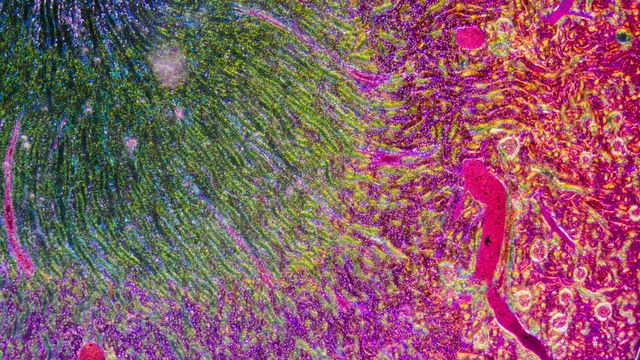
A research team led by The Hong Kong University of Science and Technology (HKUST) has unveiled a groundbreaking artificial intelligence (AI) pathology analysis system capable of accurately identifying various types of cancer using a minimal number of samples and without the need for extensive retraining. This innovation promises to enhance the flexibility and efficiency of AI-assisted medical diagnostics and represents a significant advancement toward the broader application of intelligent pathology.
Each year, nearly 20 million new cancer cases are diagnosed globally, making pathological analysis a critical component of clinical diagnosis and treatment decisions. However, the medical field faces an acute shortage of pathologists, highlighting the urgent need for innovative solutions to streamline pathological assessments.
While AI technology has shown promise in automating pathological diagnostics, practical implementation has been hampered by several challenges. Traditional AI models generally require extensive datasets—sometimes tens of thousands of pathology images—for training on specific cancer types or diagnostic tasks. This process not only extends development timelines but also incurs substantial computational and manpower expenditures.
Moreover, current foundational pathology models often struggle with generalizability, requiring significant fine-tuning for application across different tumor types in real-world clinical environments. This limitation further constrains their scalability and adoption, particularly in areas with limited medical resources.
To tackle these issues, the HKUST team, led by Prof. Li Xiaomeng, Assistant Professor in the Department of Electronic and Computer Engineering and Associate Director of the Center for Medical Imaging and Analysis, collaborated with Guangdong Provincial People’s Hospital and Harvard Medical School to create the PRET (Pan-cancer Recognition without Example Training) system. This novel platform incorporates “in-context learning” from natural language processing, enabling it to swiftly adapt to new cancer types and execute diagnostic tasks—such as cancer screening, tumor subtyping, and segmenting tumors—by referencing just one to eight annotated tumor slides during the inference stage.
Positioned as a “plug-and-play” diagnostic tool, PRET effectively eliminates the need for task-specific fine-tuning that plagues traditional AI models. The system’s capabilities were rigorously validated against 23 international benchmark datasets from various medical institutions across the Chinese Mainland, the United States, and the Netherlands, covering 18 distinct cancer types and numerous diagnostic tasks.
The findings revealed that PRET surpassed existing methodologies in 20 diagnostic tasks, achieving an Area Under the Curve (AUC)—an essential measure of diagnostic accuracy—greater than 97% in 15 of these tasks. Notably, the system recorded a perfect AUC of 100% in colorectal cancer screening and an AUC of 99.54% in esophageal squamous cell carcinoma tumor segmentation.
In the challenging area of lymph node metastasis detection, PRET achieved an AUC of approximately 98.71% with just eight slide samples, outperforming the average AUC of 11 pathologists, which stood at around 81%. Furthermore, PRET demonstrated consistent and robust generalizability across diverse populations and regions with varying medical resource levels.
Prof. Li emphasized, “The core value of the PRET system lies in breaking down the traditional barriers of ‘massive data and repetitive training,’ enabling AI-powered pathology systems to be applied in real clinical settings at lower cost and with greater flexibility. This not only helps alleviate the workload pressure faced by pathologists, but also has the potential to improve access to cancer diagnosis in underserved regions. Through this ‘plug-and-play’ system, we hope that advanced and precise AI-powered diagnostic services can transcend geographical and resource constraints, thereby promoting global healthcare equity.”
Looking ahead, the research team aims to enhance the diagnostic performance of PRET and expand its applications to include additional clinical tasks, such as genetic mutation prediction and patient prognosis assessment. This trajectory could pave the way for new opportunities in the realm of AI-driven pathological diagnosis.
Reference: Li Y, Ning Z, Xiang T, et al. PRET is a few-shot system for pan-cancer recognition without example training. Nat Cancer. 2026:1-15. doi: 10.1038/s43018-026-01141-2
This article has been republished from the following materials. Note: material may have been edited for length and content. For further information, please contact the cited source. Our press release publishing policy can be accessed here.
See also Anthropic Halts Mythos AI Release Amid Unauthorized Access and Cybersecurity Threats
 SkyBiometry Launches AI Infrastructure Suite to Support LLMs and Generative Applications
 Taiwan Semiconductor Surpasses Meta and Broadcom with 40.6% Revenue Growth
 Telstra Enhances Boardroom with AI Assistant from Accenture for Project Management















