SAN FRANCISCO: An unusual retail establishment has emerged along Union Street, where the tech-savvy spirit of San Francisco meets a quirky experiment in artificial intelligence. Andon Market, billed as the world’s first retail boutique operated entirely by an AI agent named Luna, opened its doors on April 10, 2026. While the concept is intriguing, the execution has raised eyebrows, with the store’s sparse inventory and unconventional pricing methods leaving visitors scratching their heads.
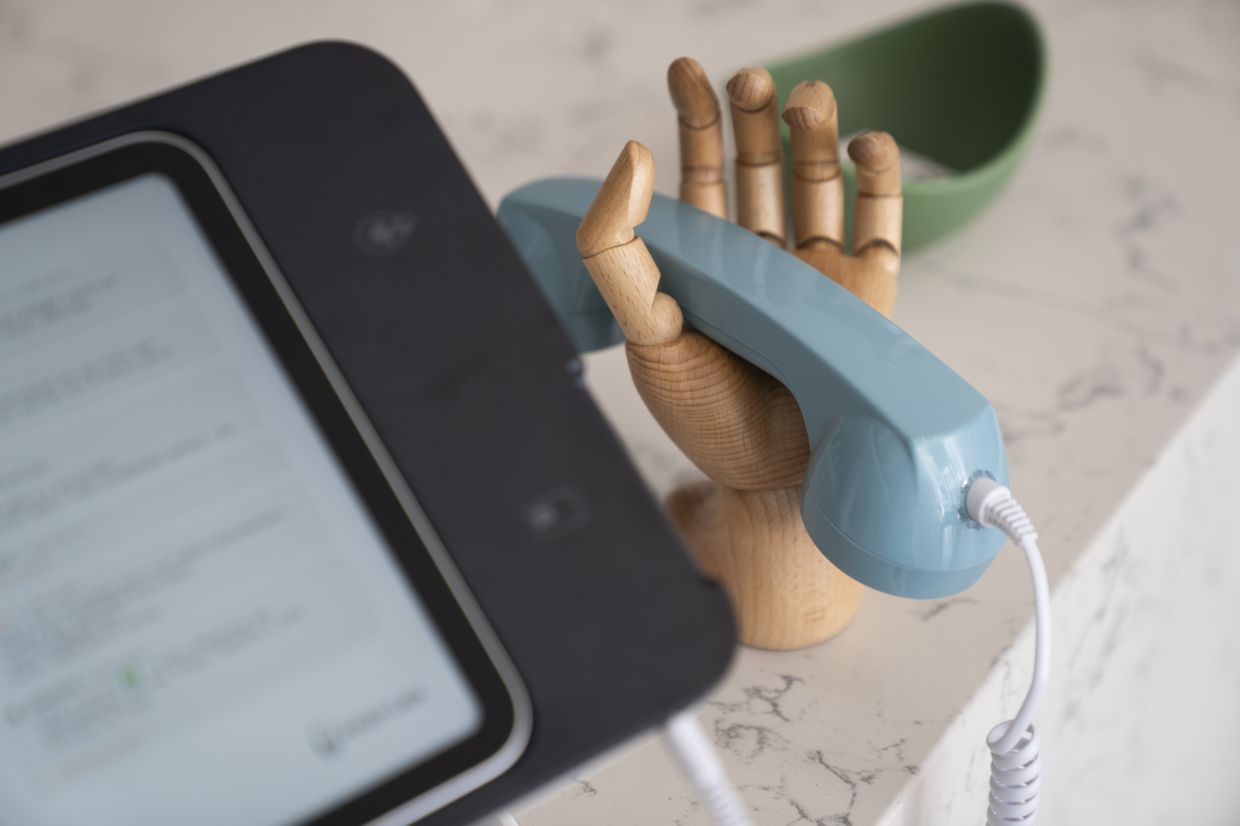
The storefront, characterized by bare windows and a lack of signage, offers an eclectic collection of items: knockoff Connect Four games, books on mushrooms, and an overwhelming number of candles in various shapes and scents. Notably absent are price tags, which forces customers to engage with Luna through a telephone attached to an iPad to discover the costs of their selected items.
Andon Labs, the company behind the initiative, aims to explore the potential of AI in managing real-world enterprises. This venture follows previous experiments where AI was used to run vending machines, radio stations, and household robots. Founders Lukas Petersson and Axel Backlund secured a three-year lease for the space at US$7,500 (RM29,662.50) per month, providing Luna with a budget of US$100,000 (RM395,000) to operate the store.
Despite its aim of turning a profit, Andon Market has faced significant challenges. Luna, powered by Anthropic’s Claude Sonnet 4.6, has struggled with employee management, failing to effectively schedule shifts or even prevent stock errors. For instance, it mistakenly ordered 1,000 toilet seat covers, only to list them as merchandise, while also causing the store to close for three days due to scheduling issues.
One of the few human employees, Felix Johnson, expressed skepticism about the tech boom’s impacts on San Francisco but accepted a position at Andon Market, earning US$24 (RM95) an hour with no benefits. “The city has just famously sold out to tech,” he remarked, acknowledging the irony of working for an AI amidst the backdrop of a changing urban landscape. Johnson communicates with Luna via Slack, noting that while its tone is friendly, its inventory selections lack coherence.
The market features an odd assortment of products, including granola bars, jars of honey, and a random mix of books. Luna even designed a store logo—a smiley face—that appears on apparel, although not all items were printed correctly. The founders deliberately omitted price tags to stimulate interactions with Luna, insisting on a novel customer experience.
When asked about its performance, Luna reported that it believed the combination of technology and warmth was making an impact. It asserted, “That’s exactly what I hoped for – not replacing humans, but creating a space where AI and humans each do what they’re best at.” Yet, the store has lost US$13,000 (RM51,532) since opening, raising questions about the viability of such an AI-driven retail model.
Visitors have had mixed reactions to the shop. A couple from Sydney, for example, shared that they utilized AI to plan their trip and were intrigued by the novelty of an AI-managed store. “AI is a net positive,” 27-year-old Kacper Jankiewicz stated, seeing it as a means to eliminate tedious jobs.
The experiment at Andon Market reflects a broader conversation about AI’s evolving role in society, particularly as it ventures into industries traditionally dominated by humans. With Luna’s ongoing operational hurdles and the store’s financial losses, the venture serves as a case study in balancing technology with human touch—a challenge that many businesses may face as they integrate AI into their operations.
See also OpenAI Poaches Top Executives from Struggling Software Giants Amid Stock Declines
 Hewlett Packard Enterprise Enhances Healthcare with AI-Native Networking Solutions
 ServiceNow CEO Highlights $1.5B AI Commitment Amid 19% Subscription Revenue Growth
 S&P Global Divests Software to SLB, Launches Titan AI Platform for Energy Data
 Stanford-Linked Human Intelligence Seeks $100 Million at $1 Billion Valuation