
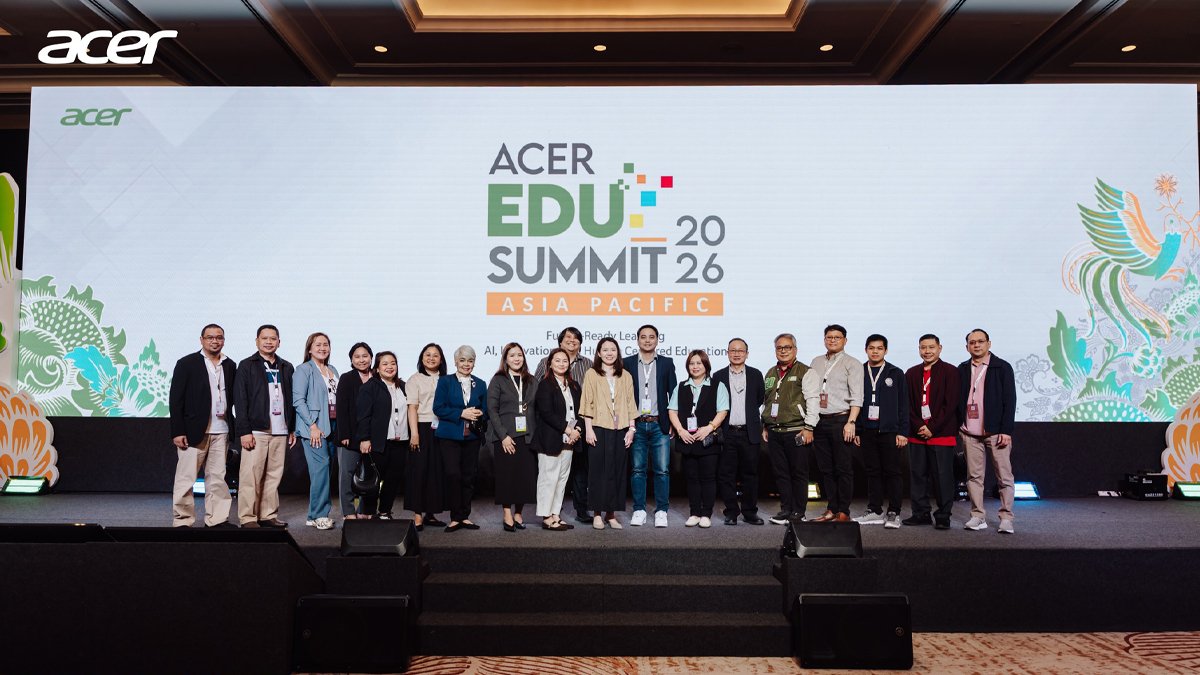
Acer concluded its Acer Edu Summit Asia Pacific 2026, emphasizing its commitment to enhancing education across the region in light of artificial intelligence (AI) transforming learning methodologies. The summit, themed “Future-Ready Learning: AI, Innovation, and Human-Centered Education,” took place in Jakarta on April 22-23 and gathered educational stakeholders from various countries to promote inclusive AI adoption and to drive significant educational transformations.
The event marked a continuation of the summit series, which debuted in 2025, and attracted delegations from Australia, Hong Kong, India, Indonesia, Malaysia, Singapore, Sri Lanka, South Korea, Taiwan, Thailand, the Philippines, and Vietnam. This diverse participation underscored Indonesia’s strategic role within Acer’s digital education ecosystem. The summit provided a collaborative platform for educators, policymakers, and industry leaders to share insights and explore the effective integration of technology to improve educational outcomes.
Andrew Hou, President of Pan Asia Pacific Operations at Acer Inc., stated, “The Acer Edu Summit Asia Pacific reflects our ongoing commitment to shaping the future of education through technology. Through this event, we are also strengthening regional collaboration among countries to drive collective progress in education. At Acer, we believe that meaningful transformation happens when innovation is guided by human needs. This summit is part of our continuous efforts to empower educators, institutions, and policymakers to build an inclusive, future-ready learning ecosystem across the region.”
During the two-day event, sessions focused on how AI can be seamlessly woven into educational frameworks. Discussions ranged from personalized learning to enhancing digital literacy, all underscoring the evolving role of educators in the age of technology. The summit took a human-centered approach, advocating for a collaborative ecosystem where technology and educators unite to foster creativity and unlock student potential.
This year’s summit highlighted groundbreaking work in AI education by the MIT Media Lab’s City Science Group. Dr. Michael Lin, a Research Scientist at MIT, along with Dr. Wolfgang Gruel, a Professor at Stuttgart Media University, introduced the Learning Foundry for AI and Robotics (FAIR). They illustrated how this initiative harnesses AI to facilitate personalized learning experiences and prepare students for future challenges. Their presentation examined the intersection of emerging technologies and education, demonstrating how they empower learners to tackle real-world urban issues.
Diverse perspectives were a hallmark of the summit, with academic and industry leaders sharing insights on AI’s role in education. Jun-Yu Fan, President of Chang Gung University of Science and Technology, presented a transformative vision for pedagogy titled “The Algorithm of the Nursing Soul,” which advocates a shift from rote learning to AI-driven clinical insights. Complementing this academic discourse, Charles Le, AI Solutions Senior Manager at Altos Computing, stressed the importance of establishing robust educational infrastructure to accelerate AI implementation.
Altos Computing showcased its full-stack AI infrastructure, featuring the Altos BrainSphere™ R680 F7 AI server and several AI workstations. Their offerings, optimized by the Altos aiWorks GPU resource management platform, aim to streamline the AI lifecycle for educational institutions, bridging the gap between infrastructure setup and the deployment of autonomous AI agents.
Acer introduced its latest Copilot+ PCs, powered by Intel® Core™ Ultra Series 3 processors, as optimal devices for modern classrooms. This lineup includes the TravelMate P4 Spin 14 AI and TravelMate P2 AI series, which are designed with portability and versatility in mind to enhance teaching and learning experiences. The TravelMate P4 Spin 14 AI, equipped with a touchscreen and stylus, promotes interactive classroom activities, while the TravelMate P2 AI series ensures long battery life for extended use, thereby supporting collaborative learning environments.
The Acer Edu Summit Asia Pacific 2026 is integral to Acer’s mission of fostering collaboration between education, technology, and public policy. Through this initiative, Acer is dedicated to leveraging technology to establish a more adaptive and inclusive educational framework, reinforcing the importance of a human-centered approach in shaping the future of learning.
See also Schools Ban Screens While Pushing for AI Literacy: A New Approach Emerges
 UK and DepEd Strengthen EdTech Partnership to Boost Learning in Philippines
 Star Trek Insights: Reimagining Ed Tech for Human-Centered Learning Environments