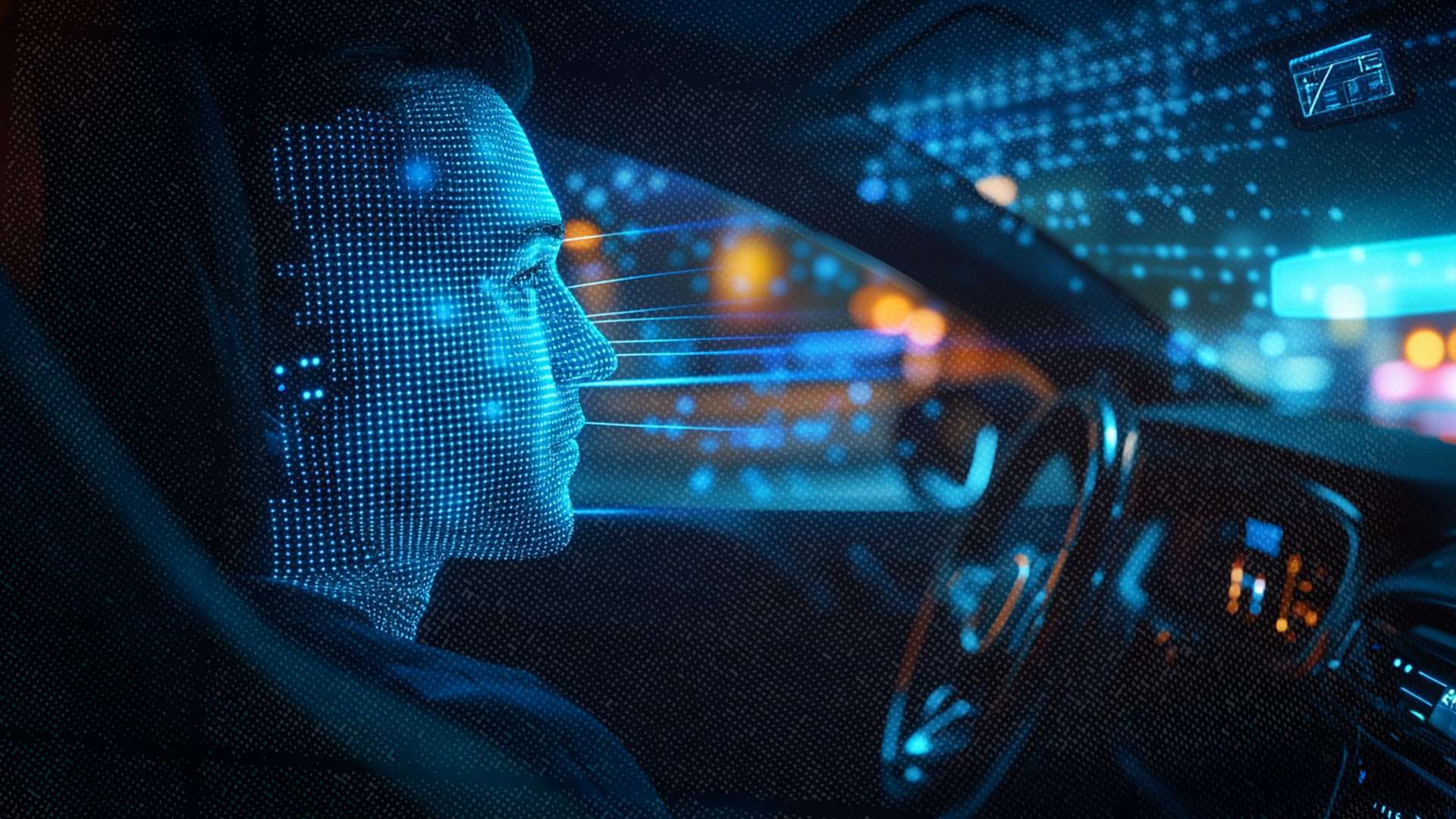
This week, a faction of House Republicans reignited a longstanding debate over a federal mandate requiring cars to incorporate impaired driving technology, raising concerns regarding privacy and the potential for increased surveillance. The discourse centers around the “kill switch” technology, a term often used by critics to denote systems that could disable vehicles if impairment is detected.
The controversy first emerged in 2021 when Congress passed the HALT Drunk Driving Act as part of the bipartisan infrastructure law. This provision mandates that new vehicles must be equipped with “advanced drunk and impaired driving prevention technology.” According to the bill, such systems would “passively monitor the performance of a driver” to accurately identify potential impairment, automatically preventing or limiting vehicle operation if necessary. Features like driver eye tracking, already found in some vehicles, could be part of this technology.
While the legislation does not explicitly use the term kill switch, critics maintain that this does not diminish the mandate’s implications. “The law’s language could not be more clear,” stated Jon Miltimore, formerly a researcher at the Foundation for Economic Education, in a 2023 commentary. He highlighted that the requirement for new vehicles includes a computer system to monitor drivers and inhibit vehicle operation if impairment is detected.
In response to these privacy concerns, several lawmakers have attempted to halt the law’s implementation. In January, Representatives Thomas Massie (R–Ky.), Scott Perry (R–Pa.), and Chip Roy (R–Texas) proposed an amendment to the Consolidated Appropriations Act aimed at defunding the mandate. Massie articulated his concerns on the House floor, stating, “The car itself will monitor your driving, and if the car thinks that you’re not doing a good job driving, it will disable itself.” He further emphasized that this scenario places excessive power in the hands of the vehicle’s technology.
The amendment, however, failed to pass, with a vote tally of 164 in favor and 268 against, including 57 Republicans opposing the measure. In contrast, Mothers Against Drunk Driving, an organization instrumental in drafting the legislation, asserts that the technology’s sole purpose is to “prevent deaths and injuries caused by drunk driving.” They have clarified that they do not support any system that would collect, store, or sell driver data.
Robert Strassburger, president of the Automotive Coalition for Traffic Safety, a partner in developing the system, told the Associated Press in 2022 that the data would “never leave the vehicle,” describing the term kill switch as exaggerated. Nonetheless, the technology is designed to either alert impaired drivers or prevent them from operating their vehicles.
Despite assurances from advocates that the mandate would not introduce further surveillance, Massie has put forth alternative solutions to combat drunk driving, such as installing ignition interlock devices in the cars of convicted offenders. He argued that the proposed kill switch technology would not effectively address the underlying drunk driving issue.
For those wary of an expanding surveillance state, there is a silver lining: the implementation of the measure has been postponed after the National Highway Traffic Safety Administration (NHTSA) missed its 2024 deadline for finalizing the rule. Experts suggest that the mandate might not take effect until 2027 “at the earliest,” according to reports from The Dallas Express. This week, Roy leveraged the delay to introduce an amendment to an existing foreign surveillance act aimed at repealing the driving tech mandate.
Despite claims that the technology will not share data with the government, critics argue that the mandate will compel manufacturers to integrate yet another layer of tracking software into vehicles, which are already equipped with various monitoring systems. Modern cars often come with cameras, sensors, and trackers that wirelessly send data to manufacturers and insurance companies. Even if the mandated technology does not transmit data externally, it compels automakers to include features that some consumers may find invasive. While certain buyers may welcome enhanced safety technology in their vehicles, not all drivers desire systems that could potentially take control of their driving experience.
See also Regulators Lag as Financial Firms Double AI Adoption, Raising Stability Concerns
 Nvidia Launches 7 Million Korean Personas, Enters South Korea’s AI Market with Lock-In Strategy
 Anthropic Eyes $1 Trillion Valuation in Upcoming Funding Round, Surpassing OpenAI
 Meta Partners with Overview Energy for 1 GW Space Solar Power to Enhance Data Centers
 Perplexity Launches Comet AI Browser Update, Enhances iPad Multitasking with Split View