






















































The integration of artificial intelligence (AI) into diplomatic efforts could enhance the work of diplomats in foreign countries, but it cannot replace the unique contributions of human judgment and experience. As articulated by Mahvash Siddiqui, a seasoned Foreign Service officer, AI tools could serve as vital partners in crisis situations, improving the speed and accuracy of decision-making.
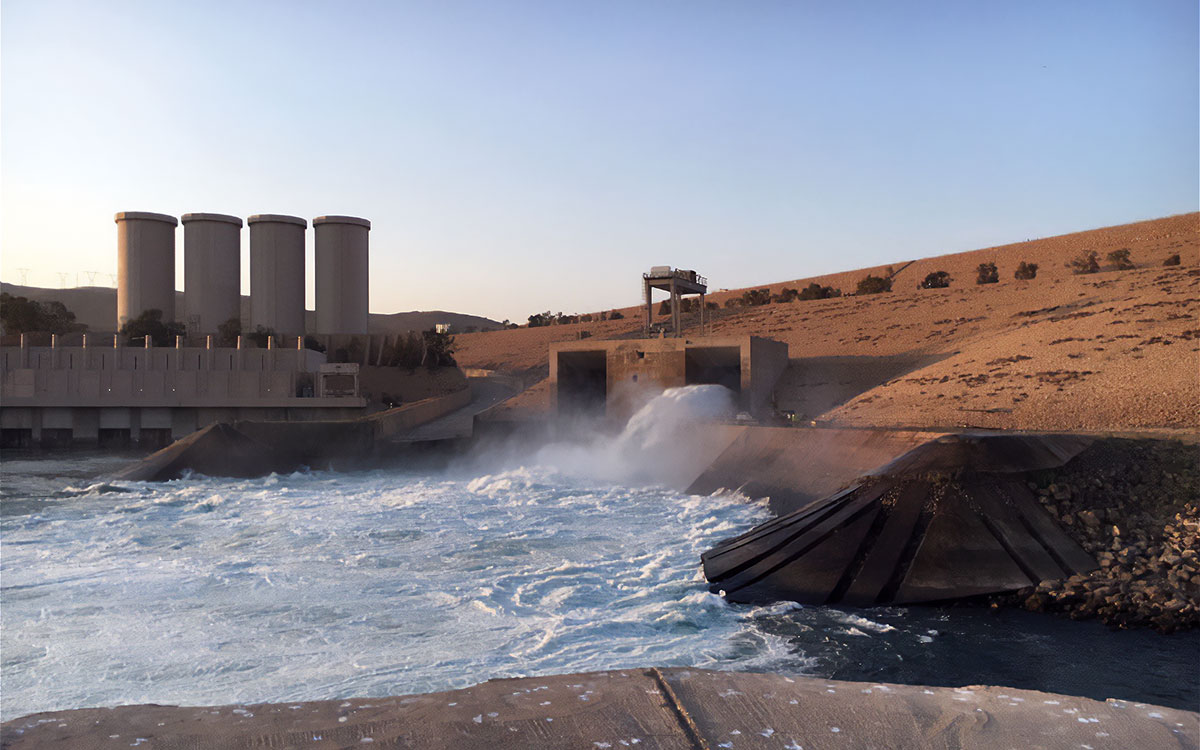
In a stark illustration of AI’s potential utility, Siddiqui recounts her experiences during the 2014 seizure of Iraq’s Mosul Dam by ISIS. As the sole environmental officer in Iraq, she assumed the role of water-security adviser amidst fears of catastrophic flooding. Lacking the technical support of U.S. Army Corps of Engineers hydrologists, Siddiqui relied on her physics and calculus training to interpret complex data and provide critical operational guidance to military leaders. Reflecting on this experience, she expressed a desire for AI systems that could quickly analyze engineering data and convert it into actionable insights, not to replace human input but to support it, enabling a focus on strategic safety.
During her tenure in Baghdad, Siddiqui witnessed how fragmented information could obscure imminent threats. In 2013, her team relayed unclassified warnings regarding an influx of foreign fighters entering Iraq, based on local conversations and reporting that had largely gone unnoticed by international media. AI systems capable of synthesizing such localized information could have provided a more coherent early warning signal, potentially altering the course of U.S. involvement in Iraq. “The challenge is rarely a lack of information—it is the inability to assemble it quickly enough,” she noted.
Further emphasizing AI’s capabilities, Siddiqui described her work at the Iran Threat Directorate, where AI analysis helped map disinformation networks targeting Afghanistan. The technology identified an 800 percent increase in coordinated narratives promoted by Iranian, Russian, and Chinese sources, a feat that manual analysis would have found overwhelming. However, she cautioned that technology alone does not guarantee effective action; institutional resistance often hinders the implementation of AI-driven insights.
AI’s strengths lie in its capability for large-scale pattern recognition and computational tasks. The technology can track disinformation flows and automate administrative processes, allowing diplomats to allocate more time to critical areas such as negotiation and relationship-building. Nonetheless, the human element remains irreplaceable. Siddiqui emphasized that AI cannot replicate the trust and emotional intelligence developed through face-to-face interactions, which are essential for effective diplomacy.
While serving in the U.K. prior to Brexit, she engaged with a diverse array of individuals who articulated concerns about EU labor migration—sentiments that were largely overlooked by mainstream media but contributed to the Brexit vote. Such insights highlight the necessity of human interaction and understanding that AI cannot provide.
The implications of AI’s integration into diplomatic practices extend beyond operational efficiency; they also raise significant national security concerns. As governments increasingly rely on private sector AI platforms, questions about data stewardship and the safeguarding of sensitive information become paramount. Siddiqui cautions that concentrating diplomatic knowledge within proprietary systems can create vulnerabilities and misalign incentives, as private companies prioritize shareholder interests over public welfare.
Moreover, an overreliance on automated systems could undermine the analytical skills vital to diplomacy. Experienced diplomats must retain the ability to question assumptions and synthesize complex information under pressure. AI should serve to enhance these skills rather than foster complacency in analytical reasoning.
In light of these considerations, Siddiqui argues that the key is not to reject AI but to strategically shape its integration into diplomatic efforts. Thoughtful implementation can extend a diplomat’s reach, speed up analysis, and streamline processes while maintaining the critical human touch that defines statecraft. U.S. diplomacy has historically thrived on officers who operate at the edge of their expertise, and AI can provide crucial support in navigating complex threats.
As technological advancements continue to reshape the landscape of diplomacy, preserving the human core is essential. Siddiqui asserts that while AI can assist in working more efficiently, it cannot replicate the unique human understanding necessary for interpreting and navigating a complex world. Ensuring that AI remains an assistant, rather than a substitute for human intelligence and empathy, is vital for the resilience and credibility of U.S. diplomatic efforts.
Mahvash Siddiqui has served for more than 20 years as a Foreign Service officer in Germany, the United Kingdom, Iraq, Qatar, and India. Her roles have ranged from public diplomacy officer to acting consul general to alternate permanent representative to the International Maritime Satellites Organization and the International Maritime Organization. The views expressed in this article are those of the author and not of the U.S. government.
See also European Parliament Fails to Reach AI Regulation Agreement Before August Deadline
 Chargebacks911 Launches Tools to Prevent False Declines in Agentic Commerce Transactions
 Fujitsu Reveals Mainframe Exit by 2035, Transitioning to AI Supercomputers and Quantum Tech
 US Lawmakers Launch Investigation into Cybersecurity Risks from PRC-Origin AI in Critical Infrastructure
 AMD Set to Boost Revenue with Next-Gen Consoles, Driving Stock Growth Beyond 60%






