
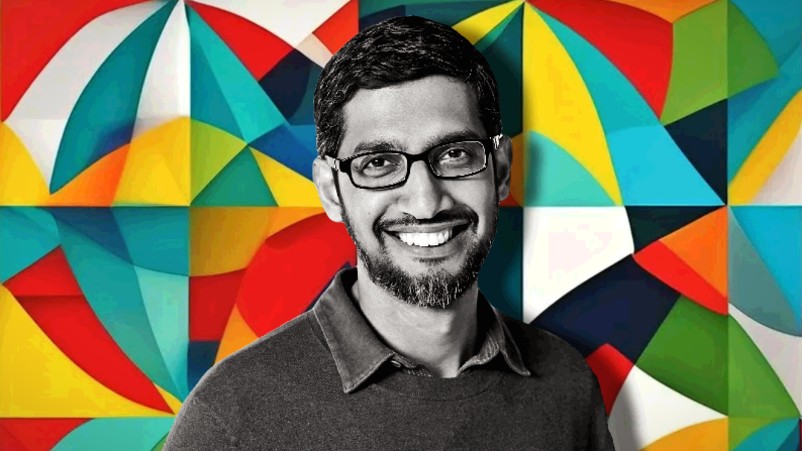
Alphabet Inc. reported a robust first quarter, with revenue reaching $109.9 billion, a 22% increase compared to the same period last year. Operating income rose 30% to $39.7 billion, while net income soared by 81% to $62.6 billion, resulting in diluted earnings per share nearly doubling to $5.11. However, while the numbers suggest a narrative dominated by artificial intelligence (AI), the reality is more nuanced, revealing a significant contribution from balance sheet effects.
A notable portion of Alphabet’s profit increase stemmed from $37.7 billion in “other income,” primarily tied to unrealised gains on equity investments. When excluding this income, the quarter still reflects solid growth, but it also indicates a miss against profit expectations. Alphabet’s core operations, particularly Google Services—which includes Search, YouTube, and Android—remained strong, generating $89.6 billion in revenue, a 16% increase year-over-year. This growth was driven by a 19% uptick in Search and subscription services, suggesting that AI is not disrupting the economics of search but reinforcing them, a point emphasized by executives in recent quarters.
Beyond search, Google Cloud exhibited remarkable performance, with revenue climbing to $20.0 billion and operating income growing to $6.6 billion from just $2.2 billion a year earlier. This represented a significant margin expansion as the division scales, providing the type of operating leverage that investors crave amid substantial AI infrastructure investments. Chief Executive Sundar Pichai highlighted how the company’s AI investments are driving momentum across products and services, with increased search activity and enterprise adoption of AI-enhanced cloud offerings.
“2026 is off to a terrific start,” Pichai stated, noting that the company’s AI initiatives are invigorating all areas of its business. He reported record-high search query activity, a 19% growth in search revenue, and a remarkable 63% increase in Google Cloud revenues. The cloud unit’s backlog nearly doubled quarter-on-quarter to over $460 billion, marking the strongest quarter for consumer AI initiatives, particularly through the Gemini App. The number of paid subscriptions has surged to 350 million, driven predominantly by YouTube and Google One, while the Gemini Enterprise model has shown impressive momentum with 40% quarter-on-quarter growth in paid monthly active users.
In a nod to new revenue streams, Pichai mentioned that Waymo, Alphabet’s autonomous driving division, has surpassed 500,000 fully autonomous rides per week. However, the segment that includes Waymo—known as Other Bets—reported an operating loss of $2.1 billion, serving as a reminder that Alphabet’s experimental ventures continue to weigh on profitability. Yet, in light of the overall earnings power of the company, these losses appear increasingly marginal.
Pichai further commented, “These outstanding results are built on our differentiated, full stack approach. Our first-party models, like Gemini, are now processing more than 16 billion tokens per minute via direct API use by our customers, up 60% from last quarter. It’s really exciting to see how our AI investments are delivering value for our users, customers, and business.”
Nevertheless, the quarter highlights a structural tension that will likely shape the next phase of earnings for major tech firms: the disjunction between capability, monetisation, and reported profit. While Alphabet’s results demonstrate a business still predominantly energized by its core operations—with both search and cloud expanding rapidly—AI is clearly driving increased user engagement and enterprise demand, particularly in the cloud sector. Yet, the headline profitability is buoyed by financial factors, especially the substantial unrealised investment gains that elevated net income this quarter.
This includes stakes in other AI infrastructure firms, such as its recent collaboration with Anthropic, indicating that a growing portion of Alphabet’s profitability may not be fully under the company’s control, introducing additional variability and risk to its financial outlook. As the landscape of AI continues to evolve, Alphabet’s performance may serve as a barometer for the broader tech sector’s ability to balance innovation with sustainable profitability.
See also Advisors Unlock AI’s Potential with Five Strategic Steps for Enhanced Client Engagement
 InMobi CEO Predicts Generative AI Will Transform Marketing by 2026 with Personalized Ads
 Tekion Integrates DAS Technology’s AI Platform to Enhance Dealership Customer Experience
 Optimove Expands Data Connectivity, Enabling 200 Customer Attributes for AI-Driven Marketing