






















































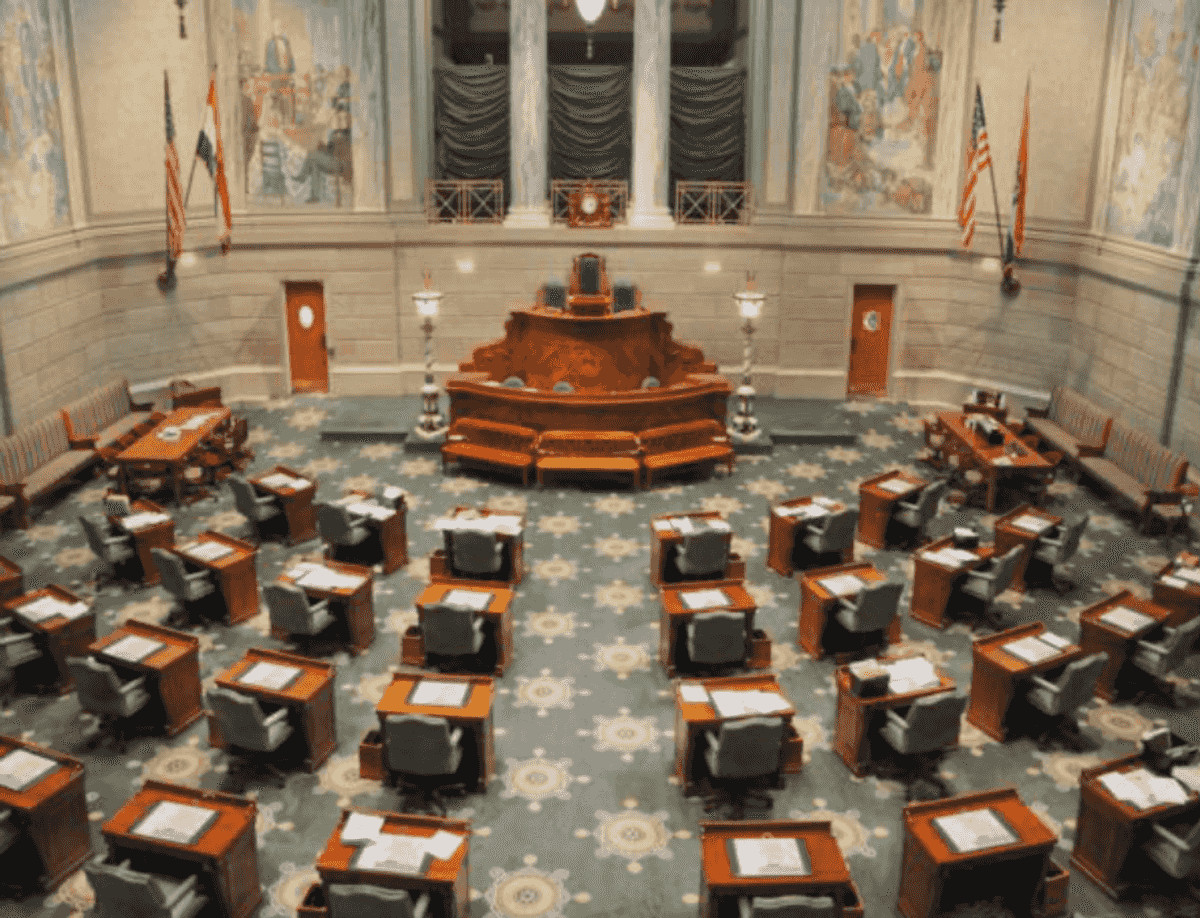
Concerns were voiced on the Senate floor Thursday as legislators moved to amend a bill aimed at regulating artificial intelligence. Senate Bill 1012, introduced by Sen. Joe Nicola, R-Grain Valley, encompasses several provisions that govern AI’s role in elections and healthcare.
The legislation also establishes the “AI Non-Sentience and Responsibility Act”, which explicitly states that AI systems are not recognized as persons, placing the responsibility for any harm caused by these systems on the owner or user. For electoral practices, the bill mandates that any political advertisements or communication campaigns utilizing AI must carry a disclaimer. Failure to include such a disclaimer could lead to a Class A misdemeanor.
In the realm of mental health, the bill outlines requirements for interactions between AI and users, particularly concerning AI companion chatbots, which simulate human responses. Under the proposed regulations, these chatbots would be obligated to provide users with mental health resources, including hotlines, especially when users express suicidal thoughts or other mental health issues. Furthermore, operators of these chatbots would need to submit annual reports to the Missouri Department of Mental Health detailing crisis interactions and instances of suicidal ideation.
Currently, Missouri lacks comprehensive state laws governing AI technologies. Amendments to the bill introduced by Sen. Jill Carter, R-Granby, removed a section concerning criminal offenses for sharing AI-generated images, citing a lack of clarity regarding malicious intent. Another amendment by Sen. Jamie Burger, R-Benton, prohibits categorizing AI systems as “he” or “she,” reflecting concerns about the bill’s timing. “I just don’t know that this is the time,” Burger commented, indicating a level of caution among lawmakers.
The urgency for AI regulation has gained traction among legislators this session, particularly in light of growing concerns over the proliferation of deepfakes—AI-generated media that can fabricate realistic audio and visuals of individuals. Back in February, during a news conference, bipartisan support for AI regulation was evident, with Nicola emphasizing the need for protective measures. “AI can be a very powerful tool, and the Missouri family should not be the guinea pigs while bad actors are exploiting new technology to harm real people,” he stated.
In a related context, President Donald Trump has issued an executive order establishing a national policy framework aimed at reducing what he describes as “onerous and excessive laws” at the state level while emphasizing safety and security regarding AI. Nicola noted his collaboration with the White House in crafting the bill, indicating a concerted effort to align state-level legislation with broader national objectives.
The Senate is expected to vote on the bill next week, marking a significant step in defining the legal landscape for AI usage in Missouri. As discussions continue, the implications of such regulations may resonate beyond state borders, potentially influencing national standards on AI governance. The legislature’s actions reflect an increasing recognition of the importance of establishing safeguards in a rapidly evolving technological landscape.
See also AI Revolutionizes Fashion: New Laws Address Digital Likeness Rights and Advertising
 Rodriguez Unveils SB 189 to Revamp Colorado’s AI Regulations, Easing Burdens for Businesses
 SymphonyAI Launches Real-Time Compliance Model, Reducing Investigation Time by 60%
 AI Agent Powered by Claude Deletes PocketOS Database, Ignoring Safety Protocols
 DOST Launches AI-Powered University Policy Hub to Enhance Accessibility for Students















