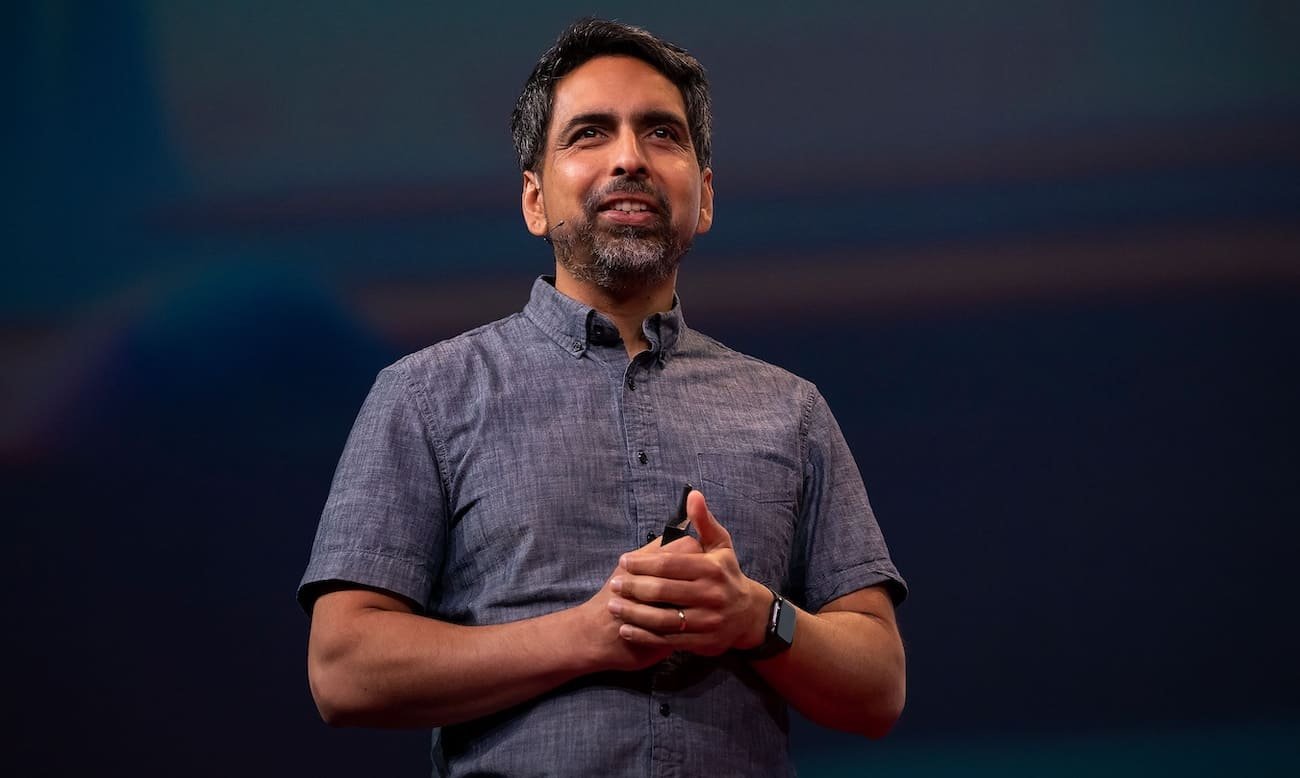
In a move that could significantly disrupt the landscape of higher education, Khan Academy has announced a partnership with TED and Educational Testing Service (ETS) to establish the Khan TED Institute. This new nonprofit collaboration aims to offer a bachelor’s degree in applied artificial intelligence for under $10,000, a stark contrast to the tuition fees at elite universities which can soar to around $70,000 annually. The announcement was made during the TED2026 conference in Vancouver on April 14, 2026, positioning this initiative as a bold reimagining of college education suited for an increasingly AI-driven world.
Sal Khan, founder and CEO of Khan Academy, emphasized the need for accessible educational opportunities during the program’s launch. “Higher education has served many, many people very, very well. And we think there are many good reasons to go to a traditional university, but not everyone has access to those opportunities,” he stated. He also highlighted the necessity for continuous reskilling in a rapidly evolving job market, noting that traditional degrees may not adequately prepare individuals for future challenges.
The Khan TED Institute combines the strengths of three prominent nonprofit organizations: Khan Academy’s extensive learning platform, TED’s community of innovative thinkers, and ETS’s expertise in skill assessment and standardized testing. The initiative aims to equip learners with the knowledge and skills needed for forthcoming job markets while fostering essential soft skills such as communication and leadership.
Applications for the program are expected to open within 12 to 18 months, with a launch targeted for 2027. The institute is actively pursuing accreditation, a process overseen by entities like the Higher Learning Commission and the Western Association of Schools and Colleges. Major employers, including Google, Microsoft, Accenture, and McKinsey, are collaborating with the institute to ensure the curriculum aligns with current industry needs.
Khan expressed optimism about the potential impact of the program, stating, “This really could make a positive dent in what the world needs. We can create a world where more people really do have access to their potential and access to opportunity.” The initial degree offering will focus on applied AI, with plans to expand into additional subjects over time. Students may complete their degrees in three years or less, depending on their prior qualifications and experience.
The curriculum will encompass three main areas: foundational knowledge in subjects such as mathematics and history, practical AI skill-building through hands-on projects, and the cultivation of soft skills like collaboration and public speaking. Khan noted the limitations of traditional metrics such as GPA in assessing a candidate’s workplace capabilities, advocating for a more holistic evaluation of skills, including communication and creativity.
While much of the coursework will be delivered online and asynchronously, ETS CEO Amit Sevak mentioned that the program will strive to replicate some traditional college experiences, such as networking and personal growth, in a modern format. Instructors will be human educators, primarily adjunct faculty, to maintain the critical elements of classroom engagement and oversight.
The genesis of this collaboration stemmed from discussions between Khan and TED chairman Chris Anderson about 18 months prior, highlighting the potential synergy between their organizations. Khan will assume the role of “TED Vision Steward” in this venture, further solidifying the partnership.
The institute aims to provide multiple pathways for admission, including the possibility for students to demonstrate mastery in prerequisite subjects through Khan Academy and a peer-tutoring initiative called Schoolhouse.world. The student demographic could include experienced professionals looking to update their credentials, undergraduates focusing on AI skills, and international students lacking access to traditional degree programs.
Khan acknowledged that the first cohort of students would be taking a risk by enrolling in a nascent institution, but he firmly believes in its potential to equip individuals with relevant skills for the future. “This is going to be a really powerful way for people with traditional backgrounds to really hone their skills of the future,” he said.
While Khan is advocating for an aggressively priced degree under $10,000, education experts have expressed skepticism regarding the initiative’s long-term viability. Concerns have been raised about whether the Khan TED Institute degree will hold value in a competitive job market, particularly as it competes with established AI programs at universities like Carnegie Mellon and Arizona State.
In a broader context, this initiative reflects an ongoing shift in education, where traditional models are increasingly challenged by innovative approaches that leverage technology and address evolving job market demands. As education continues to adapt in the face of rapid technological advancements, the Khan TED Institute may serve as a pivotal case study in the future of higher education.
See also AI Enrolments Surge 90% Among Mid-Career Professionals, Non-Tech Roles Drive Demand
 Chiemela Kalu Launches MISGPT to Enhance Academic Advising for Underserved Students
 PennWest California Professor Mark Lennon Researches AI in Brazil through Fulbright Award
 Andrew Ng Advocates for Coding Skills Amid AI Evolution in Tech
 AI’s Growing Influence in Higher Education: Balancing Innovation and Critical Thinking