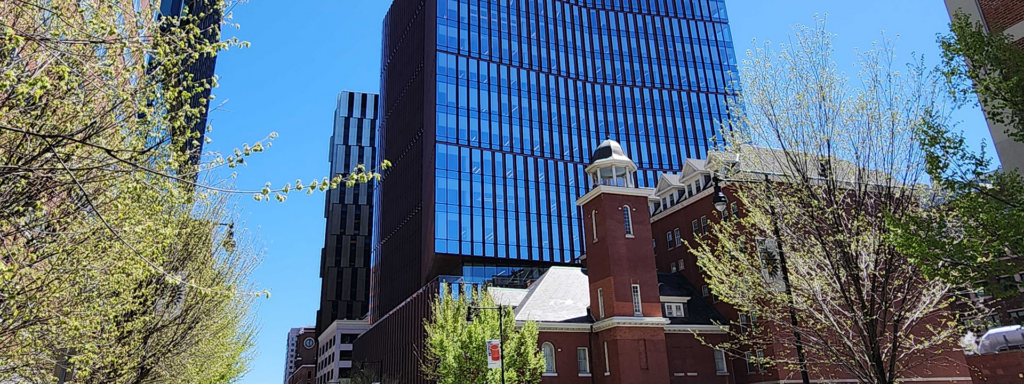
IBM has announced a significant dual expansion of its technology ecosystem with the launch of the FutureNow Chicago delivery center at the Illinois Quantum and Microelectronics Park (IQMP) and the transition of its longstanding academic partnership into the new MIT-IBM Computing Research Lab. This initiative, unveiled on April 29, 2026, aims to create 750 new full-time jobs in fields such as AI, cybersecurity, data science, and quantum computing. The Chicago delivery center will serve as a focal point for local talent while the Cambridge-based research lab will broaden its focus to integrate quantum algorithms with hybrid computing systems, addressing challenges in materials science, chemistry, and biology.
In Illinois, IBM plans to act as an anchor tenant in the IQMP’s Quantum Works building, a facility designed to connect residents of Chicago’s South Side with high-growth technology career opportunities. To aid this effort, IBM has committed to a workforce development program in collaboration with City Colleges of Chicago, pledging to hire one-third of the graduates from a new initiative aimed at creating 500 apprenticeships over the next five years. This “Chicago Moonshot” model seeks to convert paid apprenticeships into a scalable pathway for upward mobility, ensuring that the anticipated $20 billion economic impact of the IQMP is distributed broadly among the region’s diverse communities.
Simultaneously, the MIT-IBM Computing Research Lab marks its decade-long collaboration by shifting its focus toward quantum-centric supercomputing. The lab’s new mission will involve rethinking the mathematical foundations of machine learning, Hamiltonian simulations, and partial differential equations—key tools for modeling dynamic systems that surpass classical computational limits. This research is anticipated to produce more accurate weather forecasts, financial market predictions, and improved global supply chain optimization, achieved through the tight integration of quantum hardware with AI accelerators and high-performance computing (HPC) clusters.
The MIT-IBM lab is co-led by experts specializing in three distinct areas: AI, algorithms, and quantum computing. They aim to develop small, efficient modular language models and innovative quantum algorithms for drug discovery and protein structure prediction. The lab will also serve as a vital training ground, engaging faculty and students from various MIT departments to accelerate discoveries in both physical and life sciences. This evolution builds on the legacy of the MIT-IBM Watson AI Lab, which has financed over 210 projects and produced 1,500 peer-reviewed articles since its inception in 2017.
These developments underscore IBM’s strategic roadmap aimed at delivering the world’s first fault-tolerant quantum computer by 2029. By establishing Chicago as a hub for commercial delivery and MIT as a center for algorithmic innovation, IBM is effectively bridging the divide between theoretical research and mainstream enterprise deployment. As Illinois Governor JB Pritzker remarked, the establishment of the National Quantum Algorithm Center and the arrival of the IBM Quantum System Two in Illinois further solidify the state’s position as a global leader in the burgeoning quantum economy.
For further details, the official announcement regarding the Chicago IQMP expansion and the full press release for the new MIT-IBM Computing Research Lab are available online.
See also OpenAI’s AI Model Achieves 81.6% Diagnostic Accuracy, Surpassing Human Doctors in ER Tests
 AI Study Reveals Generated Faces Indistinguishable from Real Photos, Erodes Trust in Visual Media
 Gen AI Revolutionizes Market Research, Transforming $140B Industry Dynamics
 Researchers Unlock Light-Based AI Operations for Significant Energy Efficiency Gains
 Tempus AI Reports $334M Earnings Surge, Unveils Lymphoma Research Partnership