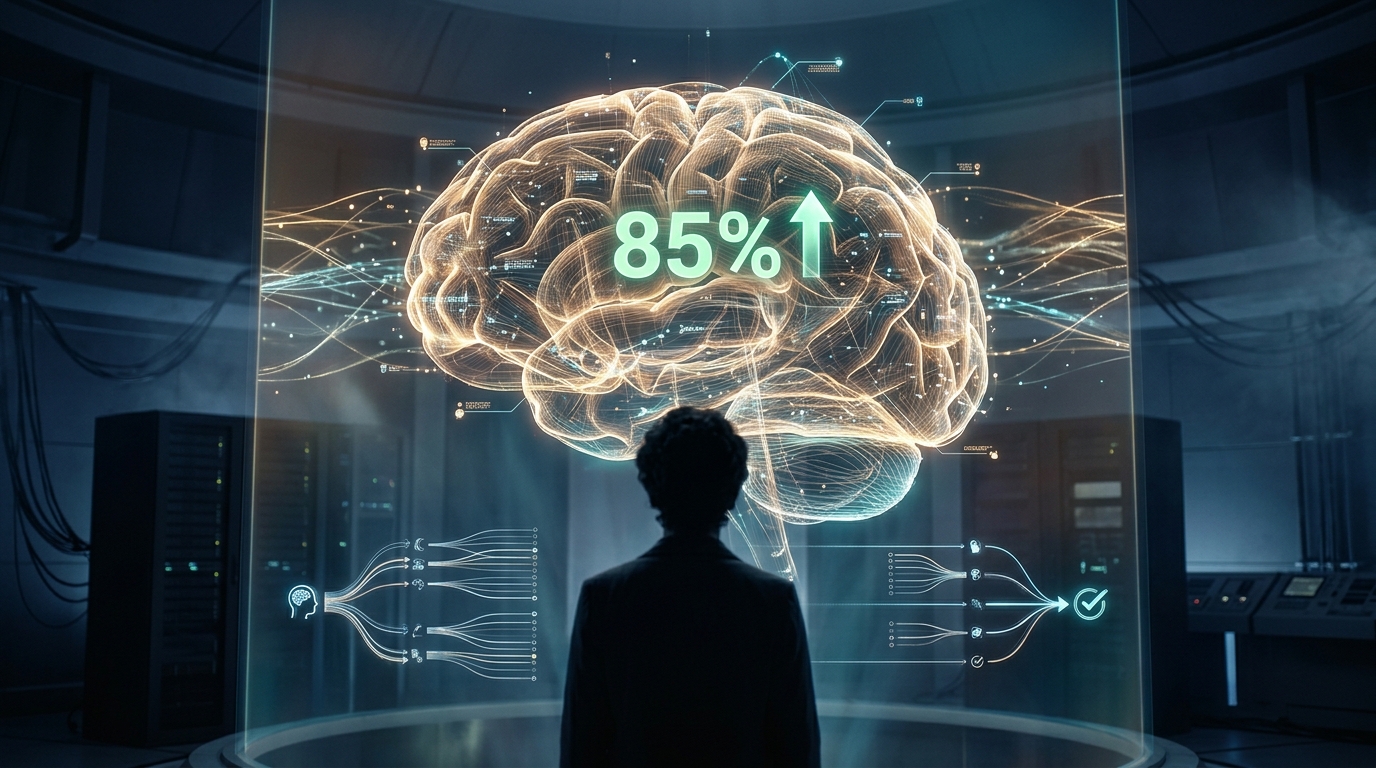
A groundbreaking study published in Forbes highlights that Generative Artificial Intelligence (AI) is now being utilized to predict the efficacy of mental health treatments with over 85% accuracy. By evaluating linguistic patterns, voice tonality, and “psychotherapeutic trajectories” from thousands of therapy sessions, AI models can forecast which patients are at risk of dropout or which specific therapeutic interventions will yield optimal outcomes. This shift toward “Precision Psychiatry” signifies a departure from the trial-and-error approach that has characterized mental healthcare for decades.
Traditionally, identifying the right therapist or therapeutic modality, such as cognitive behavioral therapy (CBT) versus dialectical behavior therapy (DBT), could take months, often resulting in patient frustration and exacerbating symptoms. Emerging AI systems, spearheaded by Silicon Valley startups and research hospitals, serve as a “co-pilot” for therapists. By processing anonymized transcripts in real-time, the AI can notify clinicians if the therapeutic alliance between themselves and the patient is weakening or if a cognitive shift indicating a breakthrough has occurred. This data-driven methodology is saving lives by shortening the recovery timeline.
Despite the clinical promise, the integration of AI in such a sensitive domain raises significant ethical concerns. Privacy advocates caution that “emotional data” constitutes some of the most intimate information a person can share. There are apprehensions that, if this predictive data were leaked or sold, it could lead to insurance companies denying coverage or employers discriminating against “high-risk” individuals. The Forbes report stresses that for AI to be successfully incorporated into mental healthcare, it must function within a “Fort Knox” of data security, coupled with strict patient-consent protocols.
As mental health technologies advance, the AI mental health market is projected to reach $10 billion by 2030, underscoring the growing economic significance of these innovations. Models are currently being trained on over 500,000 hours of clinical dialogue, utilizing key indicators such as semantic density, vocal jitter, and sentiment shifts to enhance their predictive capabilities.
In Kenya, where there is only one psychiatrist for every 1 million citizens, AI-driven mental health tools are becoming a necessity rather than a luxury. Platforms like Nila Health and various SMS-based counseling services in Nairobi are exploring how to implement basic AI for patient triage. If generative models can be adapted to understand Swahili and regional dialects, the potential impact could be transformative. Kenya’s “Silicon Savannah” is well-positioned to lead the African rollout of these tools, leveraging digital-first mental health solutions to overcome gaps in physical healthcare infrastructure.
Experts emphasize that AI is not designed to replace human therapists but rather to augment their capabilities. “The AI can see the patterns that a human brain might miss due to fatigue or bias,” says Dr. Sarah Jenkins, a leading researcher in the study. By uncovering “hidden signals” in a patient’s speech, AI allows therapists to concentrate more on the essential human elements of empathy and connection. This synergy between high-tech prediction and high-touch care represents a new gold standard in mental health treatment.
As Generative AI continues to evolve, its role in mental health care is likely to extend into preventive measures, identifying early signs of depression or PTSD before they escalate into crises. For millions of individuals worldwide grappling with mental health challenges, this technology offers a promising glimpse into a future where healing is not only faster and more effective but also deeply personalized. The emerging data suggests that, for the first time, we possess a tool powerful enough to navigate the complexities of the human mind.
See also Sam Altman Praises ChatGPT for Improved Em Dash Handling
 AI Country Song Fails to Top Billboard Chart Amid Viral Buzz
 GPT-5.1 and Claude 4.5 Sonnet Personality Showdown: A Comprehensive Test
 Rethink Your Presentations with OnlyOffice: A Free PowerPoint Alternative
 OpenAI Enhances ChatGPT with Em-Dash Personalization Feature