























































The Endpoint Detection and Response (EDR) market is poised for significant growth as businesses face increasingly complex cyber threats. With a current valuation of USD 3.6 billion in 2023, the market is projected to expand to USD 25.7 billion by 2032, reflecting a compound annual growth rate (CAGR) of 24.6% from 2024 to 2032. This rapid expansion highlights the pressing global need for intelligent and real-time cybersecurity frameworks that can effectively address evolving digital threats.
Modern enterprises are transitioning from traditional endpoint security to a more sophisticated ecosystem that integrates threat hunting, automated incident response, and predictive analytics. A May 2024 report by CIO Influence points to the increasing demand for solutions capable of protecting hybrid networks, cloud architectures, and multi-dimensional attack surfaces. To meet these needs, vendors are innovating platforms that emphasize speed, intelligence, and ease of operation, ensuring organizations can achieve real-time threat visibility and mitigation.
The need for comprehensive endpoint visibility is driven by numerous factors, including the rise of advanced persistent threats, ransomware, and insider risks. Innovations such as AI-driven anomaly detection and deep forensic capabilities are becoming essential components of EDR solutions. As organizations adopt resilience-focused security models that align with zero-trust frameworks, the urgency for robust EDR solutions grows, particularly in light of the increasing interconnectivity of global networks.
Despite the promising market dynamics, challenges remain. High costs associated with enterprise-grade EDR solutions present barriers for small and medium-sized businesses, while the complexity of deploying solutions in large-scale, multi-cloud environments requires a skilled cybersecurity workforce that is in short supply. However, the integration of machine learning and cloud-based analytics is enabling businesses to predict threats proactively, further accelerating market adoption.
Opportunities exist in the intersection of EDR with security orchestration and automated response platforms, which can streamline workflows and reduce incident response times. As businesses increasingly move toward unified security ecosystems, the demand for cross-platform compatibility and centralized threat intelligence is growing. The trend toward cloud-native EDR solutions opens avenues for Software as a Service (SaaS) innovation and scalable threat analytics, essential for modern enterprises.
In terms of market segmentation, software held approximately 65% of the EDR market share in 2023. This dominance is attributed to rapid advancements in AI-driven detection and automated response capabilities. Key players such as **CrowdStrike** and **SentinelOne** continue to lead innovation, providing robust platforms capable of analyzing vast amounts of threat data while enabling proactive defenses.
Cloud-based deployment accounted for nearly 60% of the EDR market share in 2023, reflecting a growing preference for agile and cost-efficient security architectures. This shift allows organizations to safeguard distributed workforces and remote devices effectively. Major vendors like **Microsoft** and **Palo Alto Networks** are enhancing cloud-native EDR adoption through advanced analytics and seamless integration with enterprise systems.
Looking at the types of devices being monitored, network devices and servers represented about 55% of the market in 2023, underscoring their status as prime targets for cyberattacks. Companies such as **Cisco** and **McAfee** are focusing on EDR solutions tailored to protect these critical assets.
Large enterprises dominated the EDR market with a 70% share in 2023, owing to their substantial investments in cybersecurity. Vendors like **FireEye** provide the advanced threat detection and response capabilities essential for navigating complex cyber threats.
The financial services sector led the EDR market with nearly 30% of the share in 2023, driven by the need for real-time threat monitoring to safeguard transactions and customer data. Providers such as **Symantec** and **Trend Micro** are integral in supporting the security frameworks that protect against unauthorized access and data breaches.
Regionally, North America captured about 40% of the EDR market in 2023, benefiting from a mature IT landscape and a concentration of cybersecurity leaders. Companies such as **CrowdStrike** and **Palo Alto Networks** are reinforcing this dominance through innovative EDR developments. Meanwhile, the Asia-Pacific region is expected to be the fastest-growing market from 2024 to 2032, spurred by rapid digitization and escalating cyber threats in countries like India, China, and Japan.
As the EDR market evolves, key players such as **Bitdefender**, **Broadcom (Symantec)**, **Carbon Black**, **Check Point**, and others are competing through continuous advancements in AI-driven threat detection and automated response technologies. The future of the EDR market appears to be increasingly intertwined with broader cybersecurity strategies, including Extended Detection and Response (XDR) ecosystems, which are reshaping enterprise threat management.
The Endpoint Detection and Response market is on the cusp of a critical transformation, driven by heightened cyber threats and the ongoing digital transformation across industries. As AI, cloud security, and automated response capabilities advance, EDR solutions are set to become an essential component of the global cybersecurity landscape, aimed at safeguarding the digital infrastructures of enterprises worldwide.
See also Google’s Antigravity AI Tool Hacked Within 24 Hours, Exposes Severe Vulnerability
 Anthropic CEO Dario Amodei to Testify on AI Cyberattack Linked to China on Dec. 17
 Israeli Researchers Uncover Critical AI Browser Flaw Affecting Major Tools Like Gemini and Copilot
 Congress Summons Anthropic CEO Amid First AI-Orchestrated Cyberattack Linked to China
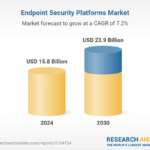 Endpoint Security Market to Reach $23.9B by 2030 with 7.2% CAGR Amid Rising Cyber Threats






