






















































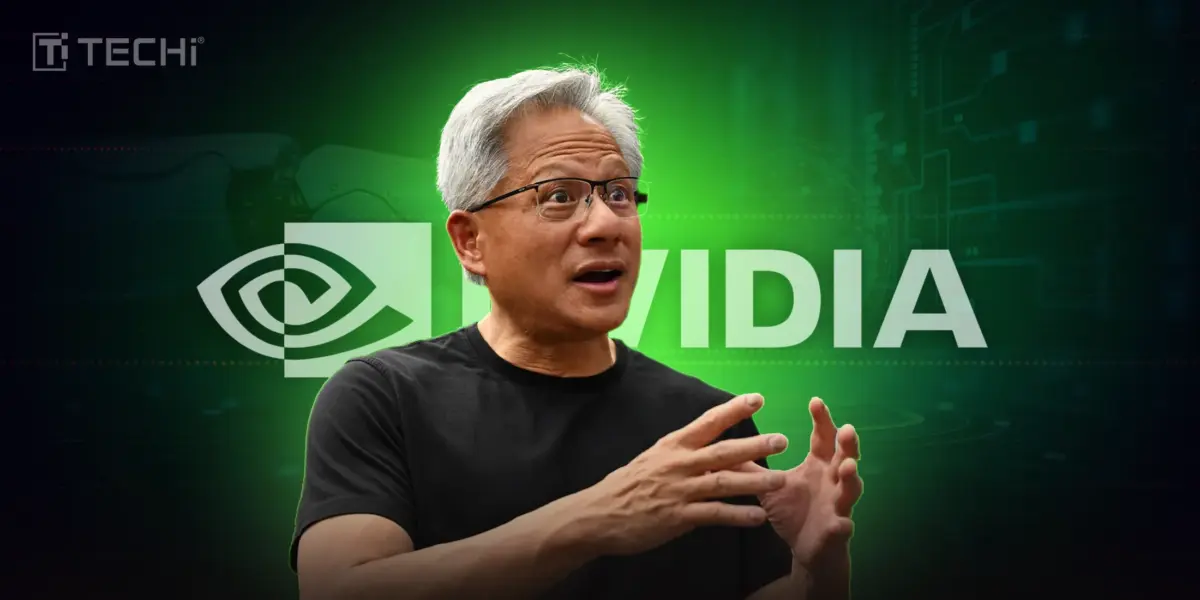
Nvidia has entered into a significant partnership with Synopsys, committing a $2 billion investment aimed at enhancing its influence in the artificial intelligence landscape. Announced on Monday, this deal not only extends an existing multi-year collaboration but also positions Nvidia as the seventh largest shareholder in Synopsys, according to data from LSEG. The partnership underscores Nvidia’s strategic move to solidify its role across the AI hardware, software, and design pipeline.
This investment follows Nvidia’s recent high-profile agreements, including a groundbreaking $100 billion deal with OpenAI and a $5 billion stake in Intel. While such transactions have raised eyebrows regarding potential overvaluation, they highlight Nvidia’s ambition to integrate itself deeply within the AI ecosystem. Following the announcement, Nvidia’s share price dipped slightly by just over 1%, whereas Synopsys saw a notable increase of 6%.
Strengthening AI Hardware Design Capabilities
Experts suggest that the alliance with Synopsys places Nvidia further into the critical realms of chip design and electronic design automation (EDA). D.A. Davidson analyst Gil Luria commented, “Nvidia has substantial control of who wins in the AI-driven compute marketplace, and it would like to benefit from that impact. By partnering more closely with Synopsys, it contributes momentum and credibility, and in turn will benefit from the appreciation of Synopsys shares.”
Under the terms of the deal, Nvidia acquired 4.8 million Synopsys shares at $414.79 per share, a price that is slightly below the firm’s closing on the previous Friday. The shares were obtained through a private placement, signifying a long-term investment strategy rather than a short-term market maneuver. This partnership grants Synopsys access to Nvidia’s extensive array of AI developer tools and software libraries, which is expected to advance the design of next-generation chips and streamline workflows for physical verification and EDA applications used globally by chipmakers.
The partnership emerges amid challenging circumstances for Synopsys, which has reported a decline in its intellectual property business. The company has cited U.S. restrictions on exports to China leading to reduced sales and difficulties with a major customer, identified as Intel. Nvidia’s significant investment not only provides financial support but also integrates technological expertise that could help navigate the shifting dynamics of the global semiconductor market.
While the partnership is not exclusive—Nvidia also collaborates with Cadence, a competitor to Synopsys—its implications have been felt across the sector. Following the announcement, Cadence’s stock price fell by over 1%, reflecting market concerns about Nvidia’s growing dominance in the design-tool space.
This latest investment exemplifies Nvidia’s aggressive strategy to assert its presence across the entire AI supply chain. With this partnership, Nvidia positions itself as a critical player, akin to a “central nervous system” for AI innovation—actively participating in everything from model training to chip design. As the ongoing AI gold rush intensifies demand for semiconductor designers and their necessary tools, this collaboration is poised to accelerate the development of cutting-edge hardware.
The implications of this partnership are vast, potentially allowing for quicker and smarter advancements in hardware design, all influenced by Nvidia’s technological capabilities. The market’s attention is squarely on this evolving narrative, as Nvidia continues to shape the future of AI through a series of strategic partnerships and investments. Whether this represents a visionary strategy or a potential overreach remains a topic of debate. However, Nvidia is clearly intent on being a driving force in the future of AI, making significant moves to ensure that it is not merely a spectator but a key architect of the technological landscape.
See also Nodeflux and Intel Launch VisionAIre for Scalable AI-Powered Video Analytics Solutions
 University of Michigan Launches AI Traffic Light System to Reduce Delays by 30%
 HPE and AMD Launch Helios AI Rack with 72 GPUs, First Ethernet-Based Switch for 2026
 Mixx Technologies Raises $33M Series A to Revolutionize AI Infrastructure Connectivity
 Apple Appoints Amar Subramanya as VP of AI, Succeeding John Giannandrea















