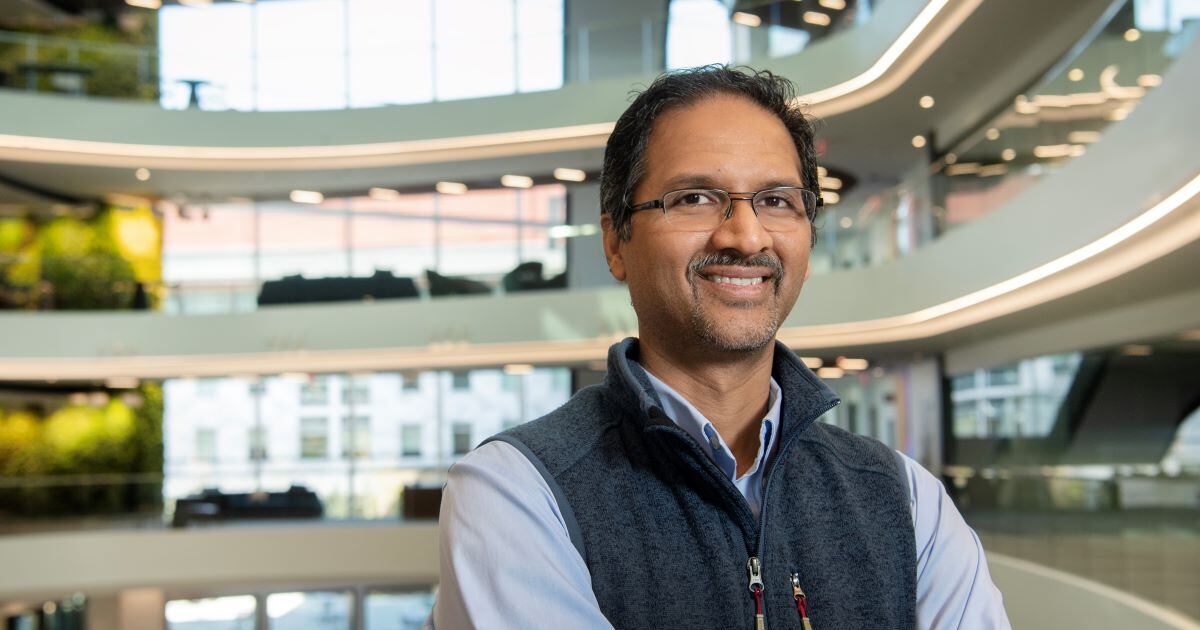
As the U.S. public health system considers the integration of artificial intelligence (AI), an Emory University lab is patenting new concepts aimed at advancing precision medicine. Professor Anant Madabhushi, who leads this initiative, believes these innovations could facilitate the practical application of AI research in a timely and nuanced manner.
Madabhushi’s work encompasses AI solutions for the detection and treatment of a wide array of diseases, including cancer, HIV, and cardiovascular conditions, extending from the United States to countries such as China, Tanzania, and Brazil. Drawing from his upbringing in Mumbai and his global collaborations, he emphasizes the potential for AI to conserve resources and enhance public health.
Currently, Madabhushi holds over 225 issued or pending patents and has chaired the Empathetic AI for Health Institute at Emory since 2023. He has also co-founded multiple companies dedicated to leveraging AI in healthcare. Recently, the U.S. Department of Health and Human Services expressed its intent to incorporate AI into public health strategies.
During a recent discussion, Madabhushi articulated a nuanced view of AI’s role in healthcare. He cautioned that while artificial intelligence promises significant public health benefits, particularly in rural segments of the United States, there is concern that the nation is lagging in the large-cohort studies critical to realizing AI’s full potential. “We owe it to Americans to be able to do whatever we can, particularly in this time of health care costs and some of the challenges with access,” he stated.
Madabhushi asserts that AI will not replace clinicians but rather augment clinical decision-making. “The real value lies in reducing variability and expanding access—especially where clinical expertise is limited,” he remarked, underscoring the importance of AI in resource-constrained areas, such as rural Georgia and his native India.
He further noted that AI breakthroughs require careful validation and regulatory oversight to avoid introducing new inequities. For instance, at a cancer center in India that serves about 1 million patients annually, any technology must enhance the clinical workflow without adding complexity. “You can’t add more seconds to the diagnosis,” he explained, emphasizing the logistical challenges presented by high patient volumes.
Interestingly, Madabhushi highlighted that eyes can serve as diagnostic windows to overall health, with AI capable of predicting heart failure and early forms of blood cancers through simple fundus images. “Even the simple fundus image has so much information… which, with the opportunistic use of AI, could start to tell us about a whole bunch of systemic conditions,” he said, indicating the potential for early intervention through lifestyle changes.
Madabhushi’s team has also identified that incorporating a “frugality constraint” into AI algorithms has the potential to significantly cut diagnostic costs while preserving accuracy. Their research on ten commonly seen emergency room diseases revealed that AI can reduce the number of tests required for accurate diagnoses to about 10% or 11% of the total tests typically ordered. “This could dramatically reduce system and individual costs in a variety of settings,” he noted.
Focusing on imaging, Madabhushi pointed out that AI could save significant resources in pathology by reducing the need for multiple stain tests. He remarked on the challenges faced in countries like India, where the added costs of pathology slides can be burdensome. “If we could learn all of these various stains and parameters from a single HD image with the power of AI, now that becomes a game changer,” he stated.
One of his recently published papers illustrates how AI can help identify which prostate cancer patients would benefit from specific chemotherapy drugs, potentially reducing the need for additional biopsies and sparing patients from unnecessary side effects.
Madabhushi also emphasized the importance of diversity in AI research, advocating for inclusive data sets to ensure the technology serves a variety of populations effectively. He referenced a study that demonstrated the differences in endometrial cancer presentations in Black and white patients, highlighting how tailored AI models can significantly improve outcomes.
Lastly, he expressed concern over the United States losing its competitive edge in AI health research, particularly against countries like China, which he claims is “quite significantly ahead” in the healthcare space due to their ability to access and share large patient datasets. “The Chinese have been able to figure this out at speed compared to us,” he remarked, pointing out that India’s innovative spirit is now beginning to influence AI applications in the U.S., exemplified by companies like Qure.AI, which deploys AI technology for detecting lung cancer and tuberculosis across numerous countries.
Through the integration of AI in healthcare, Madabhushi envisions a future where technology not only enhances clinical efficiency but also significantly improves patient outcomes, particularly for underserved populations.
See also Nebius Group Secures Multibillion-Dollar Microsoft and Meta Contracts Amid Data Center Capacity Crunch
 Ethical AI: Building Trust and Connection in Digital Advertising Amid Growing Bias Concerns
 Nvidia and TSMC: Which AI Stock Offers Better Growth Amid Rising Competition?
 AWS Advocates for Risk-Based Global AI Regulation to Balance Innovation and Responsibility
 Law Firms Boost Revenue Growth 2X with People-First AI Strategies, New Insights Reveal