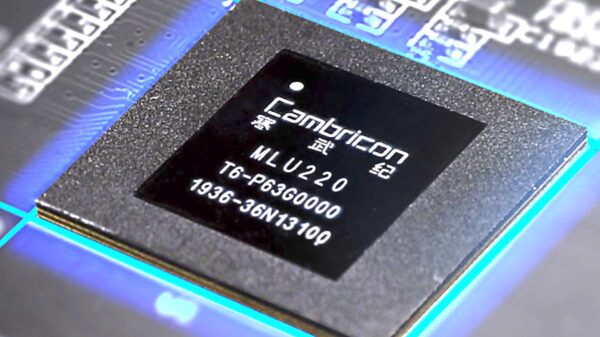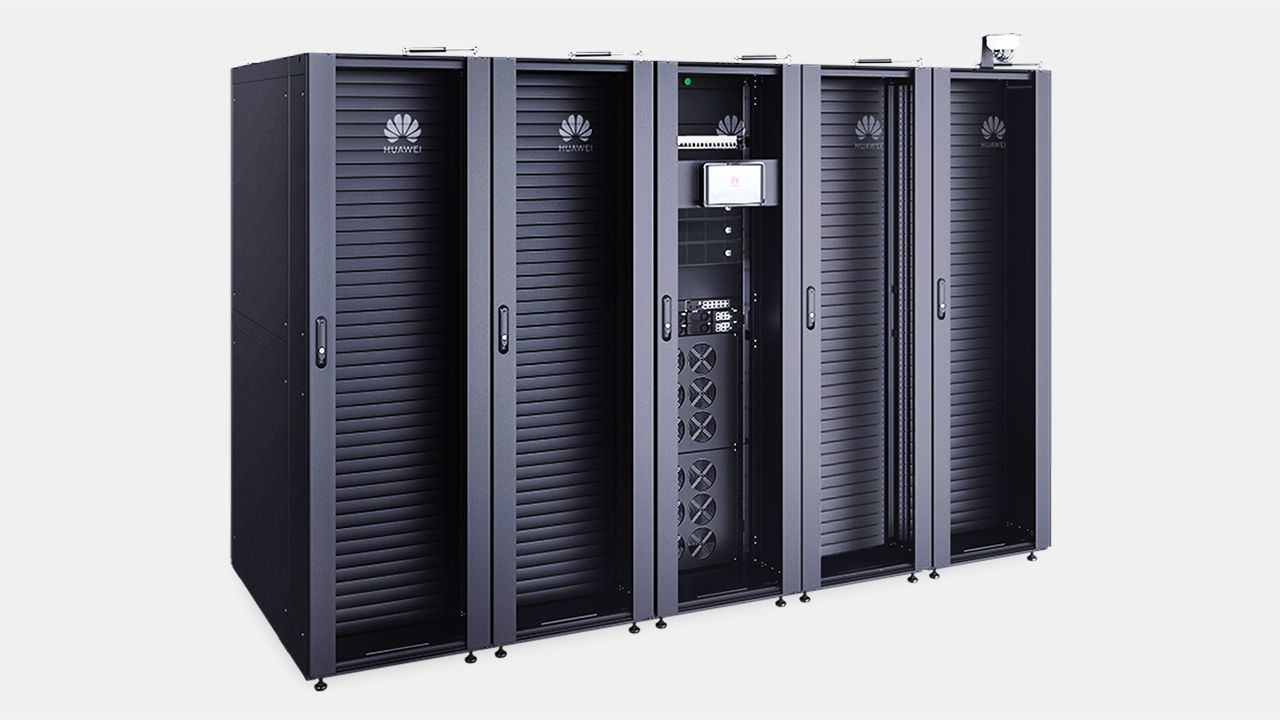
China has initiated the formation of a list of government-approved AI hardware suppliers aimed at steering public sector organizations towards locally developed artificial intelligence processors, as reported by the Financial Times. Currently, the list includes only two domestic companies: Cambricon and Huawei, notably omitting foreign firms such as AMD and Nvidia. This exclusion may reflect the Chinese government’s response to former President Trump’s efforts to permit Nvidia to sell its H200 processors to clients in China.
The new list, intended for dissemination among ministries, state-owned enterprises, and public institutions, expands the Information Technology Innovation List (Xinchuang) to incorporate domestic AI processors alongside previously added categories like local x86-replacement CPUs and homegrown operating systems that substitute for Microsoft Windows. This framework outlines the hardware and software platforms available for purchase by government bodies, thereby significantly influencing annual spending by Chinese government-controlled entities, which totals billions of dollars.
While the Ministry of Industry and Information Technology did not comment on the updated procurement regulations, the policy direction appears unmistakable: China aims to accelerate the replacement of US-designed AI accelerators with domestic alternatives within the state sector.
China’s ambition to enhance its AI capabilities alongside semiconductor self-sufficiency presents a complex challenge. On one hand, Nvidia’s hardware is recognized for its superior performance and robust software ecosystem, which facilitates the training of larger AI models. Many public-sector applications remain intricately linked to Nvidia’s CUDA ecosystem, complicating any transition to alternatives developed by Cambricon or Huawei. Conversely, embracing domestic hardware and software for a homegrown AI ecosystem would enable Chinese firms to establish their own AI standards, potentially leading to the creation of more competitive AI accelerators.
Commercial giants like Alibaba and Tencent continue to rely on Nvidia’s technology to remain competitive, emphasizing the importance of building their own AI ecosystems over achieving semiconductor self-sufficiency. Although the Chinese government may restrict the use of American AI accelerators—such as its recent ban on Nvidia’s H20—these companies can still access Nvidia’s technology through cloud services, circumventing US sanctions while maintaining their dependence on American innovation.
To incentivize China’s cloud giants to adopt domestic hardware for both inference and training purposes, the government has increased energy subsidies for these firms. Operators of large-scale data centers can now benefit from a 50% discount on electricity costs when deploying Chinese-made AI accelerators. This initiative aims to offset the lower energy efficiency of domestic AI processors compared to Nvidia’s GPUs while ensuring the performance necessary for training and executing larger AI models.
The pressing question is not merely whether Chinese public and private enterprises are prepared to substitute a significant portion of American-developed AI hardware with domestic solutions, but rather if the domestic industry can produce enough AI processors to meet the burgeoning demands of the national AI sector. Presently, the only company in China capable of manufacturing chips competitive with those produced by TSMC is SMIC. However, SMIC’s production capacity is nearly at full utilization, operating at 95.8%, and cannot scale up significantly due to restrictions imposed by the US and Dutch governments, which prevent it from acquiring advanced fabrication tools.
It is anticipated that Huawei will eventually establish its own fabrication facility that will primarily utilize domestic equipment, potentially increasing the country’s output of advanced chips. However, the timeline for when this facility will become operational remains uncertain, adding another layer of complexity to China’s ambitions in the AI hardware domain.
See also Oracle Shares Drop 10% After Revenue Miss, AI Growth Fails to Soothe Investor Fears
 DeepSeek Accused of Smuggling Nvidia’s Banned Blackwell Chips to Advance AI Models
 Autonomous AI Agents Set to Transform Platform Engineering with Self-Governance by 2026
 LG Launches AI Cabin Platform at CES 2026, Redefining In-Vehicle Experiences with Generative AI
 White House Announces Approval for Nvidia’s H200 AI Chips Export to China with 25% Fee