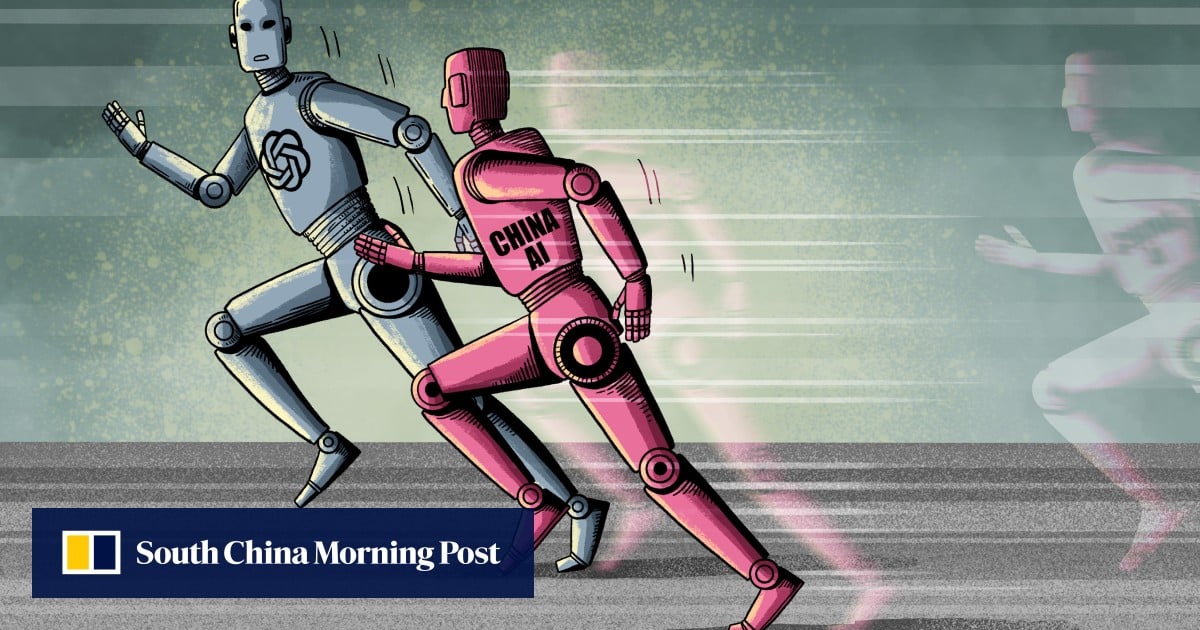
Chinese government authorities have urgently requested briefings from experts, including professors from Tsinghua University, on the implications of generative AI technology. This move underscores the growing importance of artificial intelligence in China’s tech landscape as the country races to develop its own AI capabilities amid increasing competition from Western firms.
In recent months, China’s major technology companies and ambitious start-ups have been actively rolling out their own versions of AI chatbots and large language models (LLMs). These companies are also registering their products with the government, aiming to keep American AI services from penetrating the vast market of over 1 billion internet users in China. This push reflects a strategic decision to cultivate a domestic AI ecosystem that can stand up to established Western providers.
Initially, after the launch of ChatGPT, many analysts believed that maintaining a walled garden approach to AI services was China’s most viable strategy. This involved restricting access to foreign AI technologies until local firms could develop competitive products. However, as the second half of 2025 approaches, expectations regarding the technical capabilities of Chinese AI companies and the commercial viability of LLMs have shifted significantly.
During this period, significant figures within the industry, such as Zhu, who gained prominence for his early investment in ride-hailing giant Didi Chuxing, have begun questioning the monetization strategies surrounding LLMs. Zhu rhetorically asked, “How do you make money out of just developing an LLM?” This inquiry highlights the uncertainty surrounding the profitability of AI solutions and the broader business models that domestic companies may adopt as they transition from development to commercialization.
As the market evolves, the Chinese government’s involvement in shaping the narrative around generative AI becomes increasingly apparent. By soliciting insights from academics and industry experts, authorities aim to understand not only the technical capabilities of these technologies but also their socio-economic implications. The balance of innovation and regulation will be crucial in determining how effectively these technologies can be harnessed for national growth.
The competitive landscape is further complicated by the rapid advancements made by Western tech giants, who continue to lead in AI innovations. The challenge for Chinese firms lies not only in creating comparable products but also in ensuring that they can do so within a regulatory framework that prioritizes national security and data privacy. The urgency of these developments aligns with global trends where countries are increasingly recognizing the strategic importance of AI technology.
Looking ahead, the race to develop sophisticated AI capabilities in China is set against a backdrop of intense scrutiny and competition. With the government’s push for self-reliance in technology, domestic firms are likely to ramp up their efforts to innovate while navigating the complexities of a regulated market. As the world watches, the implications of China’s advancements in AI will extend beyond its borders, potentially reshaping the global tech landscape and influencing international relations in the process.
See also Alphabet’s Strong Q3 Growth and AI Innovations Position It to Dominate Market by 2026
 TD SYNNEX Launches AI Game Plan Workshop; Shares Undervalued at $155.66 vs. $178.36 Fair Value
 Search Atlas Launches Free AI Search Summit to Optimize Content for 2025 and Beyond
 Oracle’s $50B AI Capex Shock and Adobe’s Growth Boost Reshape Software Investor Outlook