






















































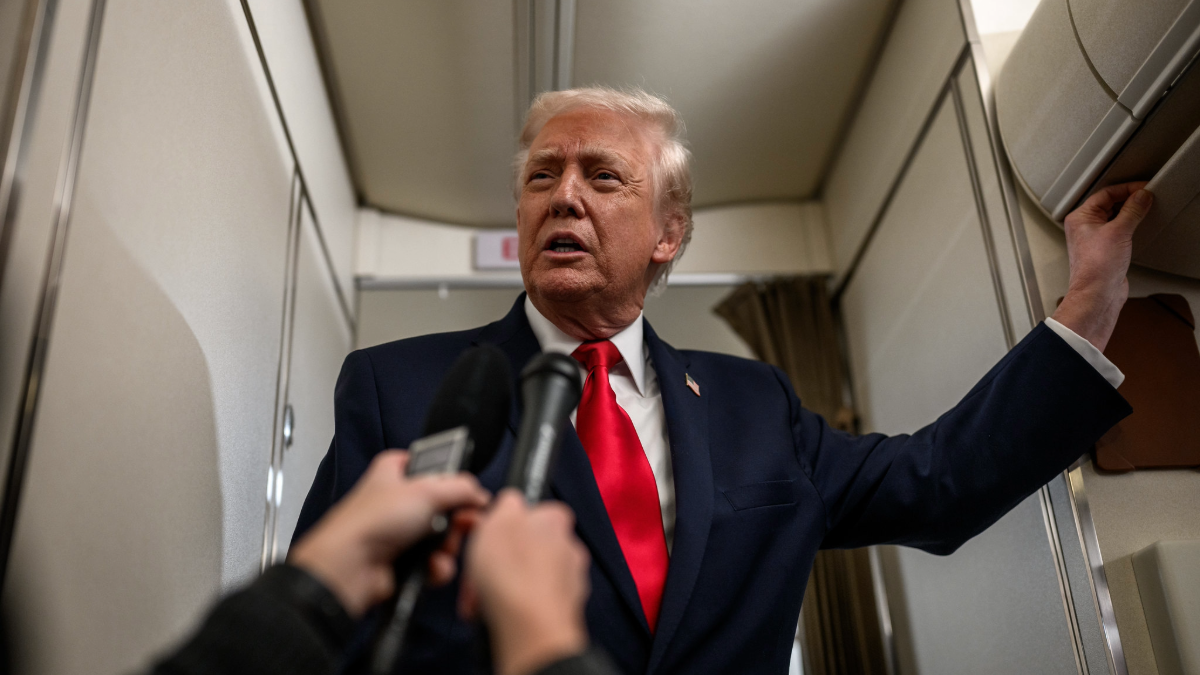
On Thursday, U.S. President Donald Trump signed an executive order aimed at reducing state regulation of artificial intelligence, declaring AI a strategic priority for the nation. The announcement took place in the Oval Office, where Trump emphasized the need for a unified system to oversee AI developers and companies. He stated that this centralized approval mechanism would streamline processes and foster innovation in the rapidly evolving technology landscape.
During the event, Trump invited reporters to witness the signing, underscoring the administration’s commitment to positioning the United States as a leader in AI development. “We must ensure that our regulatory framework does not stifle the growth and potential of artificial intelligence,” Trump remarked, highlighting the administration’s desire to balance innovation with necessary oversight.
Today’s discussion includes insights from Olivier Sylvain, a law professor at Fordham Law School and a senior policy research fellow at the Knight First Amendment Institute at Columbia University. Sylvain, who has published a critical perspective in Tech Policy Press titled “Why Trump’s AI EO Will be DOA in Court,” provides a legal lens through which to examine the implications of the executive order.
Sylvain argues that the executive order is likely to face significant legal challenges, potentially rendering it ineffective. He points out that the complexities of AI regulation intersect with various legal frameworks, including state rights and federal authority, which could lead to a protracted legal battle. “The landscape of AI regulation is not only about technology but also about governance and jurisdictional authority,” he explained.
The executive order arrives amid growing scrutiny over the ethical implications and regulatory needs of AI technologies. As AI continues to permeate numerous sectors, from healthcare to finance, the call for a cohesive regulatory approach becomes increasingly urgent. Critics argue that without a proper regulatory framework, the potential for misuse of AI technology may escalate, leading to significant societal risks.
Furthermore, the global race for AI dominance has intensified, with countries like China making substantial investments in their AI capabilities. Trump’s order seeks to bolster U.S. competitiveness in this arena, as he reiterated the importance of fostering an environment conducive to innovation. “We want to lead the world in AI. We cannot allow other countries to take the lead on this crucial technology,” he stated.
The implications of this executive order extend beyond national competition. Experts suggest that a lack of coordinated regulation could lead to uneven development of AI technologies, with some states enacting stringent rules while others may adopt a more permissive approach. This disparity could create a fragmented market that complicates compliance for companies operating across state lines.
As the conversation around AI regulation continues to evolve, stakeholders across sectors are paying close attention to the administration’s next steps. Industry leaders are advocating for a collaborative approach that involves not only government entities but also the private sector, academia, and civil society. This dialogue is essential to ensure that AI technologies are developed and deployed responsibly and ethically.
Looking ahead, the ongoing debate over AI regulation is likely to shape the future of technology development in the United States. As the administration navigates the complexities of federal and state authority, the balance between innovation and regulation remains a pivotal concern. With legal experts like Sylvain forecasting potential obstacles, the path forward for Trump’s executive order appears fraught with challenges, emphasizing the need for a comprehensive strategy that addresses the multifaceted nature of AI governance.
In conclusion, the executive order signifies a critical moment in the U.S. policy landscape concerning artificial intelligence. As stakeholders monitor its implementation and potential legal hurdles, the broader implications for technological advancement and ethical considerations in AI will continue to unfold, raising important questions about the future of regulation in this transformative field.
See also QUALCOMM Introduces Governance Changes Amid AI Chip Expansion, Boosting Investor Influence
 Trump Administration Unveils Federal AI Regulations, Challenging Arizona’s Local Authority
 AI Ethics: 5 Key Concerns Impacting Accountability, Bias, and Job Security
 Executive Order Aims to Clarify National AI Standards, Challenges State Regulations
 AI Transformation in India: 80% of Routine Tech Jobs to Be Automated by 2026















