






















































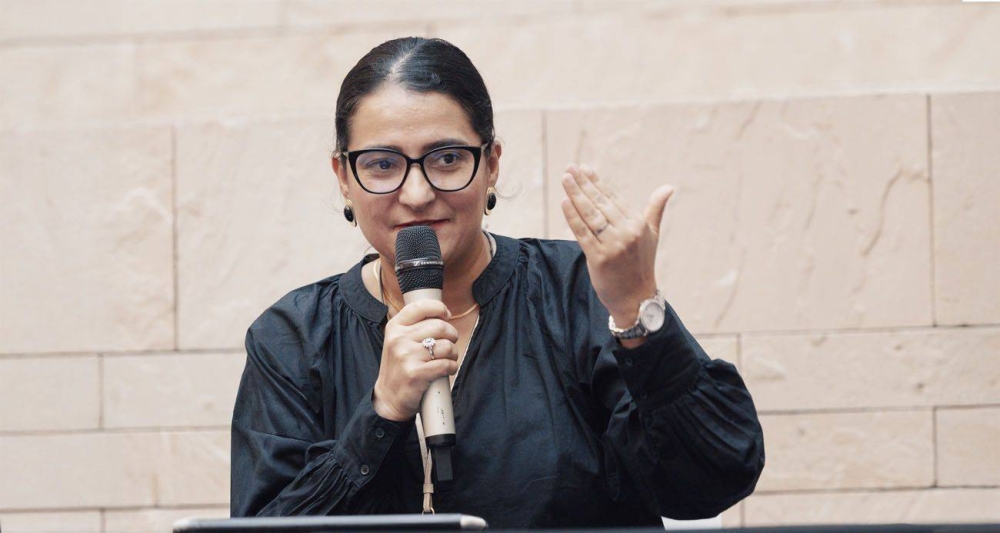
Doha — The future of artificial intelligence (AI) in the Middle East is closely tied to addressing its “inclusion” problem, according to Houda Bouamor, a prominent expert in Arabic Natural Language Processing (NLP) and an associate teaching professor at Carnegie Mellon University in Qatar (CMU-Q). Bouamor emphasized that most AI models are primarily trained on formal, literary Arabic, which hinders their ability to comprehend the various spoken dialects prevalent in the region.
The complexity of Arabic’s morphology poses additional challenges, creating nuances that English-centric models are ill-equipped to handle. “It’s about inclusion and making sure our societies benefit from AI in ways that fit our needs,” Bouamor stated, underscoring the societal implications of this technical gap. Despite having hundreds of millions of speakers, Arabic is often categorized as a low-resource language in the AI landscape, leading to significant disparities in how technology impacts the region.
For everyday dialects, particularly those spoken in Qatar, the gap is even more pronounced. “This means many tools don’t fully understand how we communicate in real life,” Bouamor noted. Addressing this linguistic divide is crucial for enhancing education, as it allows support for children in their native languages and fosters the development of vital accessibility tools, including speech recognition systems for people with disabilities.
This linguistic challenge forms part of a broader set of regional issues that Bouamor believes AI can uniquely tackle. She highlighted the importance of multimodality—the integration of speech, images, and video—as particularly beneficial for a region rich in oral traditions and with a growing media industry. “AI for social good” should direct research efforts toward specific challenges in the Middle East and North Africa (MENA) related to healthcare, climate sustainability, and crisis management, she argued.
However, Bouamor cautioned that this technical progression must be paired with ethical considerations. “Growth should not only be technical. We need governance frameworks that ensure AI reflects our cultural values, addresses bias, and is trusted by society,” she stated. This emphasis on diverse representation is especially critical in regions with varied voices and perspectives.
In response to these complex challenges, Carnegie Mellon University in Qatar is launching a new Bachelor of Science in Artificial Intelligence (BSAI). The program aims to bolster the university’s existing focus on AI across disciplines such as biological sciences, business administration, computer science, and information systems. Bouamor envisions a powerful synergy between those who develop AI and those who apply it. “The BSAI will create specialists who can build advanced models, while students, faculty, and researchers in other programs can guide new areas for discipline-specific applications and responsible, ethical deployment,” she said.
This dual emphasis on capability and conscience is already integral to CMU-Q’s educational approach. Bouamor expressed her enthusiasm for expanding this focus as the BSAI program unfolds, stating, “Our goal is to help create a self-sustaining innovation ecosystem in Qatar, and prepare graduates who can develop cutting-edge AI that responsibly serves people and society.” As the demand for AI continues to grow, addressing the inclusion and ethical dimensions of its development will be essential for ensuring that the technology can effectively benefit all communities in the MENA region.
See also EU AI Act Fuels $202B Growth in European AI Market by 2033, Driven by Horizon 2020
 Periodic Labs Aims to Create Room-Temperature Superconductor Using AI Innovations
 Engineers Accelerate AI & Machine Learning Breakthroughs in Health, Energy, and Manufacturing
 AND-E Acquires Mind Foundry’s AI Consulting to Enhance Oxford Lab’s Capabilities
 Google Gemini 3 Launches with Advanced AI Tools for Writing, Research, and File Analysis















