






















































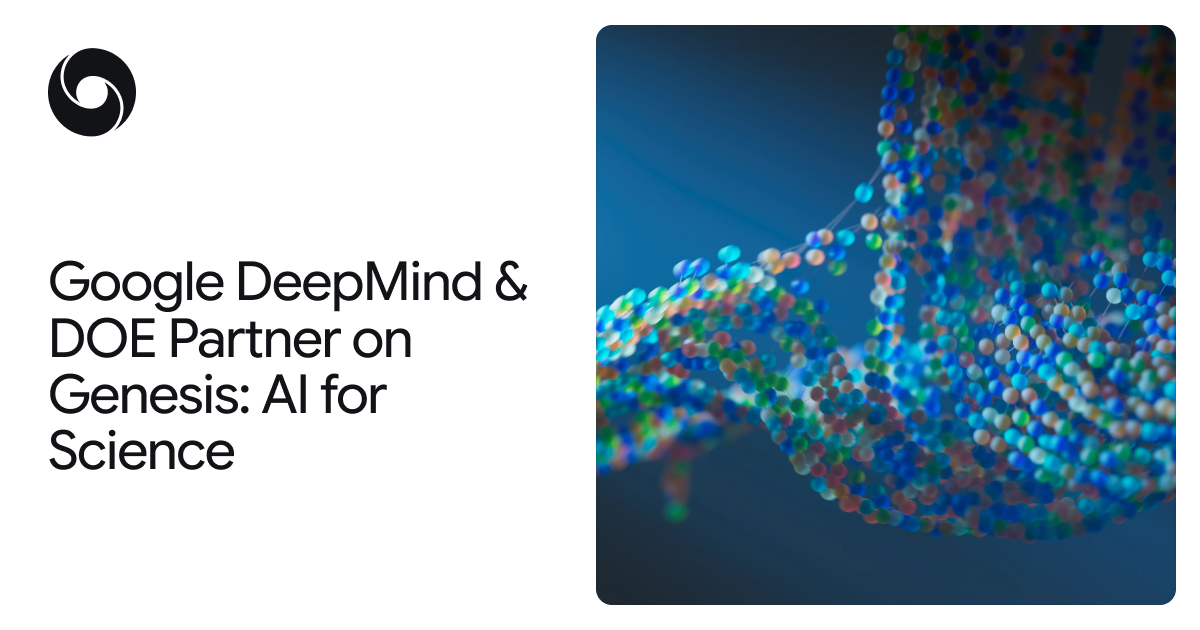
In a significant move to transform scientific research in the United States, the White House has announced the Genesis Mission, backed by Google DeepMind and the U.S. Department of Energy (DOE). This initiative aims to leverage advanced artificial intelligence (AI) to expedite scientific discovery and tackle pressing challenges related to energy, national security, and more. The Genesis Mission will activate all 17 National Laboratories under the DOE, in collaboration with industry and academia, to create an integrated discovery platform that enhances the productivity of American research.
Scientists today are grappling with complex problems that require unprecedented innovation. From simulating the dynamics of fusion plasma to analyzing vast datasets, the hurdles are immense. As a leader in AI, Google DeepMind believes that modern deep learning techniques are essential for addressing these challenges, significantly compressing the timeframe for new discoveries.
To support the Genesis Mission, Google DeepMind is launching an accelerated access program for scientists at the National Laboratories. This initiative will provide them with cutting-edge AI tools, starting with the AI co-scientist on Google Cloud. Built on the Gemini platform, this virtual scientific collaborator is designed to synthesize extensive information, enabling researchers to generate innovative hypotheses and proposals more rapidly.
The potential of the AI co-scientist is already being validated in various fields, particularly in biomedicine, where it has identified novel drug repurposing candidates for liver fibrosis and predicted complex resistance mechanisms in microbes. These breakthroughs demonstrate how AI can shorten hypothesis development from years to mere days. In addition to biomedical applications, early indicators suggest promising results in physics, chemistry, and computer science.
By early 2026, the access program will broaden to include additional AI models such as AlphaEvolve, an AI coding agent that has shown transformative potential in various computing domains, enhancing efficiencies in Google’s data centers and AI training. Another model, AlphaGenome, focuses on accelerating research in genome biology and disease understanding, with applications extending to sustainable biofuels and advanced biomaterials. Meanwhile, WeatherNext is expected to significantly improve weather forecasting capabilities, supporting disaster preparedness through better cyclone forecasts.
The partnership extends further to provide access to Gemini for Government. This service combines Google’s AI-optimized commercial cloud capabilities with its most advanced models, including Gemini 3, which boasts state-of-the-art reasoning and multimodal understanding.
The collaboration between Google DeepMind and the DOE is not without precedent. Past initiatives, such as the work by DOE’s Brookhaven National Laboratory on the Protein Data Bank, played a vital role in developing AlphaFold. This AI system, which predicts protein structures, was recognized with the 2024 Nobel Prize in Chemistry, underscoring the importance of such partnerships in accelerating scientific advancements. AlphaFold’s database has already been utilized by over three million scientists across the globe to expedite research into critical areas like malaria vaccines and gene therapies.
Looking ahead, the Genesis Mission represents a pivotal opportunity for the United States to reaffirm its leadership in scientific research. The initiative will explore collaborations with National Laboratories focused on vital areas such as fusion energy and new material discovery. Given the urgent global challenges—from energy sustainability to healthcare—this mission’s emphasis on integrating human ingenuity with advanced AI capabilities is expected to yield discoveries that were once thought impossible.
As America embarks on this ambitious journey, the upcoming years could very well redefine the landscape of scientific research, positioning the nation at the forefront of innovation.
Google DeepMind | U.S. Department of Energy | Google Cloud | Brookhaven National Laboratory | Nobel Prize in Chemistry | National Institutes of Health
See also AI Annotation Market to Surge to $28.31B by 2033, Driven by AI Expansion in Key Sectors
 Trump Administration Reviews Nvidia’s H200 AI Chip Sales to China Amid Policy Shift
 Global Dialogue on Journalism in AI Era Culminates in Berlin: Experts Forge Future Roadmap
 MMA Announces 2025 SMARTIES™ X Global Winners: 83 Campaigns Driving Marketing Innovation and Impact
 OpenAI, Google, Perplexity Launch Free AI Plans in India, Driving 607% User Surge















