






















































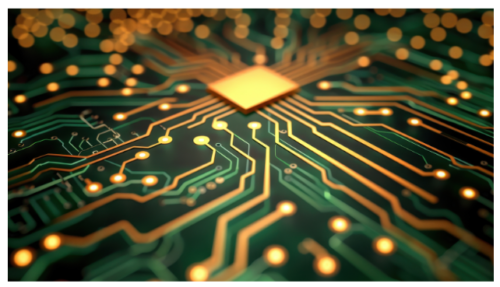
With the increasing prevalence of artificial intelligence (AI) applications, the demand for specialized hardware has surged, highlighting the crucial role of advanced circuits in AI-powered products. As of December 19, 2025, traditional computing architectures are struggling to meet the requirements of modern AI tasks, which necessitate custom circuitry capable of executing vast numbers of parallel calculations efficiently. The hardware assembly lines experienced a significant transformation, evidenced by a 35% increase in AI-powered robot deployments in 2023.
The landscape of AI hardware is changing rapidly as conventional CPU designs fail to align with the unique demands of AI processing. Unlike traditional applications that rely on sequential operations, AI requires the ability to conduct thousands of calculations simultaneously. This fundamental shift necessitates specialized data pathways with minimal latency, prompting developers to work closely with firmware teams to ensure that hardware developments translate effectively into enhanced performance for machine learning models.
Advanced circuits are not solely about speed; they represent a complex balancing act of speed, power consumption, and heat management. Conventional CPUs were not built to manage all three demands concurrently, making dedicated neural processing units (NPUs) essential for serious AI work. In stark contrast to traditional processors, which may take several seconds to analyze a single image, optimized AI circuits accomplish this in mere milliseconds, unlocking new applications that require rapid decision-making.
Technical Details
The evolution of AI hardware has led to the emergence of various specialized circuit types tailored for distinct challenges. For instance, NPUs have undergone a complete architectural rethinking, designed explicitly for parallel computations. Featuring thousands of small processing elements working in tandem, NPUs excel in pattern recognition and intelligent decision-making. Industry giants like Apple, Google, and Qualcomm have invested billions into proprietary NPU architectures, each tailored to meet specific workloads.
Furthermore, some engineers are looking towards the human brain for inspiration, developing neuromorphic circuits that utilize spiking neural networks to process information asynchronously. For example, Intel’s Loihi 2 chip exemplifies this approach, achieving 1,000 times lower power consumption for specific tasks compared to conventional circuits. Such energy efficiency becomes vital in edge devices with limited power supplies.
Analog computing, meanwhile, is experiencing a resurgence in AI applications. These circuits process calculations using continuous signals rather than discrete binary values. Recently, IBM unveiled an analog AI chip that boasts 14 times the energy efficiency of comparable digital circuits, though the challenges of managing noise and precision remain significant.
Advancements in semiconductor technology continue to push boundaries in AI chip architecture. Notably, modern circuits are integrating memory directly into processing elements, effectively eliminating data transfer delays that previously hindered performance. By 2025, semiconductors related to AI are projected to account for nearly 20% of overall demand, translating to about $67 billion in revenue, underscoring the importance of memory-integrated designs.
In addition to memory integration, three-dimensional stacking and chiplet architecture are revolutionizing circuit design. Engineers are no longer limited to flat layouts; by stacking circuits vertically, they can significantly increase component density while reducing signal travel distances. This innovation leads to faster data transfer and lower power consumption, crucial for AI workloads that constantly move information between processing units and memory.
Power management in advanced circuits is another critical factor. Modern AI chips utilize dynamic voltage scaling techniques to adjust power levels based on workload demands. During periods of heavy computation, circuits can ramp up to deliver maximum performance, while during idle times, they scale back to conserve energy. This adaptability is particularly beneficial for mobile devices, extending battery life while ensuring peak performance when necessary.
Edge AI devices face severe power limitations, often relying on small batteries or energy harvesting methods. Circuit designers have developed strategies that allow AI inference at power levels below one milliwatt, enabling continuous operation in wearables and IoT devices. Similarly, advancements in thermal-aware circuit design are essential, as they equip AI chips with sensors to monitor thermal conditions, allowing for dynamic adjustments to prevent overheating and maintain optimal performance.
The ongoing evolution of specialized circuits signifies a profound shift in computing architecture. By mimicking biological processes and exploring alternatives to traditional digital computing, engineers are discovering innovative solutions to address the unique demands of AI. These advancements not only enhance existing applications but also pave the way for entirely new product categories that were once unfeasible. As circuit technology continues to progress, the potential for AI capabilities to expand into previously unimagined domains is substantial, laying the groundwork for the future of intelligent systems.
In summary, while AI circuits differ significantly from traditional processors, the challenges of power consumption and performance optimization remain at the forefront of engineering endeavors. As the field evolves, the integration of advanced circuits will be essential in meeting the demands of increasingly complex AI applications.
See also Domain Industry Consolidates as AI Fuels $12M Sales and New gTLD Growth
 SoundHound AI Surpasses C3.ai with 400% Revenue Growth Amid AI Market Boom
 Apple’s macOS Tahoe 26.2 Launches RDMA Support Over Thunderbolt 5 for AI Clusters
 Voice-Activated AI Market Grows 25% to $5.4B, Set to Reach $8.7B by 2026
 Moore Threads Launches Huashan AI Chip, Surpassing Nvidia’s Hopper in Performance















