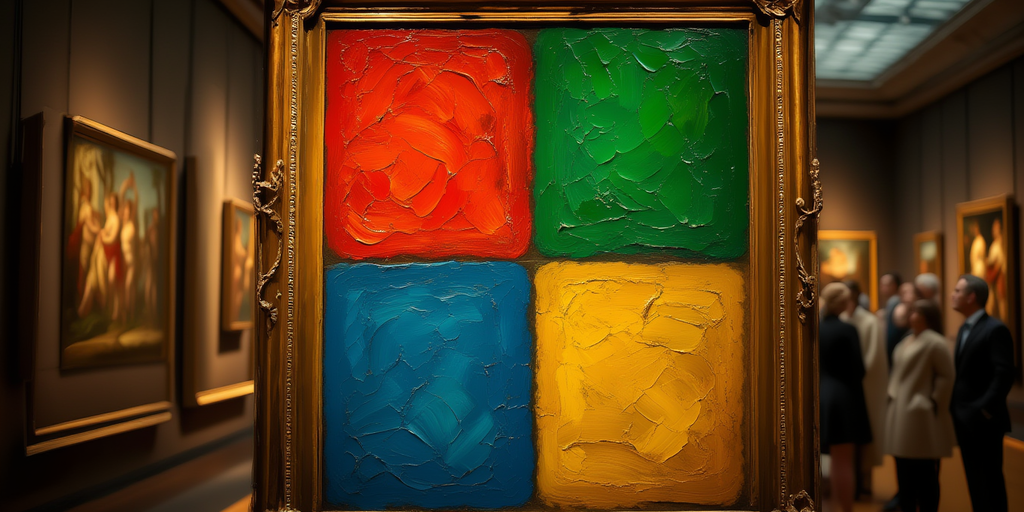
Microsoft has unveiled its latest AI image generation model, MAI-Image-2, which the company claims delivers state-of-the-art realism and text rendering capabilities. Announced by the company’s AI Superintelligence team, the model currently ranks third on the Arena.ai leaderboard, trailing behind competitors from Google and OpenAI. The development marks a significant strategic shift for Microsoft, which has historically relied on third-party partnerships to provide such technology.
While the launch positions Microsoft as a formidable player in the image generation arena, it comes with caveats. The model currently faces several limitations, including strict filters, usage caps, and the absence of certain features that may curb its practical applications. These constraints could hinder its adoption among users looking for flexibility and creativity in their workflows.
MAI-Image-2 is already available through the MAI Playground, with a gradual rollout expected for integration into Microsoft’s Copilot and Bing Image Creator. However, API access is limited to select enterprise customers, with broader availability slated for the upcoming Microsoft Foundry.
The model’s development process involved extensive engagement with photographers, designers, and visual storytellers, aiming to enhance three key areas: photorealism, reliable in-image text generation, and the ability to construct intricate, imaginative scenes. Initial tests indicate notable strengths in photorealism, particularly in capturing natural light and surface textures. While it does not quite match the performance of Google’s leading model, MAI-Image-2 shows promise, especially in tasks demanding realism.
Technical Overview
The user interface of the MAI Playground is minimal and straightforward, contrasting with the more complex dashboards seen in other platforms. Users have reported that the model excels at generating photorealistic images, performing admirably in tests focused on detail and spatial relationships. For example, it has demonstrated superior performance in generating complex scenes that defy typical expectations, including a dog riding a bike in the middle of the ocean.
Text generation capabilities are another highlight of MAI-Image-2. The model manages to produce large blocks of text—often a challenging task for AI models—with a consistency that surpasses many competitors. Initial tests even included multilingual text, where the model generated some Chinese characters, albeit with mixed accuracy.
However, the model’s extensive filtering system has drawn criticism. More stringent than those employed by Google and OpenAI, the filters have restricted the generation of certain creative content. For instance, a request for a cartoon depiction of a spider chasing a woman was outright denied, illustrating the limitations faced by users operating in creative spaces that often tread into ambiguous territory.
The limitations do not end with content moderation. Users experience a cooldown period of 30 seconds after each generation, and after generating 15 images, they are locked out for a full day. This could significantly hinder productivity, particularly for those looking to leverage the tool for extensive creative projects. Furthermore, MAI-Image-2 currently only supports a 1:1 output ratio, lacking the versatility needed for landscape or portrait formats critical to many social media applications.
As it stands, the rollout of MAI-Image-2 into products like Copilot remains incomplete. While the model has potential, it lacks vital features such as image editing and reference support that have become standard in similar tools offered by competitors like Adobe Firefly and Midjourney.
In summary, MAI-Image-2 outperforms its current leaderboard ranking by delivering high-quality images and effective text generation. Its development reflects Microsoft’s strategic intent to reduce reliance on external partnerships while fostering internal innovation. Despite this, the model is hampered by conservative product restrictions that limit its utility. A more flexible approach could position MAI-Image-2 as a serious contender in the AI image generation market, offering a glimpse into Microsoft’s future capabilities.
See also OpenAI Reveals Language Models Can Learn Traits Subliminally Through Data Filtering
 rDPO Achieves 82.69% Macro Average Score with Instance-Specific Rubrics in Visual AI Tasks
 OpenAI Set to Launch GPT-6 This Week with Major Upgrades and Faster Development Cycle
 OpenAI Launches GPT-5.3 Instant Mini and $100 Pro Plan Amid User Backlash and Protests
 Large Language Models Can Deanonymize Users with 67% Recall, ETH Zurich Study Reveals