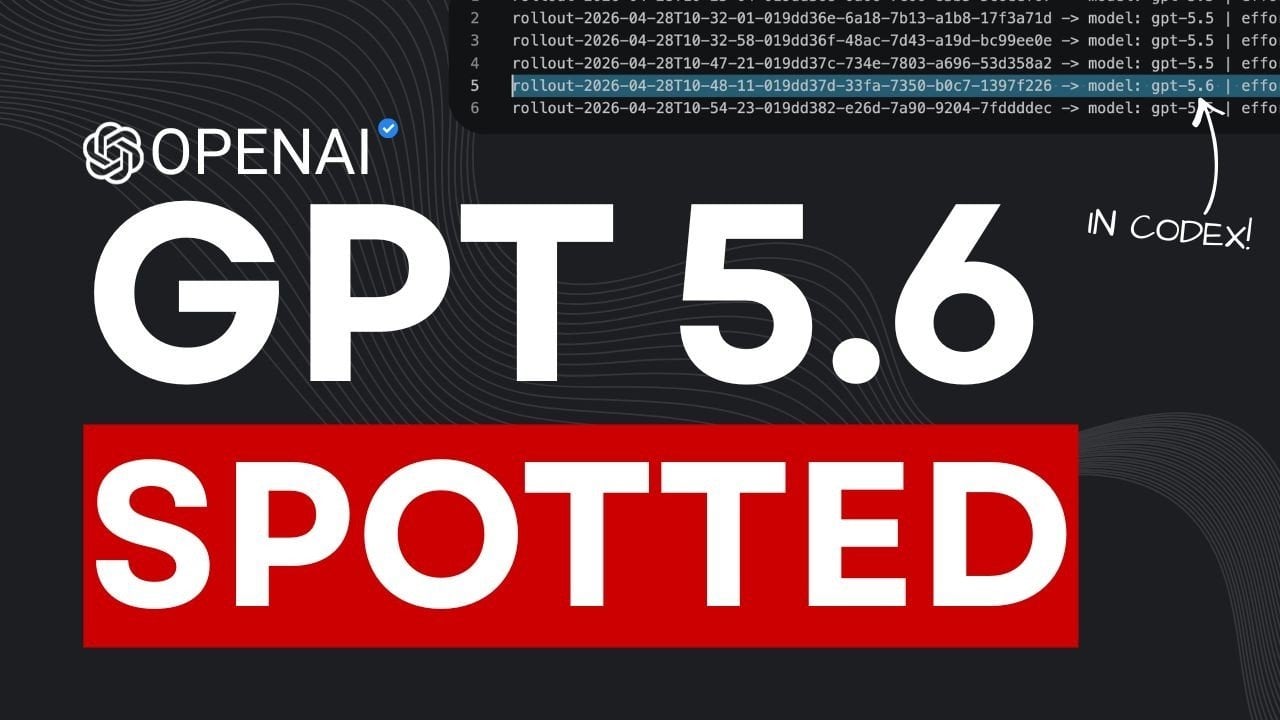
OpenAI is reportedly in advanced testing of ChatGPT 5.6, a new iteration of its generative AI model that aims to redefine standards in natural language processing and multimodal AI. This development comes as the model is being evaluated within the Codex environment, which specializes in AI-driven coding and software development. Should it be released, GPT 5.6 could present enhanced capabilities that challenge existing leaders in the field, like MTOS, and significantly improve efficiency for developers navigating complex coding tasks.
The tech industry is witnessing an accelerated pace of innovation, with major updates arriving almost monthly. This trend reflects a commitment to expand the applications of AI, from advancing natural language understanding to enhancing multimodal capabilities. OpenAI aims to not only meet but exceed user expectations with GPT 5.6 through ongoing refinements and enhancements in its models.
In parallel, OpenAI’s Codex platform is on the verge of significant updates, potentially introducing advanced features to address cybersecurity challenges and streamline software development. These enhancements may include a new Codex model designed to further solidify its position as a frontrunner in AI-driven coding tools. Reports suggest that Codex is evolving into a “super app” for developers, incorporating various plugins and tools tailored to meet their specific needs. As its adoption outpaces competitors like Cloud Code, Codex is establishing itself as an essential resource for developers focusing on innovation.
The rumored merger between Chinese AI labs DeepSeek and Kimi could create a formidable entity in the open source AI community. This consolidation aligns with China’s broader strategy to enhance global competitiveness by uniting leading players in the industry. If finalized, the merger could significantly increase Kimi’s IPO valuation, potentially doubling it from $18 billion, while strengthening its positioning in the global market. The combined entity is expected to prioritize the development of cost-effective and efficient AI models, enhancing competition with industry leaders like Frontier Labs.
DeepSeek is also preparing to launch Version 4 of its multimodal AI model, which integrates text, image, and audio processing capabilities. This update aims to improve efficiency and affordability, addressing the growing demand for versatile AI solutions across commercial and academic sectors. By focusing on cost-effectiveness, DeepSeek seeks to challenge resource-intensive models from competitors, reinforcing the significance of multimodal AI in applications ranging from content creation to data analysis.
Separately, Google’s recent agreement with the Pentagon has ignited ethical debates surrounding the role of AI in defense. The partnership allows the U.S. Department of Defense to utilize Google’s AI for classified applications, including mission planning and weapons targeting. While this collaboration could enhance military operations, it has also raised ethical concerns, particularly as over 600 Google employees signed a petition opposing the partnership. Critics argue that this move contradicts Google’s prior commitments to avoid developing harmful technologies, underscoring the ethical dilemmas that arise when technological innovation intersects with military objectives.
The interplay between these developments—GPT 5.6, Codex updates, the DeepSeek-Kimi merger, and Google’s Pentagon agreement—highlights the rapid evolution of the AI industry. As companies strive for more advanced and versatile models, they must also confront the ethical challenges that accompany these innovations. With AI increasingly becoming integral in sectors ranging from software development to defense, a balanced approach prioritizing both technological progress and ethical responsibility is crucial.
Looking ahead, further breakthroughs and debates are expected to shape the trajectory of AI technology and its role in society. Stakeholders must navigate this intricate landscape with a commitment to fostering innovation while addressing the ethical implications of their advancements. The future of AI hinges not only on technical achievements but also on the industry’s ability to align innovations with the broader values and needs of society.
See also Gemini Embedding 2 Launches with Multimodal Capabilities, Enhancing AI Retrieval Accuracy by 40%
 OpenAI’s ChatGPT Images 2.0 Surges in India, Sees Mixed Global Response with 11% App Growth
 Phosphene Launches Local AI Video Generation for Apple Silicon, Transforming Creative Workflows
 Rezolve AI Sees 14.7% Share Price Decline: Is It Undervalued at $2.67 or Overvalued?
 Anna University Launches 6-Day AI Training for Faculty on Generative Models and Edge Applications