






















































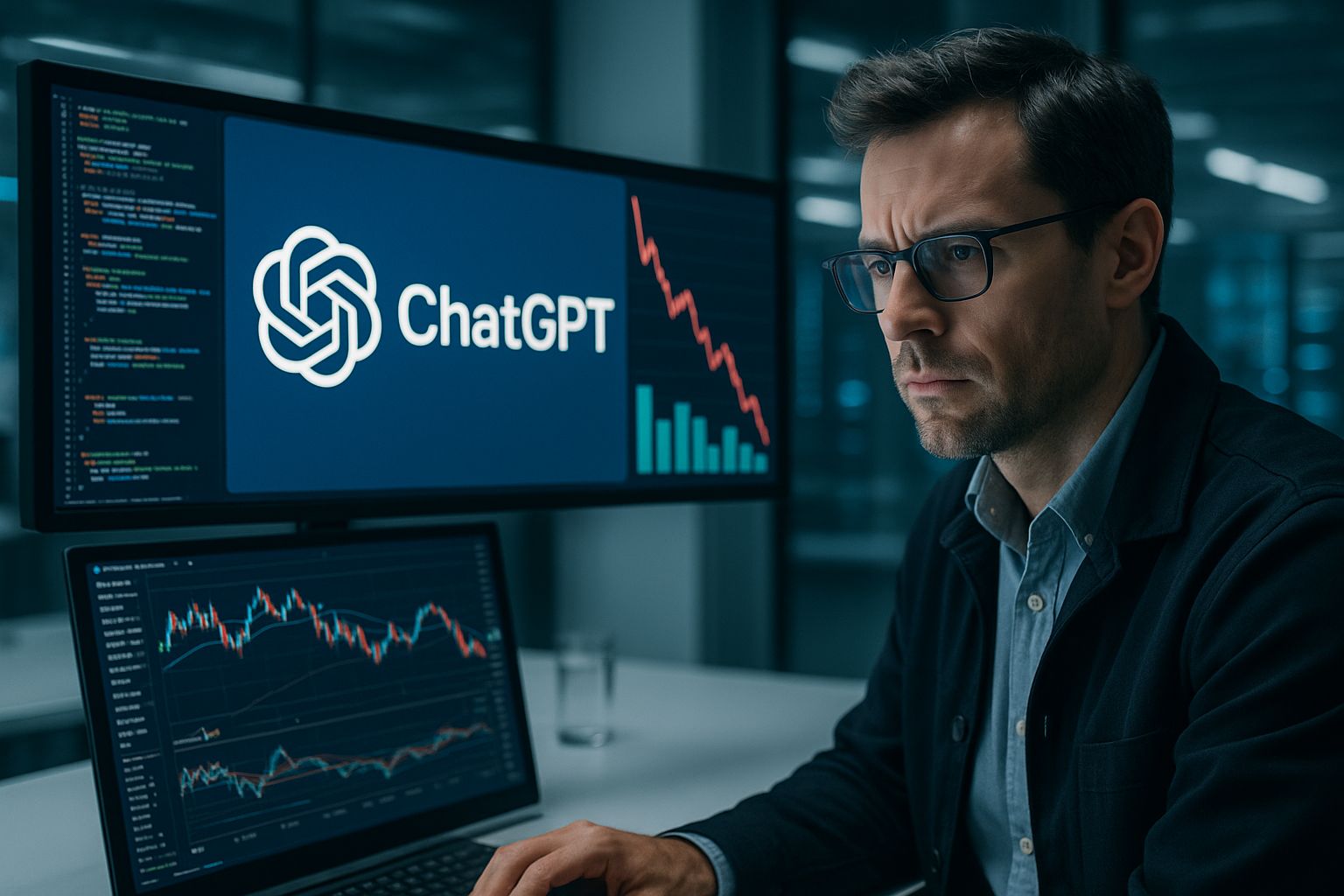
Stock market fluctuations can be notoriously unpredictable, and the recent surge in artificial intelligence (AI) shares has left many investors questioning whether we are witnessing the dawn of a new bubble. To explore these concerns, I turned to the latest version of ChatGPT. OpenAI CEO Sam Altman asserts that GPT-5 promises to provide insights akin to conversations with PhD-level experts. However, my experience with the chatbot felt more like engaging with a first-year undergraduate.
When I inquired about the potential for a bubble in AI shares, ChatGPT offered a list of risks associated with the sector, such as weak earnings and tighter regulation. However, its vague conclusion that the threat of a crash is “meaningful” didn’t provide much reassurance. It did suggest assessing the probabilities of various scenarios, including a mild correction, a moderate decline, or a significant crash. The analysis, however, consisted largely of statistics reflecting past market behaviors, indicating a 10%-20% drop as the most likely outcome based on historical occurrences. This information, while not groundbreaking, underscored the inherent challenges in forecasting market downturns.
Given the limitations of AI insights, I plan to stick with my traditional strategies for preparing for stock market volatility. This includes identifying stocks I believe will thrive even during downturns. A critical criterion in this assessment is whether the company possesses a strong competitive advantage. History shows that during economic downturns, weaker firms tend to suffer disproportionately, allowing stronger competitors to emerge in better positions.
One company that stands out in this regard is Compass Group (LSE: CPG), a leading contract caterer listed on the FTSE 100. While on the surface it may seem an unlikely candidate to face challenges from automation, which could potentially reduce staffing needs, Compass Group’s robust market position provides significant advantages. As the largest operator in its field, the company benefits from economies of scale, allowing it to negotiate favorable pricing with suppliers.
What’s particularly noteworthy is Compass Group’s innovative approach to monetizing its market position. The company has begun allowing competitors access to its platform for a fee, generating additional revenue while simultaneously discouraging them from developing competing services. This strategy not only bolsters Compass Group’s financial standing but also enhances its competitive moat, ensuring its long-term viability.
Despite my limited interaction with ChatGPT on predicting stock market crashes, it may well be that even advanced models struggle to accurately forecast such events. Given this uncertainty, my strategy remains focused on being prepared with a list of stocks I aim to acquire during market downturns, with Compass Group firmly on that list.
Currently, the stock is approximately 10% above my target price, but I believe it is likely to show greater resilience than its peers during a significant market contraction, making it an ideal candidate for investment consideration in the event of a downturn.
While my conversation with ChatGPT provided limited insights into the imminent risks of an AI bubble contributing to a stock market crash, it reinforced the idea that thoughtful analysis and traditional investment strategies can play a crucial role in navigating financial landscapes.
As always in investing, maintaining a diversified perspective and focusing on companies with sustainable competitive advantages will serve as a solid foundation for weathering market volatility.
See also Forethought AI Secures $9M Series A by Focusing on Real Customer Needs
 AI Adoption Surges in India: 76% of Leaders See Significant Impact, Marketing Leads Charge
 Alembic Secures $145 Million in Series B Funding Led by Prysm Capital and Accenture
 Consensus Launches AI-Powered Marketing Platform to Boost Lead Conversion by 6-8x
 Gartner: 95% of Marketers See Little Value from AI Agents Amid Industry Shift














