






















































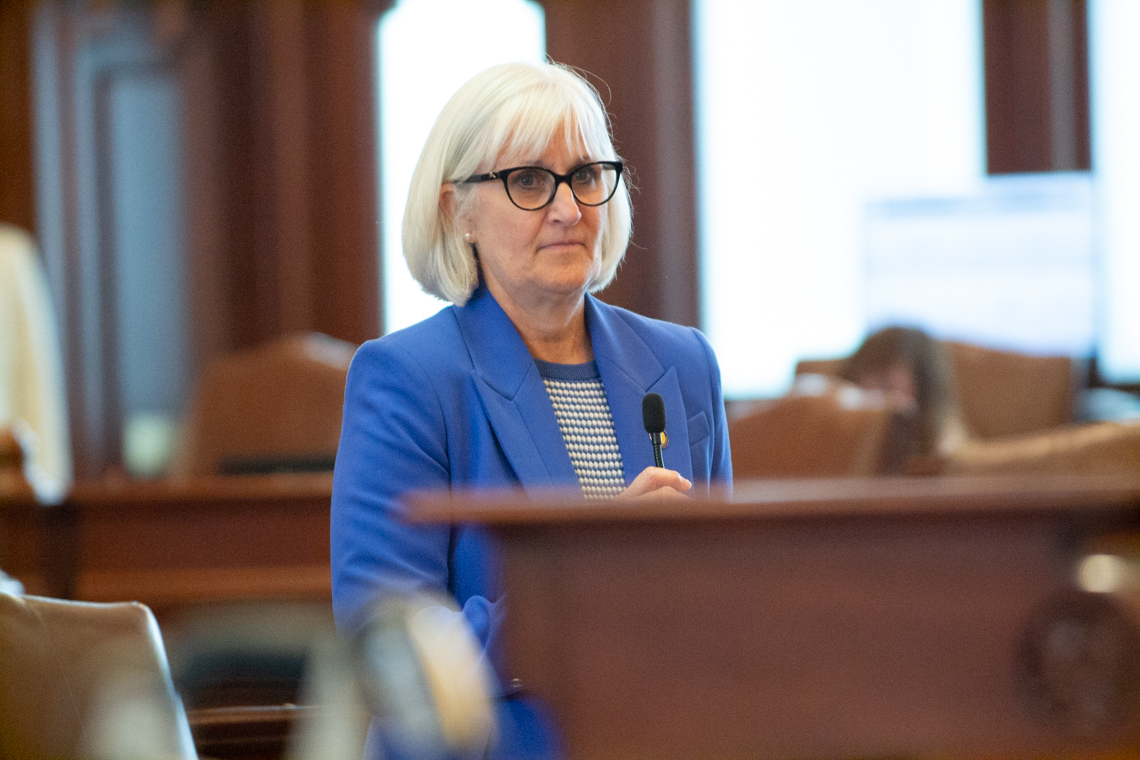
Illinois lawmakers are actively addressing the potential risks associated with artificial intelligence (AI) as they consider a range of proposed regulations intended to safeguard consumers. In a series of virtual hearings on April 9 and 10, the Illinois General Assembly engaged with nearly 50 bills focusing on AI’s impact on privacy, education, and consumer protection.
Senator Mary Edly-Allen, a Democrat from Libertyville, highlighted the lessons learned from the evolution of social media, cautioning against a repeat of past mistakes with emerging technologies. “If we got social media wrong, and we did, we cannot afford to get AI wrong,” she remarked, urging fellow lawmakers to act on previous lessons.
Industry stakeholders have urged the state to allow the federal government to take the lead on AI regulations, while still expressing concerns about the technology’s societal ramifications. A presidential executive order issued in December indicates a reluctance to impose broad regulations, emphasizing innovation over restrictions. However, AI advocates suggest that Illinois should consider aligning its laws with those of other states to avoid a complicated regulatory landscape for businesses operating across multiple jurisdictions.
“Our core concern is creating a patchwork environment, making Illinois a compliance outlier,” stated Jarrett Catlin, the state AI policy advisor at TechNet, a national technology policy advocacy group. He added that it is crucial to create incentives for responsible behavior without imposing a one-size-fits-all compliance regime.
During the hearings, some senators expressed their commitment to encouraging innovation while emphasizing the need for regulatory guardrails, particularly concerning the use of chatbots and the protection of minors. “This isn’t about stifling innovation… but you need to have guardrails to protect minors,” Sen. Sue Rezin, a Republican from Morris, noted. She underscored the importance of ensuring that consumer protections keep pace with technological advances.
Current and Proposed Statutes
Illinois already has laws targeting AI applications, including regulations on image manipulation and intellectual property. Andrew Cunningham, senior director of government relations for the Illinois Chamber of Commerce, highlighted that existing legislation can be adapted to address irresponsible use of AI technologies. He stated, “In many ways, our state laws are adaptive, and bad actors using AI, or any technology, irresponsibly are not operating without potential legal ramifications.”
Legal experts have also weighed in, with Ketan Ramakrishnan, a law professor at Yale, advocating for the use of tort law to hold AI companies accountable. “A lot of these early chatbot suits that you’re seeing are being brought through the common law in various states,” he explained, while acknowledging that current legal frameworks may be inadequate as AI systems become more powerful. Lawmakers echoed this sentiment, expressing concerns that companies could use terms of service to evade liability for any harm caused by chatbots.
“Large corporations shouldn’t be allowed to hide behind a computer algorithm,” Rezin asserted, emphasizing the necessity for accountability in cases where AI-driven decisions could lead to significant harm, such as financial loss or injury.
Amid these discussions, the Chamber of Commerce is collaborating with the Illinois Department of Human Rights on implementing a bill passed in 2024 that prohibits discriminatory AI usage in hiring and recruitment processes. Cunningham pointed out the complications arising from the lack of established rules, stating that compliance can be burdensome for businesses navigating this newly regulated landscape.
As legislators contemplate the potential impacts of AI regulations, industry donors have invested millions to support pro-AI candidates in recent elections. Emily Dickens, chief administrative officer for the Society of Human Resource Management, noted that Illinois is among 19 states actively seeking to regulate AI to some degree. She emphasized the importance of balancing innovation with the need for responsible practices that include human oversight in the workforce.
The adoption of AI in various business operations is on the rise, with companies utilizing it for tasks ranging from marketing to data analysis. Cunningham remarked that while many businesses are still in the early stages of AI integration, its role is becoming increasingly vital, especially for small and mid-sized enterprises looking to enhance their competitiveness.
In closing, as lawmakers continue to negotiate the complex interplay between technological advancement and regulation, the future of AI governance in Illinois remains uncertain. The evolving landscape reflects broader national debates about balancing innovation with consumer protection, further complicated by the shifting political dynamics surrounding AI policy at the federal level.
See also Butterfly Data Urges Public Sector to Prioritize Data Provenance in AI Development
 OpenAI’s David Lehane Critiques ‘Doomer’ Narratives, Urges Responsible AI Dialogue
 AI Governance Gaps Cost Companies $10B, Survey Reveals 75% Lack Confidence in Controls
 AI Governance Tools in 2026: 490% Rise in AI Attacks Sparks Need for Control















