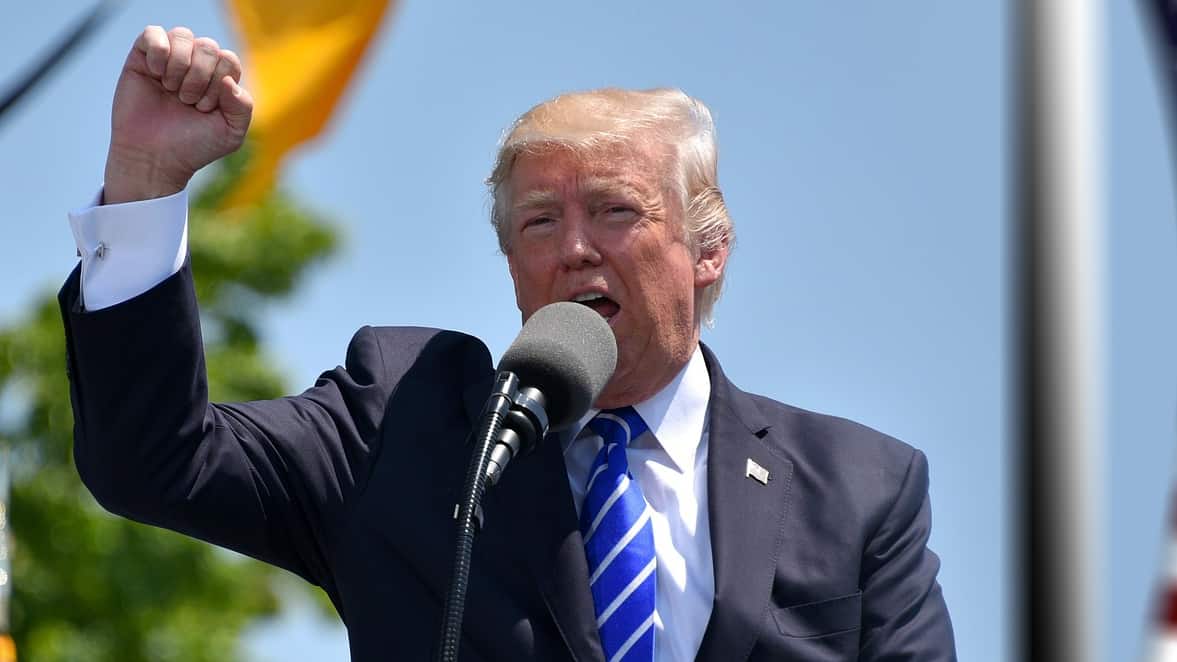
The ongoing debate over the regulation of artificial intelligence (AI) is intensifying, and recent developments hint at a shift in how the Trump administration may approach this complex issue. The question remains: is regulation beneficial or detrimental to AI advancement? Opinions vary widely, especially between AI companies, which typically oppose regulation due to perceived constraints, and advocates who argue for caution amidst rapid technological progress that outpaces understanding.
Federal vs. State-Based AI Regulations
According to a recent report from Reuters, the Trump administration may be reconsidering its previously planned executive order aimed at curtailing state-based AI regulations. Although the administration had sought to establish federal oversight to create a unified national standard, significant opposition has emerged, even from within the Republican party. In fact, a prior attempt to impose a moratorium on state regulations was overwhelmingly rejected in the Senate, with a striking 99-1 vote against it.
Currently, states have the autonomy to enact their own AI regulations, a development that opens the door for tailored approaches suited to regional needs and concerns. The implications of this could be vast, leading to a diverse landscape of AI laws that may differ significantly from state to state.
Trump’s Vision for Federal Standards
Just last week, former President Trump indicated a desire for a unified federal standard through a post on his social media platform, Truth Social. He emphasized the need to avoid a “patchwork” of regulations, highlighting the importance of having a consistent framework that not only safeguards children but also prevents censorship. This sentiment reflects a broader concern about the fragmented regulatory environment that could emerge if individual states take vastly different approaches to AI governance.
A draft of the proposed executive order includes provisions that would penalize states not complying with federal standards by threatening their federal broadband funding. It also suggests the formation of an AI Litigation Task Force aimed at challenging state-level AI laws through legal action, should they conflict with federal regulations.
This ongoing tug-of-war highlights a critical moment in AI governance. As technology advances, the balance between innovation and regulation is precarious. Advocates for regulation argue that without careful oversight, the risks associated with AI—including ethical concerns, privacy issues, and security vulnerabilities—may escalate. Conversely, industry stakeholders caution that too much regulation could stifle innovation, hindering the development of beneficial technologies.
As this situation evolves, the AI community must closely monitor these regulatory developments. The potential for state-based regulations introduces a layer of complexity that could affect everything from research and development to the deployment of AI technologies across various sectors.
Moving forward, it is essential for stakeholders—ranging from policymakers to tech companies—to engage in dialogue that balances the need for oversight with the imperative to foster innovation. The conversation around AI regulation is not merely academic; it has real-world implications that will shape the future of technology and society.
See also CIOs Must Implement Governance Frameworks to Mitigate AI Risks and Drive Innovation
 Trump Administration Proposes Executive Order to Override State AI Regulations
 Federal Preemption of State AI Laws: A Necessary Step for National Coherence
 Lawmakers Urge AI Experts to Address Mental Health Chatbot Risks and Data Privacy Concerns
 White House Pauses AI Regulation Executive Order, States Can Set Own Laws