






















































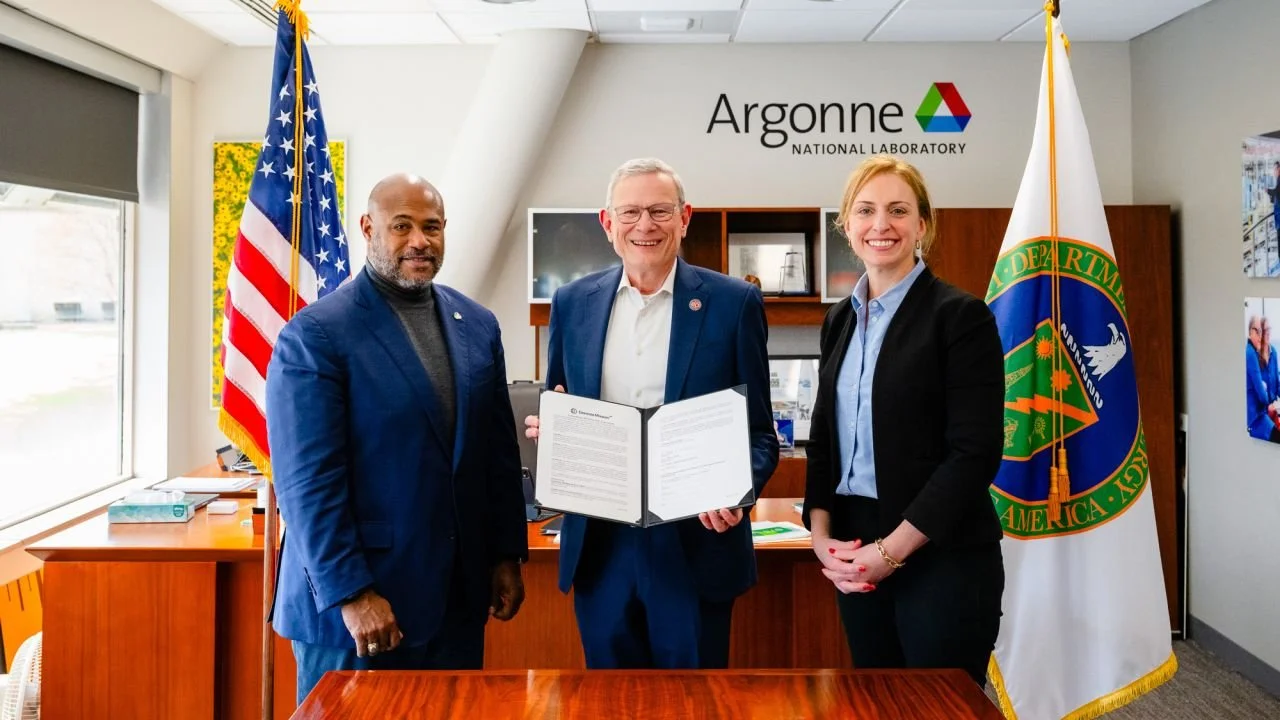
Argonne National Laboratory has joined the U.S. Department of Energy’s (DOE) Genesis Mission Consortium, a newly formed public-private network aimed at accelerating scientific discovery through the use of artificial intelligence. This collaboration, initiated earlier this year, brings together national laboratories, universities, and industry partners to enhance the integration of advanced computing, experimental tools, and scientific data.
Argonne’s participation enhances a collaborative model that is transforming the coordination of large-scale research, where AI systems are increasingly woven into workflows and partnerships. The Genesis Mission Consortium operates as a public-private partnership, moving away from traditional funding approaches to a system where participants contribute infrastructure, expertise, data, or other forms of support.
To facilitate collaboration, the Genesis Mission Partnership Exchange has been established as a platform where organizations and researchers can create profiles, identify potential partners, and form multidisciplinary teams to address national science and technology challenges. The rollout of this platform is gradual, beginning with profile creation and advancing to partner discovery and AI-supported matching. This strategy emphasizes coordination and shared capabilities over isolated projects.
At the core of the Genesis Mission is the integration of AI infrastructure and data to accelerate research across various fields, including advanced materials, quantum information science, and medicine. Argonne’s role builds on its existing expertise in large-scale computing and engineering research, employing around 3,400 staff, including 1,400 scientists and engineers, and managing over 200 research projects annually. In a LinkedIn post, Argonne highlighted that its involvement is part of a broader initiative to expedite discovery through the integration of AI in research environments.
The Genesis Mission Consortium remains accessible to universities, companies, and individual researchers, currently requiring no membership fees. Instead, contributions are expected in the form of technical capabilities, personnel time, or data. The DOE has indicated that access to elements of the Genesis Mission ecosystem will expand over time, with additional opportunities for collaboration and funding anticipated as the initiative evolves.
This model also ties research participation more closely to skills development within higher education. As AI becomes increasingly integral to scientific workflows, institutions will need to ensure that students and researchers can actively engage with these technologies in practical settings, rather than solely at a theoretical level. As the Genesis Mission Consortium continues to develop, it is poised to play a significant role in reshaping the landscape of scientific research through enhanced collaboration and the strategic application of artificial intelligence.
See also AI Achieves 95% Agreement with Clinician Assessments in Medical Interviewing Study
 Mark Zuckerberg Joins Meta’s AI Lab, Actively Coding with Engineers to Boost Innovation
 Sygaldry Technologies Secures $139M to Build Quantum AI Servers for Efficient Data Centers
 Harbin Institute and Peking University Launch Adaptive-SN2N Framework for Noise Reduction in Microscopy
 Google’s AMIE AI Achieves Doctor-Level Diagnostic Insights in Urgent Care Study















