






















































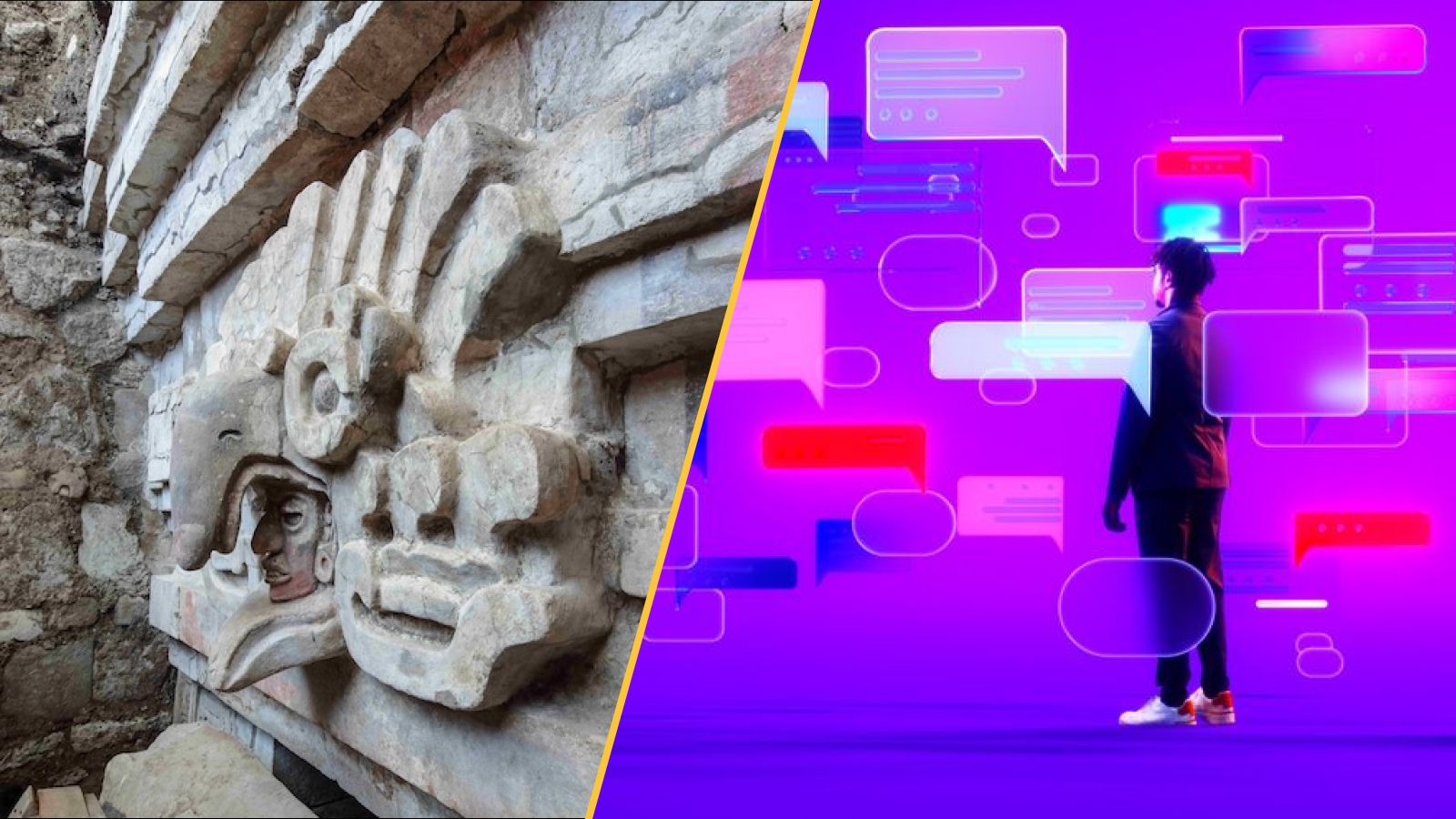
This week in technology news, concerns about the impact of artificial intelligence (AI) took center stage, particularly regarding the potential rise of next-generation AI ‘swarms’ that could infiltrate social media platforms. A study highlighted the alarming statistic that as of 2025, over half of the text generated online will be produced by large language models. Researchers caution that these future bots, designed to mimic real human behavior and integrate seamlessly into online discussions, could target individuals, disseminate false information, and sway public opinion.
Despite the grim outlook surrounding AI developments, there were also positive breakthroughs reported. Researchers unveiled a tool capable of detecting signs of cognitive decline through analysis of doctors’ notes. In addition, AI has demonstrated its ability to identify hundreds of unusual cosmic objects from the archives of the Hubble Space Telescope, showcasing its potential to expedite scientific research. In other technological advancements, a significant battery innovation emerged, Microsoft introduced a cutting-edge AI chip, and a laser-based power system was revealed, paving the way for ‘infinite’ drone flight. Notably, a robot has learned to synchronize its lip movements, blurring the line between machine and human expression.
In a separate but significant discovery, Mexican authorities announced the excavation of a 1,400-year-old Zapotec tomb in Oaxaca, which President Claudia Sheinbaum Pardo described as the country’s most significant archaeological find in a decade. The tomb, adorned with intricate carvings—including a sculpture of an owl with a man’s head in its beak—reflects the Zapotec belief that their ancestors descended from the clouds. This discovery was prompted by reports of looting at the site, and while some historical context has been lost, it adds to the growing list of recently uncovered Zapotec tombs in the region.
In health news, a groundbreaking study by scientists at the Spanish National Cancer Research Center in Madrid explored a novel triple-drug therapy that has shown promise in eliminating pancreatic cancer in mice. This development is particularly noteworthy, as pancreatic cancer is known for its aggressive nature and rapid resistance to conventional therapies. By targeting a mutated gene found in 90% of diagnosed cases, researchers found long-lasting tumor regression in all mice subjects, suggesting a potential pathway for human trials.
Elsewhere, new satellite imaging revealed that thousands of dams across the United States may be at risk of failure, stemming from ground shifts that are becoming increasingly evident. This poses serious public health and economic implications, especially given climate change’s role in exacerbating these structural vulnerabilities. Investigative reports are underway to examine the potential consequences and remedial measures that can be implemented.
This week also saw the James Webb Space Telescope achieve an unprecedented milestone by capturing light from the galaxy MoM-z14, the most distant galaxy detected to date, existing just 280 million years after the Big Bang. This discovery challenges existing theories about the universe’s early evolution, suggesting that the galaxy is more luminous and advanced than expected for its age, thus reshaping astronomers’ understanding of cosmic development.
As the landscape of technology continues to evolve rapidly, these advancements underscore the dual-edged nature of innovation—one that presents both remarkable opportunities and significant challenges. The ongoing discourse around the responsible development and application of AI highlights the urgency for regulatory frameworks to ensure that technological progress benefits society as a whole.
See also Lam Research Achieves Record $5.34B Revenue, Drives AI Tool Investments Amid Supply Constraints
 Researcher Accused of Obscuring Baby’s Poisoning; AI Retractions Surge to 63,000
 Integrated MC-DL Framework Achieves 94% Gamma Passing Rate in Radiotherapy QA
 Researchers Achieve Exponential Gains in Machine Learning Using Minimal Quantum Features















