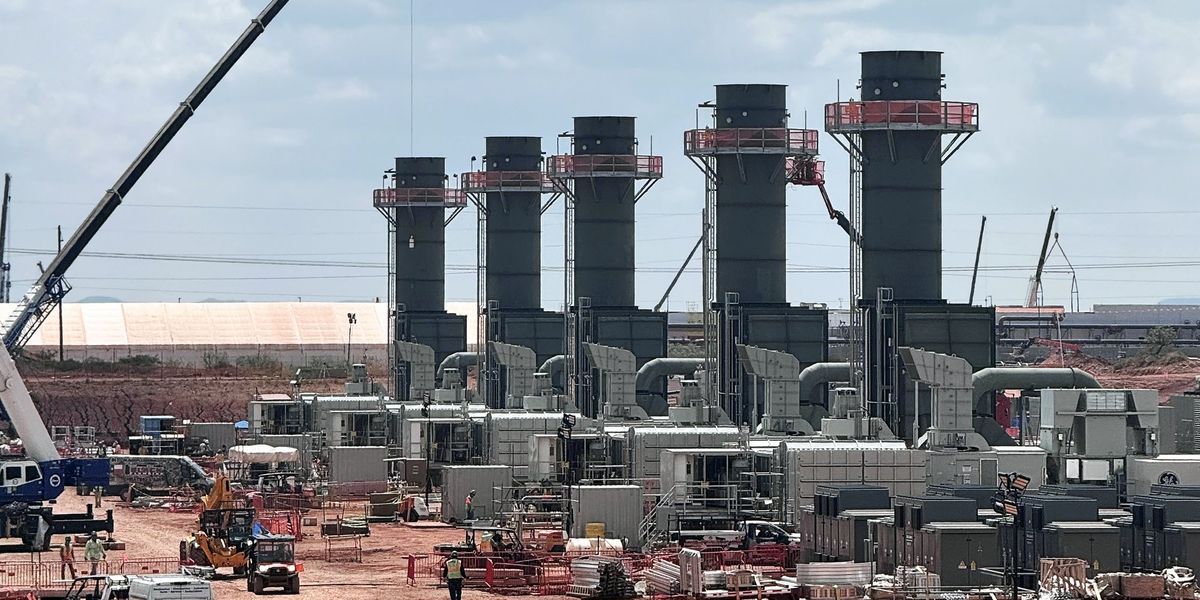
The construction of AI data centers in the United States is experiencing a significant boom, with demand for power projected to reach 106 gigawatts by 2035—a 36 percent increase from earlier estimates by BloombergNEF. This surge in demand is facing formidable challenges, including a shortage of skilled engineers, technicians, and craftsmen necessary to support the burgeoning industry. As more data centers are constructed, operators are grappling with severe constraints in power availability, material supplies, and specialized labor.
According to Laura Laltrello, the chief operating officer for Applied Digital, the need for civil, mechanical, and electrical engineers, as well as construction management professionals, has accelerated in recent months. Applied Digital is currently developing two data center campuses near Harwood, North Dakota, which will require 1.4 GW of power upon completion. Laltrello noted that the company is expanding its recruitment efforts to attract talent from diverse industries such as nuclear energy, the military, and aerospace, as the traditional pool of engineering talent shrinks.
For every engineer required to design, build, or run a new AI data center, dozens of other roles are also in demand. The Association for Computer Operations and Management’s (AFCOM) State of the Data Center Report 2025 indicates that 58 percent of data center managers have identified a need for multi-skilled operators, while 50 percent expect greater demand for data center engineers. Security specialists are also crucial in this landscape.
The U.S. Bureau of Labor Statistics anticipates a requirement for nearly 400,000 additional construction workers by 2033, with the most pressing needs in power infrastructure, electricians, plumbing, HVAC, and about 17,500 electrical and electronics engineers. These roles are essential for the design, construction, and operation of modern data centers. Bill Kleyman, the CEO of AI infrastructure firm Apolo and author of the AFCOM report, emphasized that the challenge lies not just in the number of workers available, but in the timing and intensity of demand, as various sectors compete for the same skilled labor pool.
Companies like Lancium and construction firms such as Crusoe are under pressure to accelerate the construction of AI data centers. For instance, Lancium is involved in the Stargate project in Abilene, Texas, which is being developed for Oracle and OpenAI. This project features two operational buildings and six more slated for completion by mid-2026, with the entire campus requiring 1.2 GW of power. Michael McNamara, Lancium’s CEO, stated that his company currently builds enough infrastructure annually to demand one gigawatt of power, but client expectations are rising, aiming for an increase to 1 GW per quarter and eventually one per month or less.
This ambitious construction pace demands tens of thousands more engineers. The shortage extends to various operational roles, including electrical and mechanical technicians, high-voltage and power systems engineers, and skilled HVAC technicians experienced in high-density and liquid cooling systems. Matthew Hawkins, director of education for Uptime Institute, noted that demand in these areas is rising significantly faster than supply.
To address this talent gap, technical colleges and applied education programs are proving pivotal. They focus on hands-on skills relevant to data center operations, power, and cooling systems. In Texas, where many new data centers are being established, workforce programs are proliferating. The SMU Lyle School of Engineering offers a Master of Science in Datacenter Systems Engineering in Dallas, integrating electrical engineering, IT, facilities management, business continuity, and cybersecurity. Additionally, Dallas College and Texas State Technical College near Waco provide 12-week AI data center technician programs.
“Technical colleges are driving the charge to bring new talent into an industry undergoing exponential growth with an almost infinite appetite for skilled workers,” remarked Wendy Schuchart, an association manager at AFCOM.
Industry vendors and associations are also actively working to close the talent gap. Microsoft’s Datacenter Academy collaborates with community colleges in areas where it operates data centers, while Google supports local nonprofits and educational institutions offering training in IT and data center operations. Amazon provides apprenticeships in data centers, and Siemens’ Educates America program aims to train 200,000 electricians and electrical manufacturing workers by 2030, with over 32,000 apprenticeships currently underway across various states.
As universities adapt their curricula to prepare students for future opportunities in digital infrastructure, Laltrello emphasized, “The best way to predict the future is to build it.” This proactive approach is essential to ensure that the data center industry can sustain its rapid growth while effectively addressing the critical skills gap.
See also AI Tools Enhance Diagnosis Accuracy Amid U.S. Healthcare System’s Resource Crisis
 South Korea Downplays Impact of 25% US Tariff on AI Chips, Excludes Memory Products
 Taiwan Invests $250B in U.S. Tech to Boost AI Chip Production Amid Trade Deal
 Alphabet Commits $93 Billion to Quantum Computing, Targets Industry Leadership
 Andrej Karpathy Challenges Nvidia’s Huang on AI’s Role in Coding and Productivity Gains