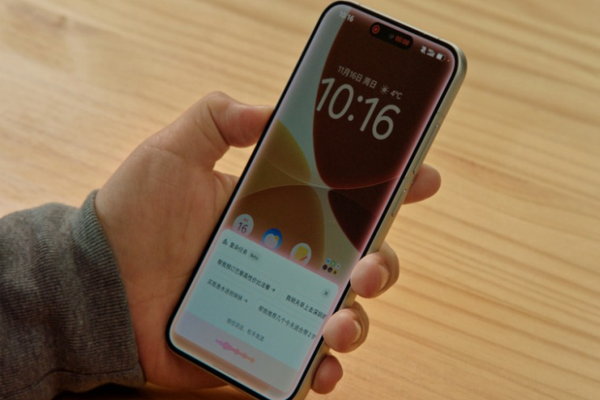
Mobile phone manufacturers are presented with pivotal opportunities as they navigate the evolving landscape of artificial intelligence (AI). On September 1, 2023, Apple CEO Tim Cook announced that John Ternus, the company’s senior vice president of hardware engineering, will succeed him as CEO. Ternus, a 25-year veteran at Apple, is expected to lead the company into an era increasingly defined by AI innovations.
This leadership transition comes amid a period of reflection on smartphone innovation, particularly following the introduction of AI tools such as Lobster. While recent phone models like the Huawei Pura 90, OPPO Find X9s Pro, and REDMI K90 Max have spotlighted enhancements in photography and memory through AI, a broader shift toward AI-led systemic reconstruction is seen as essential. As mobile phones evolve, they may no longer merely serve specific functions but become integral parts of a comprehensive AI interaction framework.
The arrival of tools like Lobster and Skill has catalyzed this shift, allowing businesses to interact with customers in new ways. A prime example is the Jinguyuan Dumpling Restaurant, which recently employed Lobster to provide customers with real-time information through chat, exceeding traditional QR code ordering systems. Such innovations suggest a future where mobile phones facilitate more intuitive, conversation-based interactions rather than relying heavily on graphical interfaces.
In this context, the role of mobile phones may transform significantly. Despite competition from AI hardware, these devices will likely remain crucial social and entertainment hubs, supporting activities like gaming and streaming. Moreover, as the most sophisticated sensor clusters available, smartphones will increasingly function as perception centers, learning user behaviors and providing personalized information. Adapting to new interaction methods is critical; manufacturers must shift from an app-centric mindset to accommodate the needs of the Agent era.
The exploration of AI applications within mobile technology is ongoing and can be categorized into three primary areas. The first involves enhancing specific capabilities, a common starting point for manufacturers, offering features like background noise removal and automatic video editing. While valuable, these capabilities face competition from standalone AI products.
The second area focuses on building AI execution add-ons for existing graphical interfaces. Notable attempts include Nubia’s partnership with Doubao Mobile Assistant. However, these efforts face challenges due to resistance from established apps that may not wish to integrate deeply with new AI products. The ongoing development of Doubao’s second-generation mobile phone reflects this struggle, highlighting the complexities of competing with major Internet giants.
The third area, encapsulated in the concept of Mobile Claw, may better align with the future needs of mobile manufacturers. Both Xiaomi and Huawei are experimenting with Mobile Claw products designed to enhance user experiences across devices. Xiaomi’s MiClaw is noted as the first mobile product to implement this technology, while Huawei promotes a similar vision with its Xiaoyi Claw. As the industry embraces this transformation, the consensus is growing that the interaction model will shift from traditional smartphones to Agent Phones.
This Agentization of mobile interaction is still in its infancy but already demonstrates key characteristics. For instance, mobile assistants are evolving to become more proactive and intelligent, as seen in the advancements of Xiaomi’s Super Xiaoai and Huawei’s Xiaoyi. Apple’s Siri is also set for enhancement, with expected developments to be showcased at the upcoming WWDC.
Another feature is the emphasis on personal knowledge bases, allowing devices to tailor experiences based on user data. Companies like Honor are developing strategies to integrate various types of memory within their devices, while Xiaomi’s Super Xiaoai aims to improve memory collection processes.
Additionally, there is a focus on multi-modal perception, enabling phones to understand and interpret diverse inputs from language to environmental visual cues. Honor’s advancements in visual recognition epitomize this trend, as manufacturers aim to create devices that function as smart companions.
Lastly, the core models behind AI development are crucial. Recent releases, such as Xiaomi’s MiMo series and Apple’s collaborative efforts with Google on next-generation foundation models, underline the importance of foundational technology in shaping future interactions. The integration of execution, memory, perception, and cognitive abilities indicates that emerging mobile operating systems will prioritize creating environments conducive to personal agents rather than merely focusing on hardware and software sales.
For mobile phone manufacturers, these advancements necessitate the cultivation of new ecosystems. Hardware must increasingly synchronize with AI solutions, enhancing user interactions through interconnected devices, including AI glasses and home IoT products. Vivo’s focus on creating a cohesive ecosystem exemplifies this strategy, aiming to blend personal features and habits with broader AI functionalities.
At the application level, the traditional app landscape is anticipated to shift towards more flexible, task-oriented skills. Innovations like Nothing’s Essential Apps illustrate how users can tailor applications to their individual needs, fostering a more dynamic interaction model. This evolving landscape suggests a potential transition in business models from app-centric frameworks to a more fluid approach based on demand-triggered agent interactions.
As mobile technology enters a new phase driven by AI, manufacturers must seize these opportunities not only to redefine user interactions but also to establish their relevance in a rapidly changing digital ecosystem. The convergence of hardware capabilities and AI interaction systems may very well determine the future trajectory of the industry.
See also HKUST Develops PRET System Achieving 100% Accuracy in Colorectal Cancer Diagnosis
 Anthropic Halts Mythos AI Release Amid Unauthorized Access and Cybersecurity Threats
 SkyBiometry Launches AI Infrastructure Suite to Support LLMs and Generative Applications
 Taiwan Semiconductor Surpasses Meta and Broadcom with 40.6% Revenue Growth