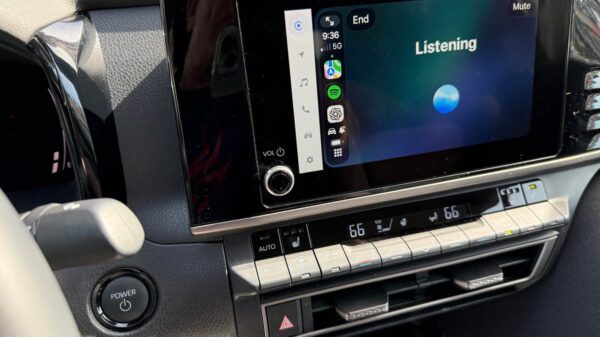
Apple is undertaking an emergency retraining initiative for its Siri development team ahead of the company’s Worldwide Developers Conference (WWDC) on June 8. This move comes as Apple plans to unveil a significant overhaul of Siri, originally scheduled for 2025 but postponed to spring 2026 due to reliability concerns with early versions. The company aims to elevate Siri’s capabilities using advanced artificial intelligence technologies.
The Siri organization has garnered a reputation as a laggard within Apple, as other teams have rapidly adopted AI coding tools, including Claude Code, and increased their budgets accordingly. In contrast, the Siri team has struggled to keep up with the swift advancements in programming technology. This retraining initiative represents a crucial shift away from Siri’s traditional intent-based architecture, which relies heavily on complex “if-then” scripts, towards modern large language model orchestration.
To facilitate this transition, engineers must acquire new skills in quantization, PyTorch, and Apple’s Core ML framework. These competencies are essential for optimizing AI models for on-device execution while minimizing battery drain and overheating risks. The training program is not merely a professional development exercise; it is a strategic pivot aimed at transforming Siri into an “agentic” AI capable of managing complex multi-step tasks.
During the training period, only around 60 members of the core Siri development team will remain at their posts, while another 60 engineers will focus on assessing Siri’s performance regarding user commands and safety standards. Apple is conducting extensive testing to ensure that the revamped assistant can accurately interpret and execute intricate instructions, addressing previous shortcomings.
This organizational shift coincides with broader changes in Apple’s AI leadership. John Giannandrea, the former head of AI, recently departed the company, and now software engineering head Craig Federighi oversees AI development. Mike Rockwell, who led the development of the Vision Pro, has taken charge of the Siri team. Under Federighi’s guidance, Apple has secured a partnership with Google to leverage Gemini models, enhancing Siri and other AI functionalities.
The anticipated new Siri experience is expected to be showcased at WWDC and later introduced as part of updates to iOS 27, iPadOS 27, and macOS 27 later this year. While the exact structure of the training program remains undefined—whether it will be conducted internally or in collaboration with external AI laboratories—the urgency of the initiative is clear. After years of lagging in voice assistant technology, Apple is making a concerted effort to upgrade Siri into a more sophisticated and capable assistant.
As Apple prepares for this pivotal transformation, the industry will be closely watching how the revamped Siri competes with other voice assistants and whether it can meet the increasingly complex demands of users. This development highlights the growing importance of AI in enhancing user experiences and positions Apple to reclaim its competitive edge in the technology landscape.
See also AI Spatial Computing Market Set to Reach $10B by 2033, Driven by AR and Gaming Innovations
 OpenAI Plans $20 Billion Investment in Cerebras Chips, Eyes Equity Stake
 Pankaj Kane of Admiral Group Named Finalist for AI and Software Development Award
 Loop Secures $95M Series C Funding to Enhance AI Supply Chain Intelligence
 TSMC Reports 58% Profit Surge, Guiding 30%+ Revenue Growth Amid AI Demand