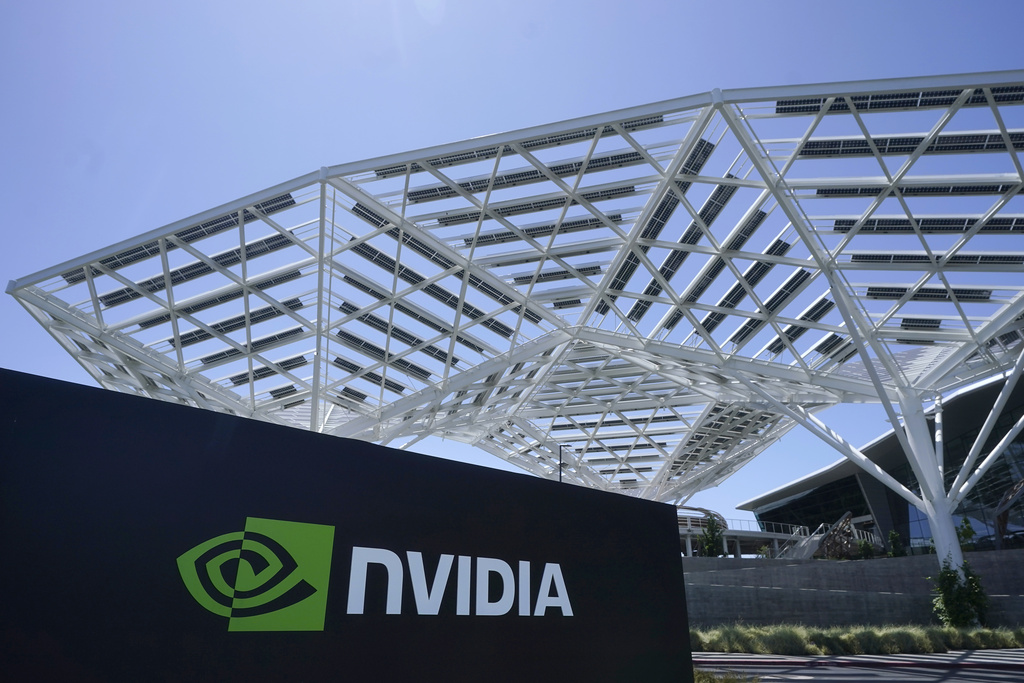
In a significant legal development, federal authorities have arrested a 38-year-old man from the East Bay, identified as Cham Li, also known as “Tony Li,” for allegedly attempting to circumvent national security technology export controls. Li’s activities reportedly involved conspiring to send specialized computer chips manufactured by the Santa Clara company Nvidia to China, a move that has raised considerable concern among U.S. officials.
Li, a Chinese citizen residing in San Leandro, California, conspired with two American citizens and another Chinese national to create falsified documentation, including fake contracts, in a bid to mislead the U.S. government. According to the U.S. Department of Justice, the group managed to illegally ship hundreds of advanced computer processors to China via Malaysia, with attempts to route additional shipments through Thailand. The department announced these charges this week.
Li could not be reached for comment following his arrest on November 19, and the Justice Department has not clarified whether he remains in custody. His co-conspirators were also taken into custody this week, as stated in the department’s news release.
The indictment specifies that Nvidia’s computer processor chips are in high demand amidst a global race for dominance in artificial intelligence (AI). China’s goal is to become the world leader in AI by 2030, leveraging its technological advancements to modernize its military and develop new weaponry, as detailed in the indictment issued on November 13.
Importantly, Nvidia itself is not implicated in any wrongdoing related to this case. The U.S. tightened its export controls in October 2022, imposing strict licensing requirements on four advanced Nvidia chip models that are crucial for AI applications. This regulatory shift illustrates the increasing caution exercised by U.S. authorities regarding technology transfers to nations that might utilize them for military purposes.
The conspiracy allegedly began in September 2023, with Li collaborating with a Hong Kong-born U.S. citizen, a 45-year-old Chinese citizen on a student visa residing in Tampa, Florida, and another U.S. citizen from Alabama. Together, they sought out customers in China for their illicit chip sales, which reportedly netted them nearly $4 million in wire transfers from Chinese clients.
The indictment claims that between October 2024 and January 2025, the group shipped approximately 400 Nvidia A100 processors to China and attempted to send 50 Nvidia H200 processors along with 10 Hewlett Packard supercomputers containing Nvidia H100 chips through Thailand. However, these latter efforts were reportedly thwarted by law enforcement.
Details regarding the recipients of the shipments and their potential connections to the Chinese military remain unclear. As investigations continue, Li is set to be arraigned on December 4 in Tampa, Florida, where he and his co-conspirators could face decades in prison for charges including smuggling, conspiracy to violate export controls, and money laundering.
This case underscores the heightened tensions surrounding tech transfers to China, particularly in light of the increasing scrutiny of AI technologies and their potential military applications. As nations push for advancements in artificial intelligence, the balance between innovation and national security is becoming increasingly complex.
See also Case Western Reserve Secures $2.5M Grant to Enhance AI Technology for Tracking Cancer Cells
 NVIDIA Achieves #1 Spot on Forbes America’s Dream Employers 2026 List Amid AI Surge
 Min Chun Fu Joins Comp AI as Co-Founder to Enhance User-Centric AI Compliance Systems
 White House Halts Executive Order Aiming to Override State AI Regulations
 IDT Launches HIPAA-Compliant AI Agent to Enhance Healthcare Operations and Boost Revenue