






















































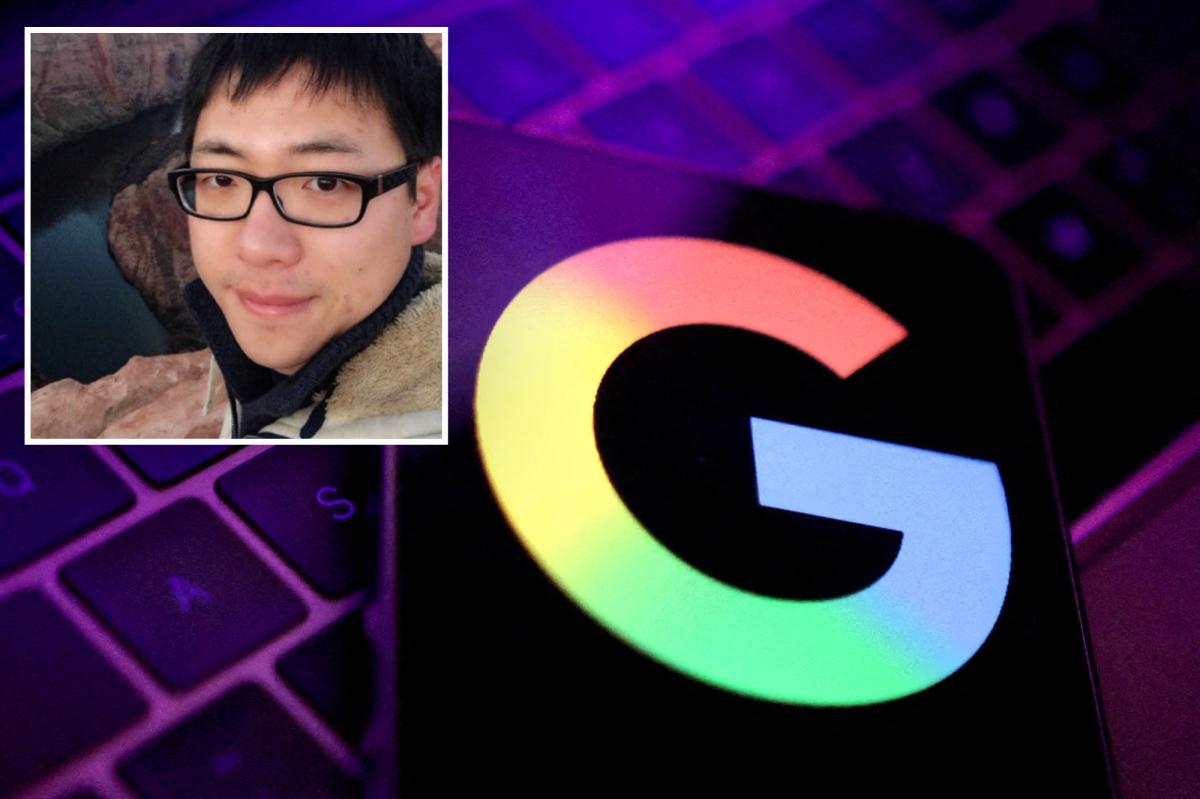
A federal jury in San Francisco has convicted former Google software engineer Linwei Ding, also known as Leon Ding, on charges of espionage and theft of trade secrets, marking a significant milestone as the first espionage conviction directly related to artificial intelligence (AI). After an 11-day trial, the jury found Ding guilty on seven counts of economic espionage and seven counts of theft of trade secrets, which included thousands of pages of proprietary information intended for use by the Chinese government.
Roman Rozhavsky, assistant director of the FBI’s espionage unit, stated, “In today’s high-stakes race to dominate the field of artificial intelligence, Linwei Ding betrayed both the US and his employer by stealing trade secrets about Google’s AI technology on behalf of China’s government.”
The case comes amid an escalating competition between US technology firms and their Chinese counterparts to develop advanced AI models. This competition intensified following China’s release of its DeepSeek AI chips in January 2025, which disrupted market expectations with their significantly lower development costs compared to their US rivals. Google DeepMind CEO Demis Hassabis has also cautioned that China’s AI models may soon catch up to American technologies.
According to the Department of Justice (DOJ), from May 2022 through April 2023, Ding, 38, misappropriated over 2,000 pages of confidential corporate information regarding Google’s AI technology, storing the documents on his personal Google Cloud account. Ding was indicted in March 2024, and the evidence presented indicated he had secretly aligned himself with two Chinese tech firms while still employed at Google.
In the lead-up to his departure from Google in December 2023, he allegedly downloaded sensitive documents, including detailed information about Google’s Tensor Processing Unit chips and its custom-built SmartNIC, a network interface card crucial for training large AI models. The DOJ emphasized that these documents contained some of the most advanced AI technology, pivotal during a critical period of AI development.
While working at Google, Ding was reportedly in discussions to become the chief technology officer for a Chinese tech firm and was in the process of launching his own startup based in China. He claimed to potential investors that he could build an AI supercomputer utilizing the proprietary information obtained from Google.
Assistant Attorney General for National Security John Eisenberg noted the severity of the case, stating it involved critical technology in a pivotal moment for AI advancement. Ding faces severe penalties, with potential sentences of up to 10 years in prison for each count of theft and 15 years for each count of economic espionage.
Ding’s attorney, Grant Fondo, contested the value of the stolen documents, arguing that Google failed to adequately protect its trade secrets. “Google chose openness over security,” he asserted during closing arguments, emphasizing that the company did not implement reasonable security measures to safeguard its information.
The conviction of Ding not only underscores the heightened scrutiny on corporate espionage but also reflects broader concerns about national security and the integrity of technological advancements in a rapidly evolving AI landscape. As companies race to develop groundbreaking AI technologies, the repercussions of this case may reverberate through the industry, prompting stricter security measures and increased vigilance regarding the safeguarding of intellectual property.
See also UCSD and Columbia Launch ChipBench to Evaluate LLMs in AI Chip Design with Key Metrics
 Rancho Cordova Students Develop AI Bots for City Services, Supported by $5M Initiative
 AI Chatbots Direct 300,000 Users to Kremlin Propaganda Sites, Research Reveals
 Innodata Secures Palantir Contract for AI Data Engineering Amid Stock Volatility
 Capstone Reveals 2026 Tech Outlook: AI Regulation and Digital Asset Competition Intensify














